DbcultAccessing Vault...
6.7/10
Senior Film Conservator
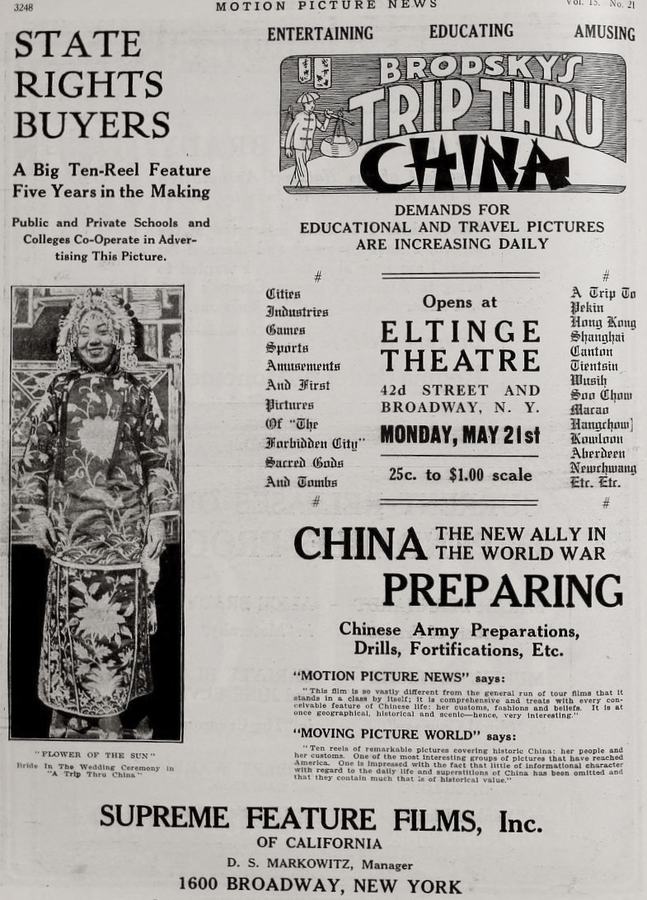
A definitive 6.7/10 rating for a film that redefined the boundaries of cult cinema. A Trip Through China remains a cornerstone of transgressive art.
Stepping back into the annals of early 20th-century cinema often feels akin to archaeological excavation, unearthing forgotten artifacts that whisper tales of bygone eras. Yet, some discoveries resonate with an almost startling immediacy, transcending their age to offer profound insights into humanity's enduring journey. Benjamin Brodsky's 'A Trip Through China' is precisely such a cinematic relic, a monumental documentary that, despite its venerable age, pulses with the vibrant, turbulent spirit of a nation undergoing a profound metamorphosis. Filmed over a remarkable ten-year span, this work isn't merely a collection of moving images; it's a meticulously crafted historical chronicle, an intimate portrait of China grappling with the vestiges of its imperial past and the nascent, sometimes chaotic, dawn of its republican future.
Brodsky, a figure whose ambition clearly outstripped the conventional filmmaking constraints of his time, embarked on an audacious endeavor: to capture the very essence of a nation in flux. This wasn't a fleeting travelogue but a sustained, decade-long commitment to documenting a historical pivot. The sheer logistical challenge of such an undertaking in the early 1900s—transporting bulky camera equipment across vast, often difficult terrain, navigating political instabilities, and maintaining a consistent vision—is almost unfathomable today. It speaks volumes about Brodsky's pioneering spirit and his prescient understanding of cinema's power as a historical witness. His lens became an impartial observer, cataloging the intricate dance between tradition and modernity, resilience and vulnerability, that defined China's early republican years.
The film opens a window onto a China that is simultaneously familiar and strikingly alien. We are first transported to Shanghai, a burgeoning cosmopolitan hub that, even then, was a crucible of East-meets-West. The footage of horse races at Shanghai isn't just a spectacle of sport; it's a potent symbol of the encroaching Western influence, of a city embracing modern leisure and international trends. The vibrant energy, the throngs of spectators, the architectural styles – all paint a vivid picture of a port city hurtling towards modernity, a stark contrast to the timeless rituals that still defined much of the interior. This juxtaposition immediately establishes a central tension within the film: the push and pull between an ancient civilization and the inexorable march of global progress. One might even draw a parallel here to the way early narrative films like The Cheat, while fictional, subtly explored the anxieties and fascinations surrounding cultural encounters and perceived 'otherness' in a rapidly globalizing world, albeit through a dramatic lens rather than a documentary one.
From the urban dynamism of Shanghai, Brodsky's camera guides us to the profound solemnity of the national Temple of Heaven. Here, the film delves into the heart of China's imperial legacy, capturing elaborate ceremonies that had, for centuries, cemented the divine authority of emperors. These scenes are imbued with an almost palpable sense of history, the rituals performed with a gravity that speaks to their deep cultural and spiritual significance. The intricate costumes, the precise movements, the architectural grandeur of the temple itself – all serve as a powerful reminder of the sophisticated, highly ritualized world that was only just receding into history. It's a poignant moment, showcasing not just the spectacle, but the very fabric of a civilization that had endured for millennia, now standing at a precipice of change. The film doesn't just show these ceremonies; it allows them to breathe, offering a respectful, if distant, contemplation of their passing relevance.
Perhaps the most viscerally impactful segment of 'A Trip Through China' is the documentation of the catastrophic 1914 typhoon. This footage is a testament to the raw, untamed power of nature, an unflinching portrayal of destruction and human vulnerability. The typhoon, a force indiscriminate in its wrath, serves as a powerful metaphor for the turbulent political climate of the era. Just as the winds and waters ravaged the physical landscape, so too were the foundations of Chinese society being reshaped by internal strife and external pressures. The scenes of devastation, the efforts at recovery, and the sheer scale of the human suffering captured by Brodsky’s lens offer a sobering counterpoint to the earlier displays of cultural celebration and nascent modernity. It underscores the immense challenges faced by the fledgling Chinese Republic, which had to contend not only with political consolidation but also with the unpredictable forces of the natural world and the immense task of protecting its populace. This segment elevates the film beyond a mere historical record, imbuing it with a profound sense of human struggle and resilience.
The narrative arc of the documentary culminates with the installation of government officials at the Peking palaces. This is a moment charged with immense symbolic weight. The very spaces that once housed emperors and epitomized imperial power are now repurposed, becoming the administrative heart of a new republic. It's a powerful visual declaration of a new political order, a clear break from the past, yet one that consciously re-appropriates the grandeur of history for its own legitimacy. The footage captures the formality and gravity of these proceedings, the earnestness of the new officials, and the architectural splendor that now served a radically different purpose. This transition, from the divine right of kings to the rule of elected—or at least appointed—representatives, is the very essence of the revolution that had swept through China. In its own way, this documentary, by capturing such a foundational shift, stands as a non-fictional counterpoint to the dramatic narratives of political upheaval seen in films like The Revolutionist, offering raw, unmediated glimpses of historical change rather than fictionalized interpretations.
Technically, for a film of its vintage, 'A Trip Through China' is a marvel. Brodsky's cinematography, while constrained by the limitations of early film technology, manages to convey a remarkable sense of scale and detail. The framing of the vast imperial courtyards, the bustling street scenes, and the wide shots of typhoon-ravaged landscapes demonstrate a keen eye for composition and an understanding of how to utilize the nascent cinematic medium to convey grandeur and devastation alike. The ten-year production period also means that the film inherently possesses an organic, evolving narrative, showcasing changes not just in political structure but also in societal norms and urban development over time. This longitudinal perspective is something few early documentaries achieved, making Brodsky's work truly exceptional.
The enduring value of 'A Trip Through China' lies not just in its historical content but in its pioneering spirit. It serves as a crucial primary source, offering invaluable visual data for historians and cultural anthropologists seeking to understand this complex period. Unlike narrative features, which, even when historically inspired, filter events through a dramatic lens, this documentary provides direct, unadorned access to the sights and sounds (or at least the visual information) of the time. It allows us to bear witness to the birth of a nation, to see the faces of its people, the architecture of its cities, and the rituals of its past with an authenticity that few other mediums can replicate. In an era where films like Your Girl and Mine: A Woman Suffrage Play were advocating for specific social reforms in the West, Brodsky's film was, in its own silent way, documenting a much larger, national-scale transformation, a testament to the power of cinema to capture and preserve the zeitgeist of an entire civilization.
Moreover, the film invites contemplation on the nature of documentation itself. What did Brodsky choose to film, and what did he omit? As a Western filmmaker, what biases, conscious or unconscious, might have influenced his perspective? These are questions that enrich the viewing experience, transforming it from a passive observation into an active engagement with the historical record. The film, therefore, is not just about China; it's also about the early days of documentary filmmaking, its aspirations, and its inherent limitations. It reminds us that every frame captured is a choice, a curated glimpse into a much larger, more complex reality.
In conclusion, 'A Trip Through China' is more than a historical document; it is a cinematic odyssey, a sprawling, ambitious endeavor that captures the soul of a nation at a pivotal crossroads. Benjamin Brodsky’s sustained dedication gifted future generations an unparalleled visual archive, a living testament to the resilience, tradition, and revolutionary spirit of early 20th-century China. It stands as a powerful reminder of cinema’s capacity not just to entertain, but to educate, to preserve, and to connect us intimately with the echoes of history. For anyone with an interest in early film, Chinese history, or the evolution of documentary as an art form, this film is an indispensable treasure, offering a profound and often mesmerizing journey into a world long past, yet vibrantly alive on screen.
Discover more pioneering cinematic works and historical documentaries on our site.
The Vital Question'Twas Ever ThusChûshingura
IMDb 7.2
1935
Community
Log in to comment.