DbcultAccessing Vault...
Cult Review
Senior Film Conservator
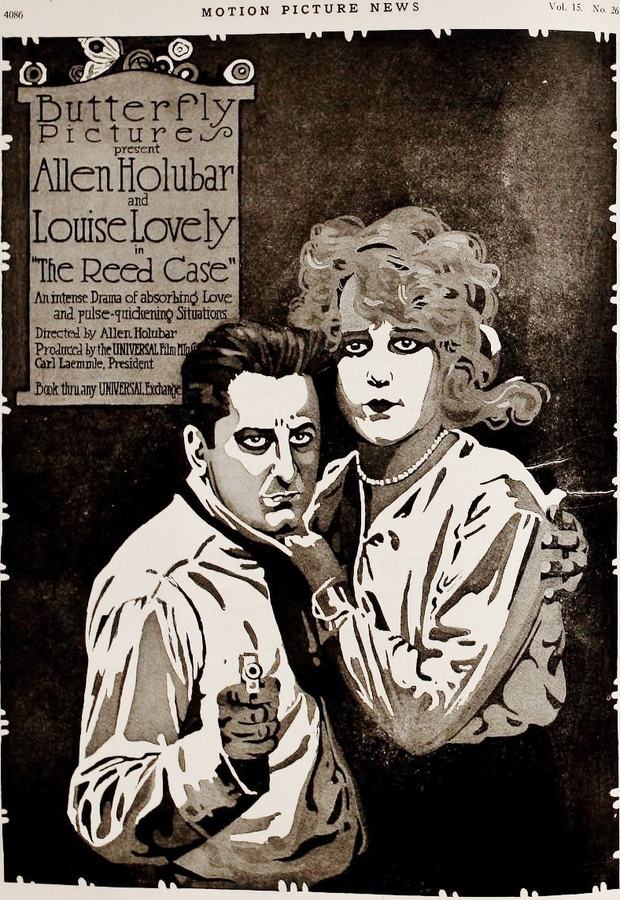
A bullet cleaves the thin mountain dusk, and in that instant Allen Holubar’s The Reed Case stakes its claim as 1915’s most elegantly duplicitous thriller—an alpine diorama where every snowflake conceals a fingerprint and every creak of cedar is a metronome for guilt.
Holubar, doubling as both scribe and auteur, engineers a narrative Rube Goldberg: a forced vacation that mutates into abduction, a ghost story that births a courtroom, and a marriage proposal delivered as evidence. The film never bothers to announce itself as clever; it simply is, the way a trap assumes the shape of the animal.
Alfred Allen’s Jerry Brennon arrives onscreen already hollowed out, coat pockets sagging with spent cartridges and unsolved ledgers. The physician’s order for rest is less diagnosis than epitaph: three years of chasing silhouettes through tenement fog have distilled the man into sinew and insomnia. When Senator Reed—portrayed by George C. Pearce with the pomposity of a Roman candle—offers his isolated cabin, the gesture reads less like hospitality and more like banishment. Yet Allen lets a tremor of relief flicker across his granite mask; even Ahab needs shore leave.
Production designer Fred Montague turns the Reed retreat into a palimpsest of dread: antlers cast shadows like gallows, kerosene halos tremble across bear-pelt rugs, and floorboards conceal a trapdoor that exhales the sobs of Louise Lovely’s Helen Reed. She is no fainting ingénue; her refusal to marry Schuyler Hastings is a gauntlet flung at patriarchy itself. Lovely plays the role with a chin-tilt that could slice bread, yet when the kidnappers gag her with a monogrammed cravat, her eyes telegraph entire manifestos of contempt.
Ernest Shields gives Hastings the oleaginous charm of a trust-fund Iago. His plan—abduct the reluctant bride, then storm the cabin in shining armor—reveals a psychology so privy to entitlement it borders on theology. Watch how he polishes his riding crop while awaiting news of Helen’s terror: the gesture is fetish, prayer, and boardroom ritual combined.
Holubar weaponizes folklore with documentary precision. Locals whisper of a widow who froze at the threshold, her lantern still glowing beneath the ice; children dare each other to listen for her knock. The legend is never verified, yet its residue lingers like frostbite. When the bullet ricochets past Brennon’s ear, the moment feels like ghostly punctuation rather than human assault—until the detective spies boot prints too fresh for mythology.
Allen Holubar’s direction revels in spatial pun: the cabin’s interior is shot at low angles to dwarf the human figure against cedar beams, while exteriors exploit vertiginous crane shots that make the Sierra look like gnashed teeth. Intertitles—rare, terse, almost apologetic—appear as whispers rather than exposition. One card reads simply: "The mountain keeps accounts." Nothing more is needed; we imagine ledgers written in snow and blood.
Stack The Reed Case beside The Lone Wolf and you’ll notice both trade on the seductive fatigue of the gentleman detective, yet Holubar refuses the urban velvet of café society for something more feral. Contrast it with Beware of Strangers, where peril arrives via train timetable; here, salvation or doom hinges on whether a snowdrift melts before the mail coach departs.
Cinematographer Allen Holubar (yes, wearing both hats) favors chiaroscuro so extreme it risks abstraction: faces vanish save for a stripe of cheekbone, a bead of eye-white. The effect is not vanity but ethnography—he is cataloging how darkness colonizes human features, how even love must negotiate with blackout.
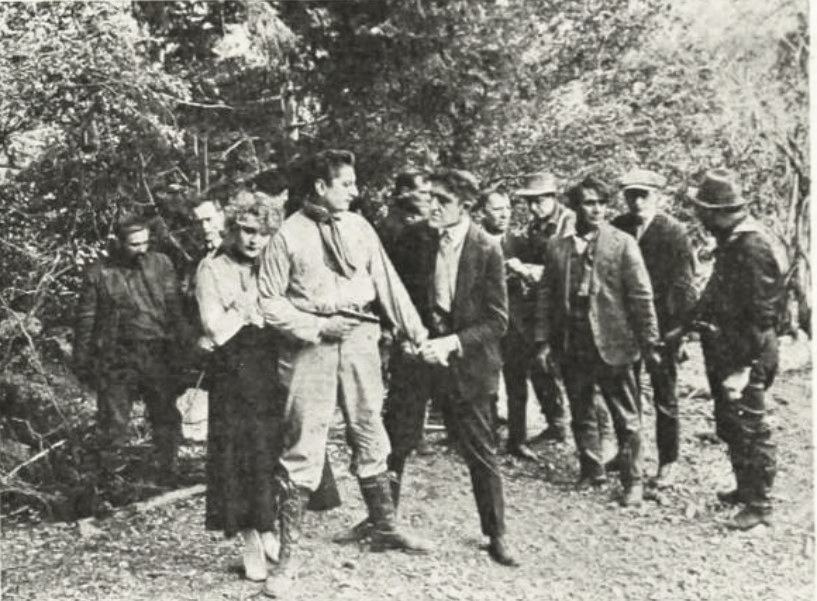
Helen’s kidnapping may sound like boilerplate peril, yet the film treats her refusal as the engine of the plot rather than an obstacle. When Hastings proposes, she responds not with demure deflection but with a laugh that could strip varnish. Later, bound and gagged in a root cellar, she taps Morse for HELP with her heel—resourcefulness coded into muscle memory. The rescue, then, is not a restitution of innocence but a confirmation of her prior sovereignty. Brennon’s proposal does not eclipse her agency; it merely relocates it from captivity to partnership.
Surviving exhibition notes recommend a live trio: viola da gamba for mountain drones, snare brushed with sheepskin for snowfall, celesta for Helen’s theme. Modern screenings often substitute post-rock ambience, yet the original cue sheet specifies rallentando during the trapdoor reveal—an aural gasp that primes the audience for subterranean sobbing. Try watching without sound and you’ll notice how the lack becomes its own score, every projector click evoking a distant rifle bolt.
Trade papers of 1915 praised the film’s "nerve-tingling verisimilitude," though some provincial exhibitors trimmed the final proposal, fearing audiences would deem it flippant. The picture slipped into archive purgatory until a 35 mm nitrate print surfaced in a Missoula basement in 1978, water-damaged but legible. The 2018 4K restoration by the Pacific Film Archive returned the cyan tint of alpine night, revealing previously invisible constellations—Holubar had hand-scratched stars onto the emulsion, a secret love letter to Montana skies.
Schuyler’s stratagem—manufacture danger, then pose as savior—feels ripped from today’s headlines of manipulated consent and reputation management. The film’s refusal to redeem him, even through last-minute contrition, aligns it with current audience intolerance for the “complicated” predator. Instead, Hastings is led away in manacles, his riding crop now evidence rather than phallus. The camera lingers on Helen’s face: not vengeful, not pitying—simply finished.
Nanine Wright as the senator’s spinster cousin delivers a three-minute cameo that functions like Greek chorus, predicting doom between sips of sassafras. Ed Brady’s sheriff embodies frontier incompetence, forever hitching trousers that refuse to stay put; his bumbling authenticates Brennon’s urban competence. Sydney Deane, voicing the off-screen ghost story via intertitle, achieves gravitas with a single line: "Some doors open only from the inside."
Holubar stages the climax during a thaw: icicles dagger the frame, snow slumps off roofs like overworked metaphors. When the kidnappers re-enter, their boots squelch, cancelling stealth. Brennon’s confrontation is less gun-blazing showdown than administrative audit: he produces evidence, timelines, motives—crime dissolved by paperwork. Only after adjudication does he kneel in the slush to propose, as if romance itself requires due process.
For a century-old one-reeler, The Reed Case carries a serrated edge. It prefigures Hitchcock’s disguised villainy, anticipates noir’s fatigue-chic, and interrogates the transaction of rescue long before feminist critique had vocabulary for it. The restoration’s tints—cyan night, amber lamplight, rose blush on Helen’s cheeks—render it a living daguerreotype that flickers, gasps, and ultimately seduces.
Seek it out at a cinematheque or stream the 4K scan via Archive.org. Watch it with headphones and a snowstorm outside; let the whiteout become your own mountain, keeping accounts. And when the final intertitle proposes marriage not as curtain but as ledger entry, you may find yourself nodding: yes, this is how justice should conclude—signed, sealed, and witnessed by constellations scratched by hand into celluloid.
References: The Girl of the Golden West for its frontier melodrama, Extravagance for class critique, and Unjustly Accused for legal ironies. For historical context on 1915 detective serials, see Moving Picture World vol. 26, no. 8.
IMDb —
1932
Community
Log in to comment.