DbcultAccessing Vault...
Cult Review
Senior Film Conservator
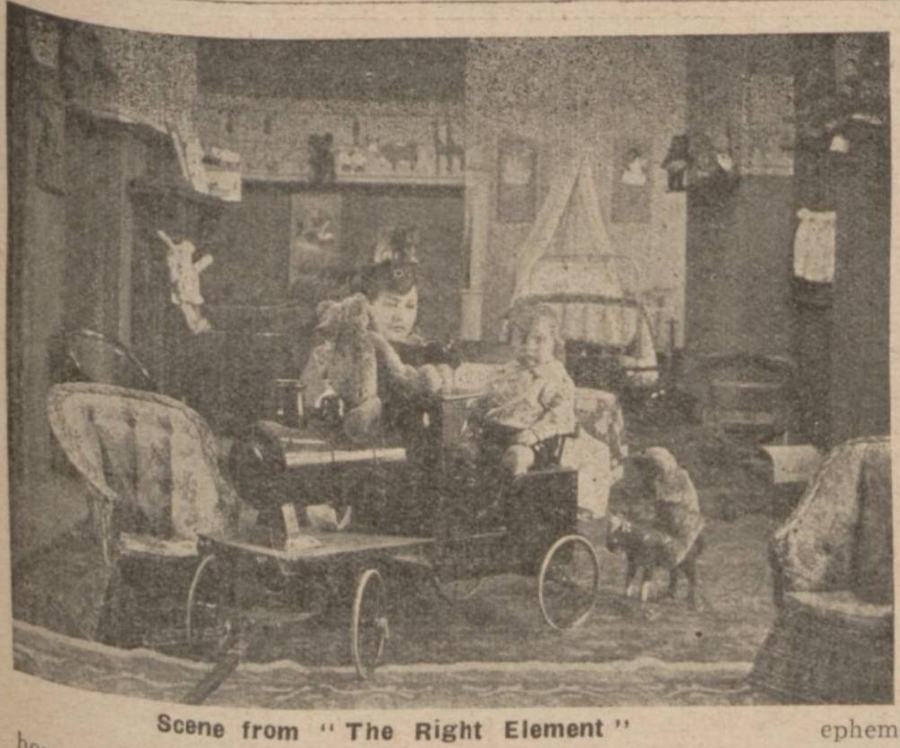
The silent era, often dismissed by casual observers as merely a precursor to sound, frequently delivered narratives of profound psychological depth, challenging its audiences with visual storytelling that transcended the spoken word. Among these gems, 'The Right Element' emerges not just as a film, but as a visceral exploration of human desperation, the perilous allure of chance, and the fragile boundary between waking life and the abyss of the subconscious. Penned by Roland Pertwee, whose literary prowess often lent itself to compelling, character-driven dramas, this cinematic offering from a bygone era manages to resonate with a surprising contemporary relevance, delving into themes of financial anxiety and mental breakdown that feel perpetually modern.
At its core, 'The Right Element' presents a stark, almost uncomfortably intimate portrait of a clerk, a man whose existence is defined by routine and a quiet struggle against the tides of poverty. His life, however, is abruptly upended by a crisis as old as humanity itself: the grave illness of his wife, necessitating an operation beyond his meager means. This premise, while straightforward, serves as the catalyst for a harrowing journey into the darker recesses of the human psyche. The clerk, nameless in the grander tapestry of societal structure but profoundly individual in his anguish, is pushed to an ethical precipice. The thought of losing his beloved, coupled with the crushing weight of medical debt, forces him to make a desperate choice: to gamble. This isn't merely a casual wager; it's a desperate, last-ditch effort, a Faustian bargain struck with fate, where the stakes are not just money, but the very sanity of a man pushed to his breaking point.
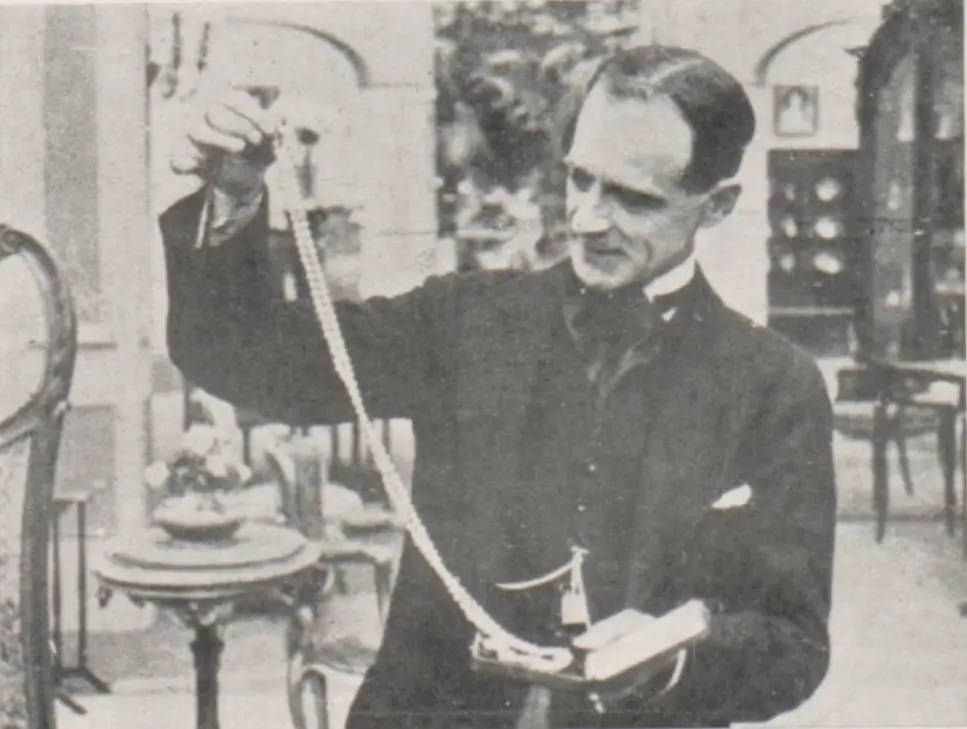
The film excels in its depiction of this mounting pressure. While silent, the visual cues, the subtle shifts in John Kelt’s portrayal of the beleaguered clerk, speak volumes. His slumped shoulders, the haunted look in his eyes, the nervous fidgeting – all convey a man trapped, a soul gradually being eroded by circumstance. Mary Rorke, as his ailing wife, though perhaps given less screen time, imbues her character with a quiet fragility that underscores the clerk's motivation, making his desperate actions understandable, if not entirely justifiable. The tension builds with each scene, drawing the audience into the clerk's spiraling despair, making us complicit witnesses to his impending doom.
The inevitable loss at the gambling table is not merely a plot point; it is the fulcrum upon which the entire narrative pivots. It’s a moment of devastating finality, a cruel twist of the knife that severs the clerk’s last thread of hope. What follows is not just sadness or regret, but a profound, terrifying descent into madness. The film, through its visual language, attempts to portray the fragmentation of a mind under extreme duress. We witness his reality distort, his perceptions warp, as the world around him becomes a reflection of his internal chaos. This segment of the film is where its true artistry lies, exploring the psychological toll of utter defeat.
The performances here are crucial. Kelt’s portrayal of mental collapse avoids theatrical overstatement, opting instead for a more nuanced, unsettling portrayal of a man losing his grip. His movements become erratic, his gaze unfocused, painting a picture of a mind adrift. Annie Esmond, Campbell Gullan, Tom Reynolds, Miriam Ferris, and George K. Gee, while perhaps in supporting roles, contribute to the atmospheric tension, their reactions often mirroring the audience's growing unease. The ensemble cast works in concert to build a world that feels increasingly claustrophobic and threatening, reflecting the clerk’s internal state.
One might draw parallels between the clerk's desperate situation and the harrowing choices faced by characters in other films of the era. The sheer weight of personal crisis and the desperate measures taken to overcome it could find a thematic kinship with the struggles depicted in films like The Crisis or even the more intimate dramas found in A Love Sublime, where profound emotional stakes drive the narrative. The desperation to secure a future for a loved one is a universal theme, here amplified by the immediate threat of illness and financial ruin.
And then, the twist. The ultimate revelation that the entire agonizing ordeal—the gamble, the loss, the descent into madness—was nothing more than a vivid, terrifying dream. This narrative device, while now a well-worn trope, was particularly potent in early cinema, capable of eliciting gasps of surprise and relief. It reframes the entire viewing experience, transforming a tragedy into a psychological cautionary tale. The dream sequence itself, presumably rendered with period-appropriate special effects or heightened dramatic acting, serves as a powerful testament to the clerk’s anxieties, a manifestation of his deepest fears about failure and loss.
This 'it was all a dream' ending is a double-edged sword. On one hand, it offers a cathartic release, pulling the protagonist (and the audience) back from the brink of despair. On the other, it can be seen as a narrative shortcut, potentially undermining the emotional investment built throughout the film. However, in the context of its time, and given the psychological focus, it works effectively to highlight the sheer power of the subconscious mind to conjure such elaborate, torturous scenarios. It's not merely an escape from reality; it's a profound exploration of the mind's capacity for self-inflicted torment, a vivid internal drama played out while the conscious self is at rest.
The concept of a dream as a central narrative mechanism or a source of terror has been explored repeatedly throughout cinematic history. While 'The Right Element' uses it for a sense of relief, other films, like the later The Woman in Black (though a different genre), tap into the psychological dread that can manifest from the unknown or the imagined. The idea of a character's reality being questioned, or the audience being misled, is a timeless storytelling device. The way 'The Right Element' executes this, making the audience believe in the dire consequences before snatching them away, is a testament to its narrative ambition. It forces us to confront the idea that our greatest fears often reside within our own minds, potent enough to construct entire alternate realities.
The film’s ultimate message, then, is not one of external threat, but of internal vulnerability. The clerk’s torment is self-generated, a manifestation of his very real financial and familial worries. The dream acts as a crucible, burning away his anxieties through simulated catastrophe, allowing him to awaken with a renewed appreciation for his (still challenging but not catastrophic) reality. It’s a powerful, albeit perhaps a little too neat, resolution to a profound psychological struggle.
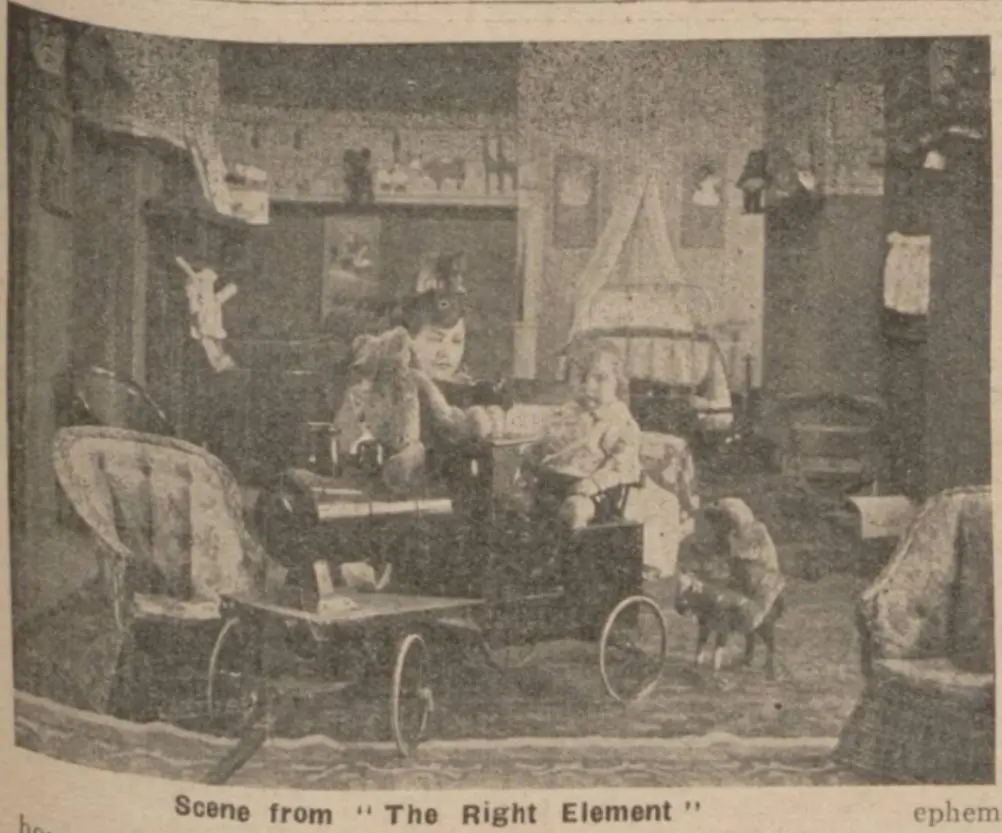
Considering the limitations of early cinema, 'The Right Element' likely relied heavily on expressive acting, stark lighting, and perhaps some rudimentary editing techniques to convey its psychological intensity. The visual composition would have been paramount in establishing the clerk’s mundane existence, the tension of the gambling den, and the disorienting chaos of his madness. One can imagine dramatic close-ups on Kelt’s face, conveying his internal turmoil without the need for intertitles, or perhaps distorted camera angles to signify his warped perception of reality during the dream sequence. The success of such a film in the silent era hinged on its ability to communicate complex emotions and abstract concepts purely through visual means.
The choice of setting, likely a drab, unremarkable clerk's office and a modest home, would have underscored the protagonist's ordinary life, making his extraordinary internal journey all the more impactful. The contrast between this mundane reality and the vivid, terrifying dreamscape would have been a key visual element, emphasizing the stark difference between his waking fears and their nightmarish manifestation. This kind of visual storytelling, where atmosphere and character expression carry the entire weight of the narrative, is a hallmark of the finest silent films.
Roland Pertwee's screenplay, even without dialogue, clearly laid the groundwork for a compelling character study. His ability to craft a plot that builds suspense, introduces profound conflict, and delivers a surprising resolution speaks to his talent as a storyteller. The cast, led by John Kelt, Mary Rorke, and featuring solid support from Annie Esmond, Campbell Gullan, Tom Reynolds, Miriam Ferris, and George K. Gee, translated this vision into a tangible experience. Their performances, relying on exaggerated yet heartfelt expressions, body language, and subtle gestures, were the true conveyors of emotion and intent. In a period where cinematic acting was still evolving, their ability to evoke empathy and dread without a single spoken word is commendable.
This collaborative effort between writer, director, and actors is what allowed silent films to transcend their inherent limitations. They invited audiences to actively participate in the storytelling, filling in the emotional gaps and interpreting the visual cues. This active engagement often led to a more profound and personal viewing experience, as viewers became co-creators of the narrative's emotional landscape.
'The Right Element' stands as a fascinating artifact of early cinema, not just for its historical value but for its enduring thematic resonance. It’s a film that speaks to the universal anxieties of financial insecurity, the desperate measures one might take for love, and the terrifying power of the human mind to construct its own hell. While the 'dream' ending might feel somewhat conventional to modern audiences accustomed to more ambiguous or darker conclusions, it served its purpose effectively within the narrative conventions of its time, offering a psychological release valve rather than a lingering sense of despair.
For those interested in the evolution of psychological drama and the nuanced art of silent storytelling, 'The Right Element' offers a compelling case study. It reminds us that even without sound, cinema possessed the profound ability to explore the deepest fears and hopes of the human condition, leaving a lasting impression long after the projector lamp dims. Its exploration of delusion and reality, of the fine line between sanity and madness, makes it a valuable piece in the larger puzzle of cinematic history, demonstrating that the 'right element' for a powerful story often lies within the intricate workings of the mind itself.
It’s a stark reminder that the struggles of individuals, the silent battles against circumstance and inner demons, are not exclusive to any single era. Whether it's the desperate gamble of a clerk in the early 20th century or the complex psychological narratives of today, the human heart, and mind, remain fertile ground for compelling cinematic exploration. This film, with its simple yet powerful premise, continues to echo the timeless truth that sometimes, the greatest terrors, and indeed the greatest reliefs, are found not in the world outside, but within the confines of our own consciousness.
IMDb 4.8
1919
Community
Log in to comment.