DbcultAccessing Vault...
Cult Review
Senior Film Conservator
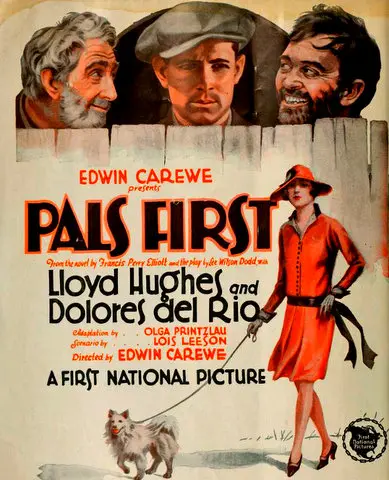
Is Pals First (1926) a film that demands your attention a century later? Short answer: Yes, but only if you appreciate the slow-burn theatricality of silent-era melodrama and the early evolution of the 'gentleman thief' archetype. It is a film that rewards patience but punishes those looking for modern pacing.
This film is for enthusiasts of 1920s Southern Gothic stories and those tracking the early Hollywood career of Dolores Del Río. It is not for viewers who find the 'identical lookalike' trope too far-fetched to maintain suspension of disbelief.
1) This film works because of the palpable chemistry between the central trio of 'crooks' and the genuine tension created by the Southern setting.
2) This film fails because the central twist is telegraphed too early for modern audiences, making the middle act feel like it is spinning its wheels.
3) You should watch it if you enjoy stories where class boundaries are challenged by characters who perform nobility better than the nobles themselves.
Pals First is a fascinating relic. At its core, it is a story about the performance of class. When Danny Rowland (Lloyd Hughes) enters Winnecrest Hall, he isn't just a man pretending to be Richard Castleman; he is a man inhabiting the ghost of an aristocrat. The film leans heavily into the visual language of the era to distinguish between the 'real' and the 'fake.' Hughes does an admirable job of shifting his posture, moving from the slouched, weary gait of a wounded traveler to the rigid, commanding presence of a plantation owner.
One specific moment that stands out is the first dinner scene. Rowland must navigate a minefield of social cues and domestic memories. The camera lingers on his hands—hesitant, then firm—as he interacts with the silver and the servants. It is a tense sequence that mirrors the anxiety of the 'imposter' subgenre seen in later films like My Lady's Garter, where the protagonist is always one slip-of-the-tongue away from ruin.
The supporting cast adds a layer of 'crook comedy' that balances the heavy melodrama of the romance. Alec B. Francis as 'The Dominie' and George Cooper as 'The Squirrel' are more than just sidekicks. They provide a meta-commentary on the film's events. By posing as an English cleric and an Italian count, they highlight the absurdity of the very social structures Chilton is trying to protect. Their performance-within-a-performance is the comedic engine of the film.
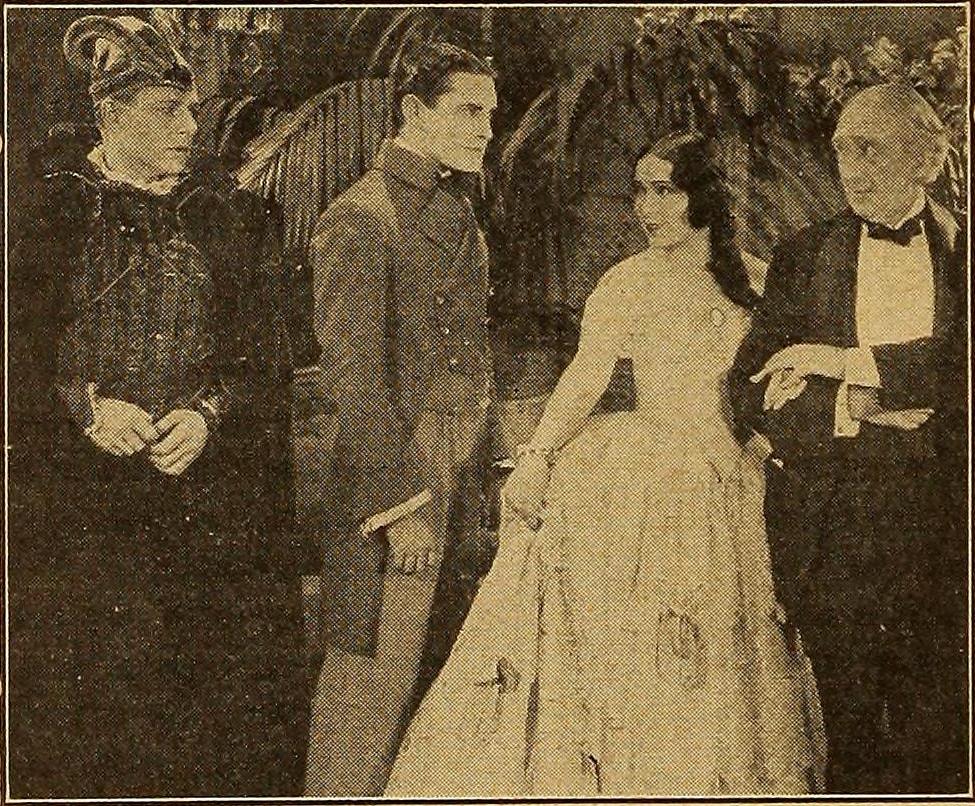
While Lloyd Hughes carries the narrative weight, Dolores Del Río provides the emotional anchor. In 1926, Del Río was on the cusp of superstardom, and her portrayal of Jeanne Lamont explains why. She possesses a screen presence that is both ethereal and grounded. Unlike many silent actresses who relied on exaggerated pantomime, Del Río uses her eyes to convey a complex mixture of grief, hope, and burgeoning suspicion.
The tragedy of her character is the film’s most debatable element. Is it cruel for Castleman to 'test' her in this way? The film frames his deception as a necessary ruse to expose Chilton, but the emotional toll on Jeanne is immense. When she looks at Rowland, believing her dead fiancé has returned, the vulnerability in her performance is heartbreaking. It makes the eventual reveal feel almost like a betrayal of the audience’s empathy. It works. But it’s flawed.
Contrast this with the villainy of Harry Chilton, played with a slinking, bureaucratic malice by Edward Earle. Chilton is the quintessential 'wolf in sheep's clothing.' His villainy isn't loud or physical; it is a slow poisoning of the family legacy. This dynamic of the 'internal threat' vs. the 'external savior' is a common trope, yet here it feels specifically tied to the decline of the Southern estate, a theme explored with different tonal shifts in A Son of the Hills.
The cinematography by Edwin Carewe’s team (though Carewe directed, the visual style is distinct) utilizes the Louisiana landscape to great effect. The moss-draped oaks and the sprawling shadows of Winnecrest Hall aren't just background; they are active participants in the secrecy of the plot. The lighting in the library scenes, specifically when Chilton is searching for the documents to secure the estate, uses high-contrast shadows that predate the noir aesthetic by nearly two decades.
The pacing, however, is where the film shows its age. The transition from the sea voyage setup to the arrival of the vagabonds takes a considerable amount of time. Modern viewers might find the expositional title cards tedious. However, once the trio is established at the hall, the film finds its rhythm. The 'unmasking' sequence is a highlight of silent film editing, cutting between the anxious faces of the trio and the triumphant, sneering face of Chilton.
One surprising observation is the film’s treatment of the 'crooks.' In many films of this era, like Graft, criminals are often portrayed as irredeemable or purely comic. In Pals First, there is a genuine sense of brotherhood—the 'pals' of the title. Their loyalty to Rowland, and his to them, is the film's moral compass. It suggests that true nobility is found in loyalty, not in bloodlines or physician's titles.
For the casual moviegoer, Pals First might feel like a redundant exercise in tropes that have been done better in the sound era. However, for those interested in the history of the 'Double Role' or the development of the mystery genre, it is a vital watch. It lacks the kinetic energy of The Mystery Box, but it makes up for it with atmospheric depth and character-driven stakes.
The film asks a fundamental question: If a man acts like a gentleman, treats a woman with honor, and protects a home, does it matter if his name is Rowland or Castleman? The twist ending provides a literal answer, but the journey there explores the gray areas of identity that were quite sophisticated for 1926. It is a film that takes a stance on the side of the underdog, even when that underdog turns out to be the master of the house in disguise.
Pals First (1926) is a sturdy, well-crafted piece of silent cinema that survives on the strength of its performances and its atmospheric setting. While it doesn't reinvent the wheel, it rolls it with a certain Southern grace that is hard to find in the more frantic comedies of the same year, such as The Milky Way. It is a story about the masks we wear and the people who see through them. If you can look past the dated plot devices, you will find a film with a surprising amount of heart and a cynical edge regarding the 'honesty' of the upper class. It’s a worthwhile trip to Winnecrest Hall, even if you know the secret behind the door before you arrive.
IMDb —
1934
Community
Log in to comment.