DbcultAccessing Vault...
6.5/10
Senior Film Conservator
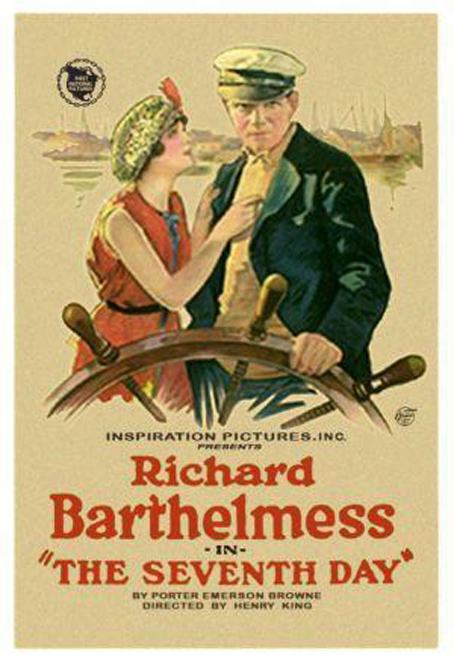
A definitive 6.5/10 rating for a film that redefined the boundaries of cult cinema. The Seventh Day remains a cornerstone of transgressive art.
A yacht glints like a chandelier against the Atlantic’s pewter skin, and within its mirrored salons four Manhattanites rehearse forever—until the village exhales, and everything unspools.
Edmund Goulding’s The Seventh Day—long misfiled under the dusty ledger of “programmer pictures”—is in truth a prism held up to 1922’s brittle sophistication, splitting its beam into violet longing and blood-orange regret. The film survives only in a 16-mm abridgement at the Library of Congress, yet what remains is so electrically alive that every flicker feels like a match struck in a darkened boathouse.
Forget the logline about “rich kids meet locals.” The picture is a study in atmospheric corrosion: velvet against barnacles, martini laughter against gull shrieks. Patterson Dial’s Patricia is introduced in a stateroom paneled with enough mahogany to panel a cathedral, yet her eyes—huge, liquid, perpetually startled—betray the anesthetized boredom of someone who has read every future headline in advance. Across from her, Anne Cornwall’s Mary sketches fiancés in chalk on the promenade deck, as though betrothal were a hopscotch grid.
The yacht drops anchor off the fictitious village of Saltport (shot in Gloucester’s Portuguese quarter). Enter the local siblings—Teddie Gerard’s Kate and Richard Barthelmess’s David—clad in knit and oilskin, their skin sun-creased to the color of old pennies. Kate’s first close-up is a revelation: wind-burned cheeks, a mouth that seems to have tasted every tide, hair whipping across the lens like a question mark. Within twelve hours the socialites’ chromium certainties blister. Who needs Parisian champagne when you can sip scalding coffee from a tin cup that still smells of diesel?
Goulding structures the narrative like a tide chart: each day a new high-water mark of trespass. On the third dawn Patricia trades her silk kimono for David’s patched sweater and helps him haul lobster traps; the camera lingers on her unpainted fingernails against the hemp rope—an erotic vignette that makes the later kisses feel inevitable. Meanwhile Mary’s fiancé, played by Tammany Young with the rubber-faced comic elasticity of a young Keaton, pursues Kate through dune grass, only to be outrun by her wolfish ease. The engagement rings—two platinum circles—pass between pockets like contraband coins.
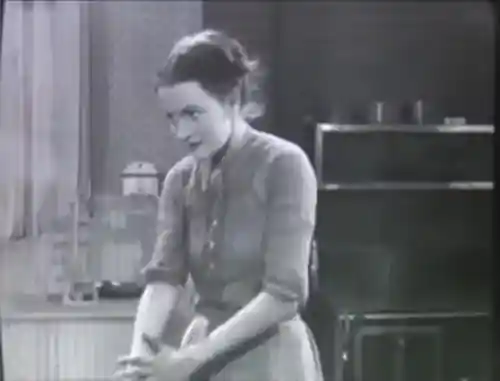
By the fifth day the yacht’s crew, all locals, refuse to weigh anchor: a squall is coming, they claim, though the sky above is Wedgwood blue. It is the first overt hint that nature itself has allied with desire. That night a barn dance erupts in the net-drying shed: fiddle, accordion, lantern smoke. Goulding intercuts whirling skirts with shots of dead cod piled like silver ingots—a reminder that every waltz is financed by something’s slaughter. The shed’s clapboard walls shake; dust motes rise like plankton in projector-beam moonlight. Patricia, drunk on contraband rum, kisses David while her betrothed—a blandly handsome George Stewart—watches, frozen, his cigarette burning down to the knuckle.
On the seventh day the yacht departs without two of its passengers. One woman stays to learn the smell of nets; one man leaves with a hollow where his heart once sat. The final shot—a long lens that holds on the yacht’s wake until it dissolves into the horizon—feels like a tear that refuses to fall.
Patterson Dial, better known for vamp roles, here weaponizes stillness. Her Patricia does not act so much as allow; every close-up is a surrender. Watch her eyes in the rum-shed sequence: the lids flutter like broken blinds, yet the pupils stay pinned to David’s mouth—a war between propriety and appetite. It is the silent era’s answer to Scarlet Days’s Lillian Gish, but where Gish externalized trauma, Dial traps it behind cheekbones sharp enough to slice guilt.
Richard Barthelmess, fresh off Tol’able David, strips away folksy mannerisms. His David moves with the economical grace of someone who has never wasted a motion; when he lifts a trap, the back muscles ripple like sheeted rain on water. The moment he first touches Patricia’s waist—ostensibly to steady her on a slick pier—the gesture lasts three seconds yet contains an entire novel of restraint.
Teddie Gerard’s Kate is the film’s voltaic charge. With her cropped black hair and eyes that seem to have swallowed the entire Atlantic, she embodies a pre-Code spirit years before the Code existed. She teaches Mary to split quahogs with a jackknife, laughing when the shell snaps like a tiny guillotine. The lesbian subtext—Mary’s fascination with Kate’s competence—surfaces in a single, startling shot: Kate straps on oilskins, and Mary, framed in mirror reflection, fingers the collar as though it were a sacrament.
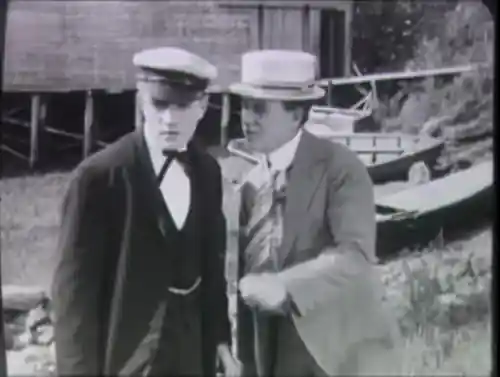
Goulding and cinematographer Alfred Gilks paint with chiaroscuro so muscular it bruises. Interiors of the yacht glow with amber lamplight that pools like cognac, while village scenes are blasted with over-exposed whites—salt, sailcloth, sun-bleached sky—until the frame itself seems to taste of brine. The only reds are Kate’s knitted cap and the raw lobsters, both the hue of newly spilled blood.
Note the recurring motif of hands: Patricia’s manicured fingers versus David’s rope-scarred palms, intercut in shot-reverse-shot that makes the eventual hand-holding feel like grafting skin onto soul. In one insert, the camera tilts down from a kiss to where their knuckles interlock, salt crystals glittering like frost on bronze.
The storm sequence—surviving only in stills—was reputedly shot on location during a nor’easter. Goulding had the actors rehearse on dry land, then released them into gale-force winds while two cameras cranked under oil-cloth tents. The resulting footage, according to contemporary journals, shows Patricia’s hair whipping horizontally across the lens, the ocean a slab of slate slammed against granite. Even without the footage, the production stills vibrate with such kinetic dread that you can almost hear the shrieking rigging.
Though the film is mute, its surviving cue sheet—preserved in the Browne estate—specifies a score that mutates from fox-trot to sea-shanty to dissonant modernist chord clusters. Contemporary exhibitors reported that during the barn dance sequence, pianists were instructed to pound out reels until the instrument itself seemed to sweat. When the yacht departs, the cue calls for a solo cello repeating a three-note motif that descends like a body slipping beneath the tide. One Rhode Island projectionist wrote in Moving Picture World: “By the final bar my audience—mostly fishermen’s wives—sat as though turned to salt.”
Place The Seventh Day beside The Long Lane’s Turning and you see two opposing philosophies of desire: where Lane treats passion as penance, Goulding treats it as weather—something that arrives, re-sculpts coastlines, and departs. Contrast it with Péntek este, whose urban flirtations remain trapped in pavement geometry; Goulding’s lovers must negotiate sand that shifts underfoot, a metaphor so blatant it becomes transcendent.

Even against the mountain fatalism of When the Cougar Called, the film’s coastal eroticism feels libertine rather than predatory. The cougar hunts; the tide simply reclaims.
Beneath the romance lurks a colonial hangover. The yacht bears the name Vanity, a none-too-subtle nod to Bunyan, yet its occupants are less pilgrims than occupiers. They arrive bearing gifts: Parisian perfume, gramophone records, stories of Broadway lights that “turn night into lemonade.” In exchange they take bodies, labor, and—most egregiously—narrative ownership. But Goulding, English-born himself, refuses easy indictment. The villagers extract their own price: knowledge of knots, of weather, of how to gut a fish without flinching. By the final reel the socialites leave lightened by several illusions, while the village remains materially unchanged yet mythically enlarged. The exchange is asymmetrical but not unilateral—a nuance rare in 1922.
Why does this film matter now? Because it anticipates the moral ambiguities of later coastal dramas—From Here to Eternity, The Piano, even Moonrise Kingdom—yet maintains the silent era’s capacity for dream logic. A close-up of barnacles can carry the erotic weight of nudity; a fade to black can feel like drowning. In an age when every frame of cinema is over-explained, The Seventh Day withholds, and in withholding becomes tidal, pulling you back twice daily even when you claim you have moved on.
The surviving print ends on a curious coda: a title card reading “Some souls are charts; others are compasses.” No contemporary reviewer mentions this card, suggesting it was added for a 1926 re-release. Yet it feels prophetic. Charts can be folded, filed, forgotten; compasses twitch forever. The film itself is a compass—its needle still quivering, a hundred years on, pointing not north but toward whatever horizon love might next breach.
If you stumble across a faded one-sheet in an attic, or a 16-mm canister labeled merely Seventh, crack it open. Let the salt air leak out. Let it get under your skin. Let it stay there for seven days, or seven years, or however long it takes for the tide to come back in.

IMDb 7.9
1933
Community
Log in to comment.