DbcultAccessing Vault...
Cult Review
Senior Film Conservator
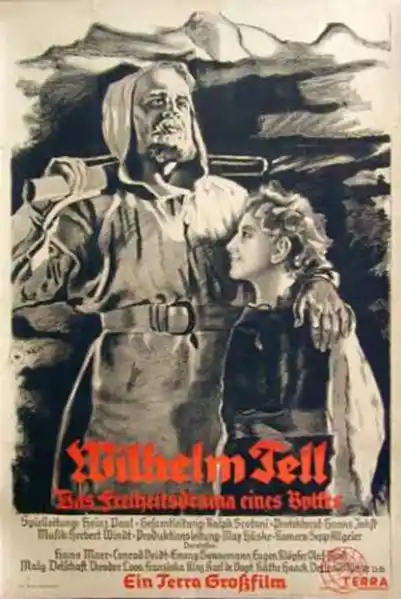
Alright, look, if you’re deep into early German cinema or have a soft spot for historical dramas, especially those tackling famous legends, then *They'll Never Surrender* might just be a peculiar, interesting watch for you. But for most folks just looking for a good movie night? You’ll probably find this one a bit of a slog. It’s got a certain charm, but it demands patience. 🕰️
The film takes on the William Tell story, which is a classic. You know the one: brave archer, mean Austrians, and that infamous apple on his son's head. It's a tale of defiance, pure and simple, and this 1933 version really leans into that.
From the get-go, the mood is pretty heavy. The Austrian overlords, especially Gessler, played by Werner Schott, are just *so* smug. You really feel the oppression, even if some of their evil acts are shown a bit stiffly. Like, they're always just… there, looming. Not much subtlety.
The whole apple scene, obviously, is the big moment. You’re waiting for it. And when it finally arrives, it’s… quick. Almost too quick, like they didn’t want to dwell on the sheer horror of it. Till Klockow, who plays Walter, Tell's son, just stands there, little kid, completely still. You feel a knot in your stomach. Then William Tell, played by Edmund Willard, does his thing. It’s almost understated, but the tension is thick enough to cut.
After the shot, there's this weird moment where Walter just stares at the apple. Not crying, not relieved, just *staring*. It's a small detail, but it stuck with me. Like, what does a kid even process there? 🤔
A lot of the film feels like staged theater, which isn't surprising for its time. The crowds, for instance, often feel a bit too organized, like everyone got their mark and was told exactly how to look angry or scared. There’s a scene where the villagers are gathered, and everyone’s got this intense, fixed gaze. It’s a bit much.
Conrad Veidt is in this, and he’s always a presence. He doesn't have a huge amount of screen time, but when he's there, you notice him. He brings a certain gravitas, even if the script doesn't always give him a ton to work with. He just has that *look*.
The pacing is… deliberate. Very deliberate. There are long stretches of people talking or just looking worried. You can almost feel the movie trying to make every single moment matter. Sometimes it works, sometimes you just want them to get on with it.
The landscapes are pretty striking, though. Lots of big, sweeping shots of mountains and valleys, giving you a real sense of the Swiss setting. It’s a nice contrast to the sometimes claustrophobic feel of the Austrian garrisons. The black and white cinematography here really shines.
One odd thing: there are several times characters just sort of disappear from a scene without much explanation. Like they walked off camera and everyone just went with it. Maybe it was a filming choice, but it felt a little jarring, honestly. Like, wait, where did he go?
The film's message about standing up to oppression is super clear, almost to the point of being shouted. It's all about liberty and national pride, which, given the year it came out (1933), probably resonated pretty strongly in Germany. You can definitely feel that undercurrent of fervent nationalism. It’s not subtle.
Overall, They'll Never Surrender is a historical curiosity. It’s not a fast-paced action flick, not by a long shot. It’s a weighty, somewhat stiff interpretation of a timeless story, with some really strong visuals and a few genuinely tense moments.
For those interested in the evolution of cinema or just the William Tell legend itself, it offers a window into filmmaking from nearly a century ago. For everyone else, maybe put on a documentary instead. Or watch Mrs. Slacker if you want something completely different. 😉
IMDb 6.3
1927
Community
Log in to comment.