DbcultAccessing Vault...
5.7/10
Senior Film Conservator
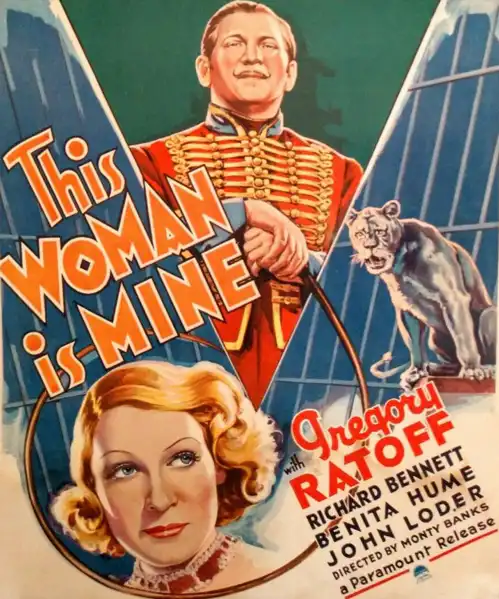
A definitive 5.7/10 rating for a film that redefined the boundaries of cult cinema. This Woman Is Mine remains a cornerstone of transgressive art.
If you have a soft spot for dusty 1930s melodrama and the smell of cheap circus sawdust, This Woman Is Mine is worth a lazy Sunday afternoon watch. People who love old-school theatrical acting and random dance breaks will find it charming, but if you can't stand crackly audio and plots that move like a tired donkey, stay far away. 🎪
Its a circus movie from 1935, which means everyone is either shouting their lines or looking incredibly tragic in sequins. The whole thing is directed by Monty Banks, who used to be a silent comedian himself, so there is this weird, frantic energy to the background actors.
Gregory Ratoff plays the ringmaster, and oh boy, does he shout. I think he forgot the microphones were actually working by 1935.
Everytime he comes on screen, the energy spikes, but you also kind of want to hand him a throat lozenge. He just waves his arms around like he is trying to swat a swarm of invisible bees.
Then you have John Loder, who is just incredibly handsome and sits there looking like a piece of very expensive, very stiff furniture. You can practically feel him waiting for his cue, his eyes darting slightly off-camera.
"The circus is my blood, Lida!"
Someone actually says that line with the enthusiasm of a man reading a grocery list. It’s amazing.
Then theres this girl Lida, played by Kathryn Sergava. She was actually a famous ballerina in real life, and the movie really wants you to know this.
There is a scene where she does a dance that feels like it belongs in a completely different, much classier movie. The camera just stares at her feet for what feels like five minutes.
It's beautiful, sure, but it completely kills whatever little momentum the plot had. It’s like the director just went, "Well, we paid for a ballerina, so we are going to watch her dance."
It reminds me of those old early-talkie experiments like The Lottery Bride where nobody quite knew if they were making a play, a musical, or a silent film with noise. Or maybe even some of the wacky stuff in Oh, Mabel Behave, where the silence is replaced by people just talking at each other.
There is a real clunkiness here that you don't get in modern movies, and honestly, that's why I like it. Did anyone notice how bad the animal props look?
There is a lion cage scene where you can clearly see the "beast" is just a very bored dog or a very sad looking taxidermy rug in some shots. And the lighting in the tent scenes is so inconsistent.
One second it looks like high noon, and the next, everyone is engulfed in pitch-black shadows like they're in a German expressionist film. It's these little mistakes that make me smile.
It's not a masterpiece, not by a long shot. But it has that cozy, scratchy record feel.
If you like finding weird little relics from the transition era of film, give it a go. Just don't expect it to change your life.
IMDb 5.7
1933
Community
Log in to comment.