
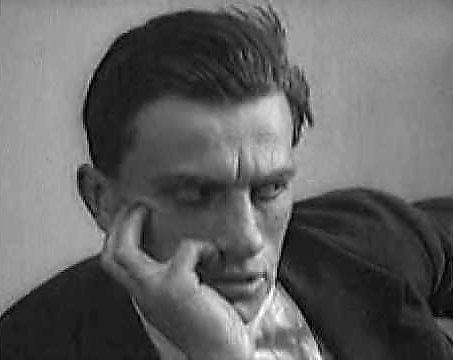
Vladimir Mayakovsky
actor, director, writer
- Birth name:
- Vladimir Vladimirovich Mayakovsky
- Born:
- 1893-07-19, Baghdati, Kutaisi Governorate, Russian Empire [now Baghdati, Imereti, Georgia]
- Died:
- 1930-04-14, Moscow, RSFSR, USSR [now Russia]
- Professions:
- actor, director, writer
Biography
Vladimir Mayakovsky, a titan of 20th-century Russian letters, emerged as the pioneering Futurist poet who forged a revolutionary poetic style, whose thunderous voice and rhythmic innovation prefigured modern spoken word artists. Christened Vladimir Vladimirovich Mayakovsky on July 19, 1893, he came into the world in Bagdadi, a town nestled in the Kutaisi province of the Transcaucasian kingdom of Georgia, then under the dominion of the Russian Empire (now an independent Georgia). The youngest of three children, he hailed from a Russian-Ukrainian lineage. His father, also Vladimir Mayakovsky, a Russian Cossack, served the Imperial Ministry as a forest ranger, while his mother, Alexandra Alekseevna, was Ukrainian. The boy Mayakovsky absorbed a vibrant, bilingual tapestry, with his mother speaking Georgian and his education unfolding in Russian, attending grammar school in Kutaisi. A profound shift occurred in 1906 when, at 13, Mayakovsky's father succumbed to blood poisoning from a finger cut. This tragedy led young Mayakovsky to relocate to Moscow with his mother and two sisters. During his turbulent adolescence, Mayakovsky steeped himself in the rich tapestry of multi-cultural influences from Transcaucasia and Russia. From 1906 to 1908, he studied at the Moscow Gymnasium before dropping out to immerse himself in the revolutionary fervor of the then-underground Communist Party of Russia. His association with communists led to three arrests, culminating in over six months endured in Moscow's Butyrskaya prison, where his defiant spirit even led to rule violations. It was within a solitary cell in 1909 that he penned his inaugural verses. Post-imprisonment, Mayakovsky declined formal membership in the Communist Party, a decision that prompted Vladimir Lenin to caution his comrades against trusting Mayakovsky and to closely monitor his activities and publications. Throughout the 1910s, Mayakovsky blossomed as an independent thinker and writer, honing his artistic sensibilities first at the Stroganov School of Art, then at the Moscow Institute of Painting, Sculpture and Architecture. There, he encountered the catalytic Futurist artist David Burlyuk, forging a dynamic partnership that resulted in numerous art exhibitions and publications. In 1912, Mayakovsky gravitated to St. Petersburg, a dazzling metropolis of wealth, cultural ferment, and cosmopolitan flair. There, he met Maxim Gorky, who proved pivotal in guiding his initial forays and introductions. Mayakovsky authored and staged his inaugural dramatic work, a tragedy titled 'Vladimir Mayakovsky,' which debuted on a St. Petersburg stage in 1913. It was around this time, at a dacha in the Levashovo suburb of St. Petersburg, that he encountered Lilya Brik, a woman who would irrevocably reshape his destiny. She became his muse, lover, and most intimate confidante, while her husband, Osip Brik, would later champion and publish his most significant works. In St. Petersburg, Mayakovsky unleashed his passionate poetic declarations: 'Cloud in the Trousers' (1915) and 'The Backbone Flute' (1916), boldly hinting at his burgeoning sexuality and the nascent ménage à trois with the Briks. Within the vibrant literary club "Brodyachaya Sobaka" (aka "Wandering Dog"), Mayakovsky crossed paths with the burgeoning poet Anna Akhmatova, her husband Nikolai Gumilev, and other luminaries of St. Petersburg's flourishing cultural scene. Korney Ivanovich Chukovskiy, a leading literary figure, hailed Mayakovsky as a genius, actively championing his verse. However, the period from 1914 to 1918 saw the cataclysmic First World War, two Russian Revolutions, and the ensuing Russian Civil War unleash an epoch of devastation, poverty, and instability. Mayakovsky himself was conscripted into service at the Petrograd Military Automobile School from 1915 until August 1917. Following the Revolution of 1917, he remained in Petrograd (St. Petersburg), where he helmed a Futurist paper and edited influential art magazines like "Iskusstvo" and other projects. In 1918, Mayakovsky stepped onto the silver screen, appearing in three silent films produced at Neptun studio in St. Petersburg. He graced the screen as an actor, co-starring opposite Lilya Brik in 'Zakovannaya filmoi' (1918), which he also wrote, and in 'Nye dlya deneg radivshisya' (1918); both films were directed by Nikandr Turkin. Mayakovsky also featured in 'The Young Lady and the Hooligan' (1918), a film he co-directed. Concurrently, his stage-play 'Mystery-Bouffe' (1918) premiered at a St. Petersburg theatre. By mid-1919, he returned to Moscow from St. Petersburg, sharing a modest room in a communal apartment with his friend and lover, Lilya Brik. For a period, he lent his talents as designer and poet to propaganda efforts at ROSTA, the Russian Telegraph Agency. His Moscow coterie comprised cultural figures such as Osip and Lilya Brik, alongside their friends: artists and filmmakers like Sergei Eisenstein and Alexander Rodchenko, and writers Boris Pasternak and Viktor Shklovskiy, among others. Mayakovsky and Brik co-founded and published the avant-garde and leftist journal 'LEF' with Lev Kuleshov, Dziga Vertov, and Sergei Yutkevich, a platform where they stood in fierce opposition to the prevailing official Soviet culture. Mayakovsky’s radicalism knew no bounds; he advocated for a complete rejection of historical and traditional culture, including 19th-century literary giants like Aleksandr Pushkin and Lev Tolstoy, as well as classical art. Simultaneously, he railed against the insipid official "proletariat" propaganda and conformist Soviet mass-culture. His biting satirical plays, 'Klop' (aka 'Bedbug') and 'Banya' (aka 'Bath'), though staged by director Vsevolod Meyerhold, were swiftly suppressed. Mayakovsky was a prolific contributor to the burgeoning Russian-Soviet film industry as a writer, actor, and director. He also co-wrote the scenario for Lilya Brik's film 'Yevrei na zemle' (1927). Throughout the 1920s, Mayakovsky embarked on extensive travels across Europe and America, cultivating a rich tapestry of cosmopolitan experiences. In Paris, he visited the studios of Pablo Picasso and Fernand Léger. In America, he fathered a daughter, Patricia Thompson, with Russian-American émigré Elli Jones (Elisaveta Petrovna). In Europe, he engaged in another relationship with a Russian émigré actress. During this time, he observed the financial struggles of many Russian émigré writers and poets in the West, such as Anastasiya Tsvetaeva. Back in Russia, his success was so pronounced that he acquired a new Renault automobile and employed a private chauffeur, comrade Gamazin, who, unbeknownst to Mayakovsky, was also a clandestine informant for the Soviet Security agency. By the late 1920s, Mayakovsky had ascended as a towering, electrifying presence in Soviet culture and politics – a poet, artist, actor, writer, director, and public speaker. His electrifying public performances frequently grated on Soviet officialdom. Mayakovsky channeled his untamed genius into virtually every facet of cultural and political life, eventually growing into a figure far too immense and independent for the Soviet officialdom to comfortably contain. His non-conformist and distinctly non-Marxist stance proved problematic, leading to ceaseless surveillance by Soviet authorities. Intellectuals celebrated Mayakovsky for his audacious subversion of literary rules and traditions, erupting with a bold and profoundly original poetic style. He was renowned for his fervent and intense public recitations, and equally notorious for his tumultuous relationships with women. His personal world remained a turbulent landscape for many years, pulled in multiple emotional directions by the various women in his life. On April 14, 1930, Mayakovsky was discovered dead, his demise accompanied by a characteristically sardonic farewell note. Soviet officials officially declared that Mayakovsky had shot himself directly in the heart, purportedly due to a breakup with actress Veronika Polonskaya. Ten days after Mayakovsky's death, the criminal investigator assigned to his case was also found shot dead. Mayakovsky was interred in Novodevichy Cemetery in Moscow. Lilya Brik and her husband Osip Brik became the custodians of the writer's archive. In 1935, five years after Mayakovsky's death, Lilya Brik penned a letter to Joseph Stalin, proposing the publication of Mayakovsky's collected works. Stalin, in a pivotal decree, not only approved Brik's proposal but mandated that Soviet publishers issue collections of Mayakovsky's "revolutionary" poetry. Thus, by Stalin's directive, Mayakovsky's "revolutionary" verse was enshrined in the Soviet school curriculum and reissued in colossal print runs. His own words echoed on screen in the film 'Mayakovsky itskeboda ase...' (1958), directed by Konstantine Pipinashvili, based on the autobiographical book "Ya -sam" (aka 'I-myself').
Filmography
In the vault (0)
No films in the vault yet.
Knowledge Base
Frequently Asked Questions about Vladimir Mayakovsky
Community
Comments
Log in to comment.