Summary
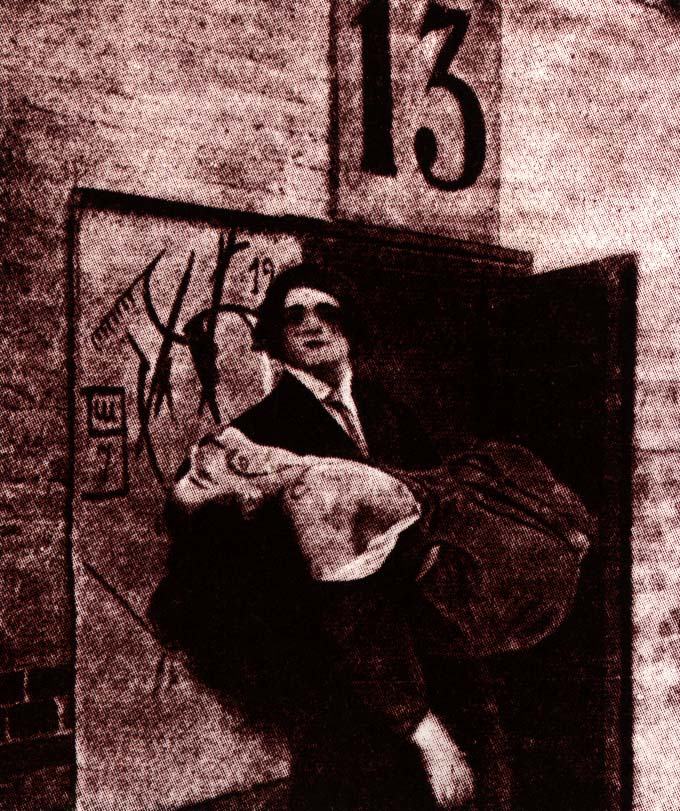
Within the cacophonous, smoke-laced confines of Cabaret No. 13, a crucible of nascent modernism, the very essence of artistic revolution ignites. The film plunges headlong into a visceral confrontation between the ossified conventions of the past and the audacious, velocity-driven aesthetic of Futurism. A 'Critic,' a sartorially precise embodiment of conservative taste, enters this maelstrom, his presence a stark counterpoint to the anarchic energy pulsating through the venue. On a makeshift stage, the 'Poet' (Vladimir Mayakovsky, a towering figure of verbal insurgency) unleashes a torrent of implied verse, his every gesture a defiant rupture with lyrical tradition. Simultaneously, 'Painters' (Vladimir Burlyuk, David Burlyuk, Michael Larionov, Natalia Goncharova — the avant-garde pantheon) engage in a frenetic, almost violent act of creation, their brushes slashing across canvases, conjuring abstract forms that reject mimetic representation. The Critic’s initial disdain curdles into palpable agitation as a 'Dancer' performs a series of jarring, angular movements, a human machine articulating the rhythm of a new industrial age. The ensuing 'drama' is less a narrative and more a kinetic ballet of ideological warfare: the artists, a united front of radical visionaries, physically and symbolically overwhelm the Critic. His world, built on predictable beauty and established order, is metaphorically shattered by the sheer force of Futurist audacity. The film culminates not in resolution, but in a triumphant, chaotic embrace of the future, leaving the audience to grapple with the exhilarating debris of a demolished past.
Review Excerpt
"
Stepping into the spectral glow of Drama v kabare futuristov No. 13 is less an act of viewing a film and more an immersion into a kinetic, historical artifact. This isn't merely a silent picture; it’s a time capsule, pulsating with the defiant energy of Russian Futurism, a movement that sought to shatter the shackles of tradition and propel art into the dizzying, exhilarating velocity of the modern age. To dissect this cinematic fragment is to excavate the very foundations of avant-garde ex..."