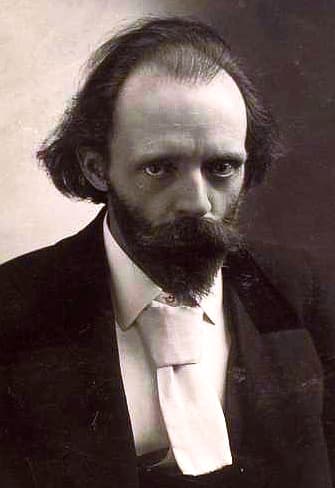
Hall Caine
writer
- Birth name:
- Sir Thomas Henry Hall Caine
- Born:
- 1853-05-14, Runcorn, Cheshire, England, UK
- Died:
- 1931-08-31, Isle of Man, UK
- Professions:
- writer
Biography
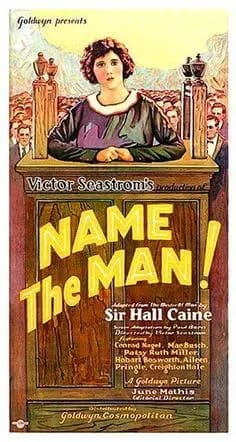
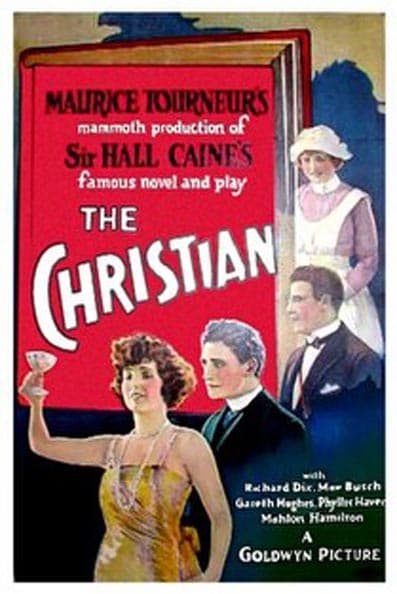
"Once a literary titan of the late Victorian and Edwardian eras, the name Hall Caine now barely echoes in the annals of English literature, despite his immense celebrity in his time. Born Thomas Henry Hall Caine on May 14, 1853, in Runcorn, Cheshire, England, he quickly shed the 'Thomas' he despised, a name he never used even after his knighthood. His father, a Manxman who had apprenticed as a ship's smith in Liverpool, soon returned the family to that city where young Hall spent his formative years. Regular sojourns to the Isle of Man kept him connected to his Manx heritage. His initial path was practical, apprenticed as an architect and surveyor, a profession he practiced while voraciously self-educating through extensive reading. This intellectual curiosity led him to become a lecturer and theatrical critic, opening doors to influential figures like actor Sir Henry Irving and author Bram Stoker, who notably dedicated his novel Dracula (1931) to Caine. A pivotal role found him serving as secretary, factotum, and nurse during the final years of the revered poet Dante Gabriel Rossetti. While a well-received memoir of Rossetti marked an early success, Caine's initial forays into serious literature struggled to find an audience. However, a strategic pivot from literary criticism to romantic fiction, echoing the grand tradition of Walter Scott, ignited his career. His 1885 novel, \"Shadow of a Crime,\" a tale woven around a compelling love triangle, soared to bestseller status. Though his 1887 critical work on Samuel Taylor Coleridge faltered, Caine's return to fiction that same year proved triumphant with The Deemster (1917), a gripping romance set on his beloved Isle of Man, where a 'deemster' serves as a judge. Over four decades, Caine penned 15 romantic novels, many imbued with his Christian socialist leanings. His popularity was extraordinary; \"The Christian\" (1897) not only became a film (titled The Christian, 1915) but also shattered sales records, becoming the first novel in the United Kingdom to surpass a million copies. His fame was such that in August 1902, during their visit to the Isle of Man, King Edward VII and Queen Alexandra (a known admirer) invited Caine aboard the royal yacht. He was not merely a celebrated author but a celebrity in his own right. The Great War saw Caine engage in wartime rhetoric, contributing propaganda articles that implored the United States to join the Allied cause against Germany and her allies. He declined a baronetcy in 1917 but accepted a knighthood, famously insisting on the style Sir Caine Hall. Yet, as the war concluded, the tide of public taste began to turn, and his narrative style was increasingly perceived as antiquated. His 1921 return to fiction, \"The Master of Man: The Story of a Sin,\" another Isle of Man romance, failed to recapture his former popular acclaim and faced a harsh critical reception, drawing derision for its 'Victorian' sensibilities. His prolific output during the silent film era led to numerous adaptations. Alfred Hitchcock himself directed The Manxman (1929), based on Caine's novel. The final cinematic translation of his work, The Bondman (1929), also premiered in 1929. So profound was the eclipse of his reputation and popularity that no sound film has ever been made from his extensive body of work. Today, Caine's literary legacy is largely overlooked, his novels often dismissed as poorly constructed, with indistinct characterizations and repetitive plots. G.K. Chesterton's 1931 literary epitaph encapsulated this decline: \"Bad story writing is not a crime. Mr. Hall Caine walks the streets openly, and cannot be put in prison for an anticlimax.\" Hall Caine passed away on August 31, 1931, at the age of 78, the same year Chesterton delivered his cutting assessment. He was survived by his son, Sir Derwent Hall Caine, 1st Baronet (1891-1971), who carved out his own path as an actor, publisher, and Labour politician."