
J. Searle Dawley
cinematographer, director, writer
- Birth name:
- James Searle Dawley
- Born:
- 1877-05-13, Del Norte, Colorado, USA
- Died:
- 1949-03-30, Hollywood, California, USA
- Professions:
- cinematographer, director, writer
Biography
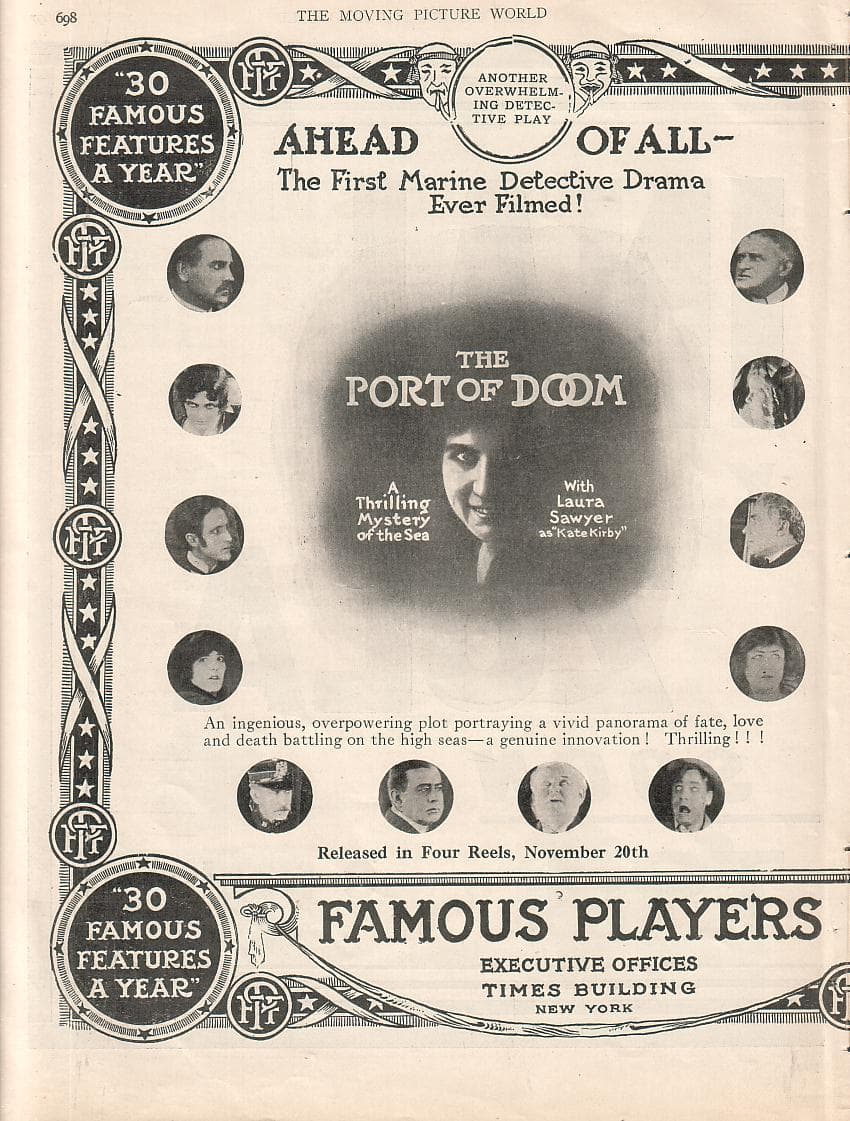
J. Searle Dawley, who staked his claim as the pioneer of professional film direction, emerged from the rugged plains of Del Norte, Colorado, on May 13, 1877, as James Searle Dawley. His journey through the nascent entertainment world began in Denver, where he honed his craft after graduating in 1895. Initially lured by Louis Morrison’s theatrical touring company, Dawley found his aspirations dashed when the tour collapsed, forcing him back to Denver. Undeterred, he reconnected with Morrison’s troupe in 1897, this time embracing both the stage and its behind-the-scenes mechanics as actor and stage manager for three formative years. By 1902, he’d transitioned to vaudeville, balancing performance with writing before joining the Spooner Stock Company as a triple threat—actor, writer, and stage manager. His big break arrived in 1907 when Edison Company’s Edwin S. Porter enlisted him to direct *The Nine Lives of a Cat*, marking Dawley’s assertion as the first paid film director in America. He argued that prior to his appointment, "the cameraman reigned supreme," while his role expanded to stewarding performances and narrative flow, not just capturing action. This distinction cemented his legacy. At Edison, he guided D.W. Griffith’s debut in *Rescued from an Eagle’s Nest* (1908), a silent spectacle featuring a lifelike, though bewildered, taxidermied eagle—a stunt that thrilled early cinema audiences. By 1910, Dawley had pivoted to California, establishing Long Beach’s Balboa Studio, named after explorer Vasco Núñez de Balboa, to serve Edison’s West Coast ambitions. The studio, spanning 20 buildings and an expansive Signal Hill backlot, became a hub for innovators like Henry King and William Desmond Taylor. Dawley’s résumé brimmed with milestones: the first film adaptations of *Frankenstein* (1910) and *The Charge of the Light Brigade* (1912), over 200 one-reelers, and a 1913 collaboration with Adolph Zukor’s Famous Players following Edwin Porter’s defection. After a brief stint founding his Dyreda studio in 1913—quickly absorbed by Metro Pictures—he helmed the first live-action *Snow White* (1916), starring Marguerite Clark, a project that captivated young Walt Disney. His 1918 *Uncle Tom’s Cabin* and 1923’s *Broadway Broke* punctuated a career spanning silent cinema’s golden age. Beyond the camera, Dawley’s legacy thrived in advocacy. In 1915, he helped found the Motion Picture Directors Association (MPDA), a precursor to the Directors Guild of America, born from a clandestine meeting of eight directors seeking to combat industry corruption, from exploitative casting practices to moral decay. As secretary, Dawley championed the MPDA’s dual mission: elevating directors’ status and fostering unity amid growing scrutiny of Hollywood’s "cesspools." The organization’s Masonic-inspired structure, annual fundraising galas for veterans, and wartime loyalty pledges underscored its social and political clout—until Louis B. Mayer’s 1929 Academy of Motion Picture Arts & Sciences diluted its influence. Dawley’s twilight years saw him pivot to radio, yet his indelible mark endured. The MPDA’s dissolution paved the way for the Screen Directors Guild in 1936, a movement he’d once envisioned. J. Searle Dawley, the self-ordained pioneer, not only shaped cinematic technique but ignited a directors’ rights revolution that echoed through Hollywood’s most pivotal decades.