DbcultAccessing Vault...
Cult Review
Senior Film Conservator
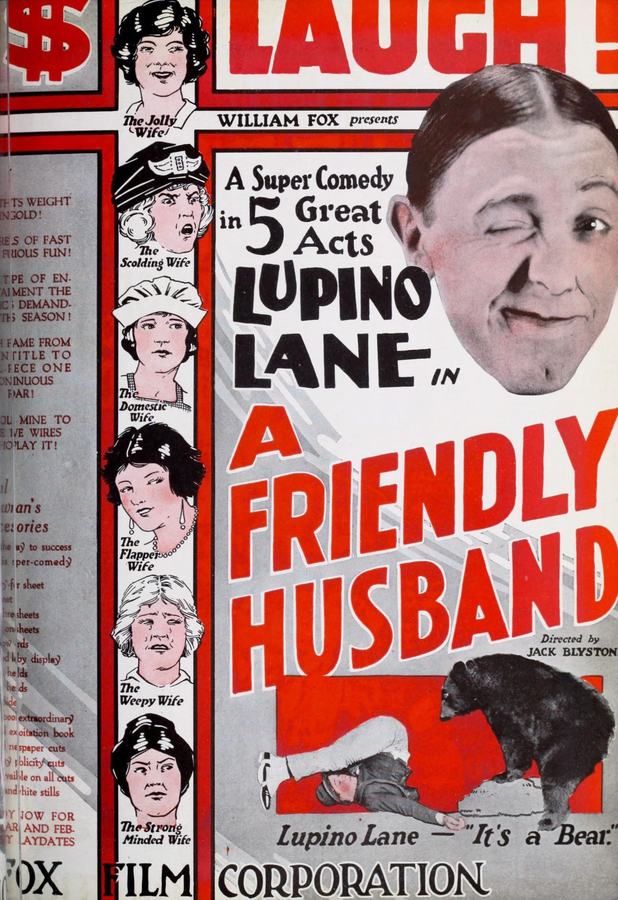
A Friendly Husband (1936) is a deceptively simple film that marries the slapstick traditions of 1930s American cinema with the rugged individualism of Western tropes. Directed by John G. Blystone, and written by Hampton Del Ruth, Ralph Spence, and John G. Blystone, the film orbits the delicate balance of a marriage tested by the weight of familial intrusion and societal expectations. The film’s appeal lies in its ability to oscillate between farcical domesticity and sudden bursts of action, all anchored by Lupino Lane’s performance as a husband whose amiability borders on martyrdom. Alberta Vaughn, as his wife, embodies a mix of affection and obliviousness, creating a dynamic that feels both familiar and refreshingly unpolished.
The film opens with Lane and Vaughn embarking on a camping trip, a modest retreat from urban life that quickly devolves into a logistical nightmare. Their trailer, a symbol of modern aspirations, becomes a microcosm of social disarray as Vaughn’s family—each member a caricature of self-centeredness—joins them at the last minute. Lane’s character, ever the pragmatist, assumes the roles of provider, problem-solver, and emotional anchor, while Vaughn’s family members bicker over trivialities. This setup, reminiscent of early Marx Brothers comedies, leans into the absurdity of domestic life amplified by proximity and lack of resources. The humor is derived not from physical gags alone but from the stark contrast between Lane’s quiet resilience and the cacophony of demands surrounding him.
What elevates *A Friendly Husband* beyond its sitcom-like structure is its sudden pivot into Western genre territory. The final act introduces a gang of bandits, their attack on the campsite transforming the film’s tone from lighthearted to operatic. Lane’s character, previously dismissed as a passive husband, reveals an unexpected physical prowess and tactical acumen. This shift is handled with remarkable seamlessness, the Western elements serving as both a narrative climax and a metaphor for the husband’s silent rebellion against the domestic constraints imposed upon him. The action sequence, though rudimentary by modern standards, is infused with a campy energy that feels entirely in keeping with the film’s overall aesthetic. The reward he receives for capturing the bandits—monetary and symbolic—acts as a cathartic resolution, rewarding his unspoken labors with tangible validation.
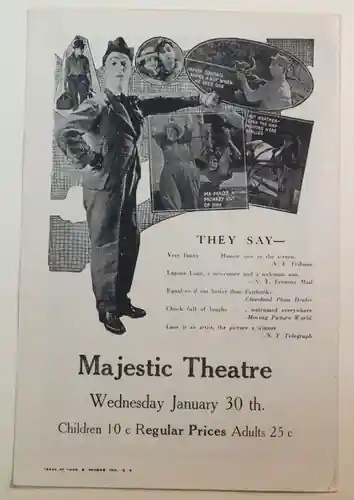
The film’s dialogue is a masterclass in understated wit. The writers—Del Ruth, Spence, and Blystone—leverage the era’s comedic sensibilities to craft exchanges that are both anachronistic and universally relatable. Lines like "You’ve been a one-man campsite since we left the city" or "I’d say you’re the best husband money can’t buy" are delivered with a deadpan sincerity that contrasts humorously with the escalating absurdity of the situation. The script also deftly incorporates period-specific references to economic hardship, subtly suggesting that the couple’s initial retreat into nature is a form of aspirational escapism. This layering of themes—marital roles, economic anxiety, and the illusion of leisure—gives the film a depth that belies its B-movie budget.
Lupino Lane’s performance is the film’s linchpin. He embodies a kind of everyman heroism, his expressions and gestures conveying a blend of exasperation, tenderness, and quiet determination. His physical comedy—such as the scene where he single-handedly repairs a collapsed tent while managing to prepare a meal—is executed with such precision that it transcends slapstick, evoking a sense of admiration for his character’s relentless positivity. Alberta Vaughn, while less showy, brings a charming warmth to her role, her interactions with Lane radiating a domesticity that feels both genuine and slightly anachronistic. The supporting cast, including the bickering relatives, is uniformly effective in their roles, their over-the-top behavior serving as a comedic counterbalance to the protagonists’ steadfastness.
The film’s cinematography and production design are modest but purposeful. The trailer itself is a character in the narrative, its cramped quarters and basic amenities a constant reminder of the couple’s aspirational middle-class status. The outdoor sequences, shot in what appears to be a hastily constructed forest set, are imbued with a rustic charm that enhances the film’s themes of simplicity and resilience. The transition to the Western-style attack is marked by a sudden shift in musical score and visual tone—drums replace lighthearted jazz, and the camera adopts a more dynamic, almost cinematic quality, despite the film’s limited resources. This tonal shift, while abrupt, is executed with such confidence that it becomes a narrative strength rather than a weakness.
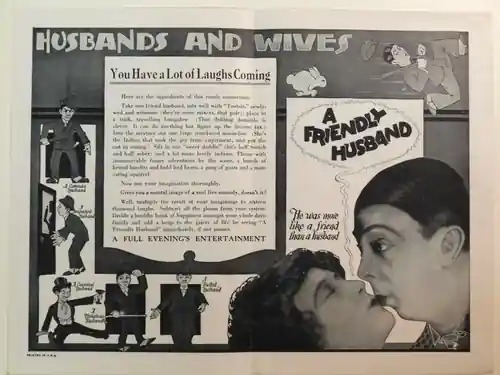
Comparisons to other films of the era are inevitable. The family-dynamics-driven humor of *A Friendly Husband* echoes the Marx Brothers’ *Duck Soup* (1935), though it lacks the latter’s anarchic genius. Similarly, the Western interlude bears faint resemblance to *The Fair Barbarian* (1936), another film that juxtaposes urban and frontier life, though *A Friendly Husband* is far less pretentious in its ambitions. The marital power dynamics explored here also find parallels in *Two Men and a Woman* (1936), where the central relationship is similarly strained by external pressures. Yet, *A Friendly Husband* distinguishes itself through its unapologetic focus on the husband as both comic figure and reluctant hero—a role rarely afforded to male characters in contemporary romantic comedies.
The film’s soundtrack is another subtle but effective element. The score oscillates between wistful piano melodies in the domestic scenes and brassy, rousing tunes during the action sequences. This duality reinforces the film’s thematic contrasts—peace vs. chaos, routine vs. adventure—and elevates the emotional stakes. The use of diegetic sound, such as the crackling of a campfire or the creaking of the trailer’s hinges, adds a layer of realism that grounds the film’s more fantastical elements.
In the broader context of 1930s cinema, *A Friendly Husband* occupies a niche that straddles the line between genre and social commentary. While it is not a groundbreaking film in terms of narrative innovation, its ability to blend humor with subtle critiques of gender roles and class aspirations is noteworthy. The film’s portrayal of the husband as a silent martyr, whose heroism is only recognized in a non-domestic context, invites reflection on the invisibility of care work in traditional narratives. This is a theme that gains new relevance in modern discourse, making the film a curiously prescient artifact of its time.
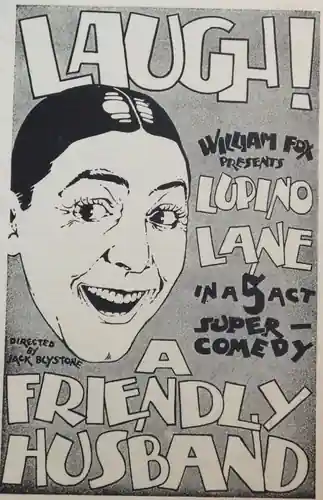
The film’s pacing is another element worth examining. At just under 60 minutes, *A Friendly Husband* maintains a brisk tempo that prevents any single scene from overstaying its welcome. The comedic set pieces are tightly constructed, with a rhythm that allows for both punchlines and character moments. The Western climax, while brief, is paced with a sense of urgency that propels the film toward its satisfying conclusion. This efficiency is a testament to the writers’ skill in balancing multiple narrative threads within a constrained runtime.
Cinematic tropes are handled with a wink and a nod, particularly in the portrayal of the bandits. Their exaggerated accents and over-the-top antics—clearly inspired by early Western serials—add a layer of self-aware humor that prevents the film from becoming too earnest. The resolution of the conflict, with the husband’s reward, is both a literal and symbolic victory, suggesting that the true battle has always been the invisible labor of maintaining a household. This duality—a literal fight against bandits and a metaphorical fight against societal expectations—gives the film a thematic richness that rewards closer scrutiny.
In terms of cultural resonance, *A Friendly Husband* offers a window into the 1930s idealization of middle-class life. The trailer, the camping trip, and the familial squabbles all serve as microcosms of a society in transition. The film’s humor, while not overtly political, gently critiques the gendered division of labor, even as it reinforces certain stereotypes. This tension between critique and convention is what makes the film a compelling study in its era’s cinematic values. It is a film that both reflects and subtly challenges the norms of its time, using comedy as a vehicle for social observation.
For modern audiences, *A Friendly Husband* may feel quaint in its execution, but its core themes remain strikingly relevant. The film’s exploration of marital dynamics, familial intrusion, and the quiet heroism of everyday life resonates in an age where work-life balance and gender roles continue to be contentious issues. While it lacks the narrative ambition of more celebrated films from the same period, its charm lies in its unpretentiousness. It is a film that trusts its audience to find joy in simplicity, and in doing so, it creates a lasting impression that transcends its modest origins.
In conclusion, *A Friendly Husband* is a film that deserves rediscovery by contemporary viewers. Its blend of humor, action, and social commentary may not be groundbreaking, but it is executed with enough flair and heart to make it memorable. The performances, particularly Lane’s, are a delight, and the film’s ability to pivot between genres is a testament to its creative audacity. For those interested in the evolution of American comedy or the intersection of domestic and frontier narratives, this film offers a fascinating case study. It is a reminder that even in the most formulaic of genres, there is room for nuance, humor, and a quiet celebration of resilience.
If you enjoyed *A Friendly Husband*, you might also appreciate Some Mind Reader for its blend of psychological intrigue and comedic timing, or The Fair Barbarian for its juxtaposition of urban and frontier life. For further exploration of marital dynamics in 1930s cinema, Two Men and a Woman provides a compelling counterpoint to the gender roles examined here.
IMDb 6.1
1933
Community
Log in to comment.