DbcultAccessing Vault...
Cult Review
Senior Film Conservator
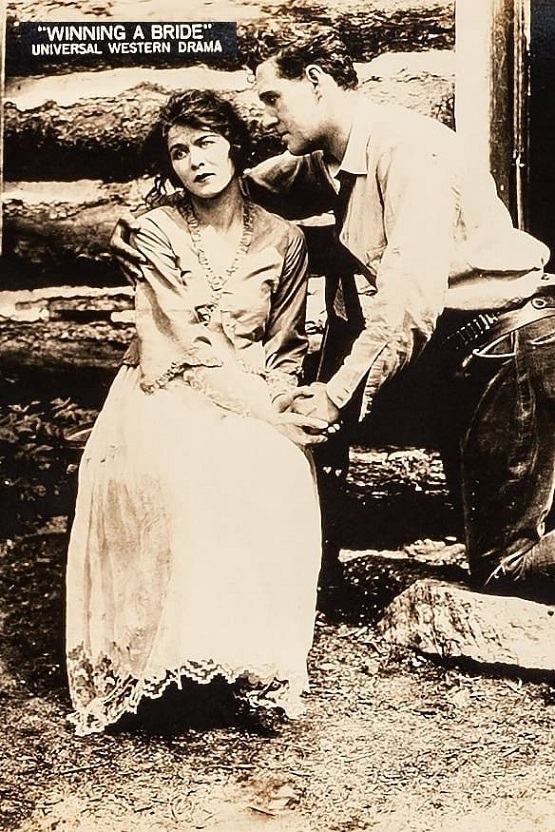
In the grand tapestry of early American cinema, where myth and nascent nationhood often intertwined, Winning a Bride (1919) emerges as a fascinating artifact, a cinematic snapshot of a bygone era's values and aspirations. This isn't merely a tale of a cowboy and a competition; it’s a profound exploration of what it meant to earn one's place, not just in a community, but in the heart of another, through trials that tested both brawn and character. The film, penned by the insightful duo of George Hively and William Pigott, transcends its seemingly straightforward premise to offer a compelling look at frontier life, where the stakes were always higher than just prize money.
At its core, Winning a Bride pivots around the figure of a ranch foreman, brought to life with understated power by Herbert Heyes. Heyes, a stalwart of the silent screen, imbues his character with a quiet dignity, a man whose actions speak far louder than any dialogue could. We see him not as a boisterous hero, but as a grounded individual, keenly aware of the unspoken rules of the frontier. His participation in the frontier day rodeo is not born of mere bravado, but of a deeper, more resonant purpose. This particular rodeo isn't just entertainment; it's a social crucible, a public declaration of worth and capability, a stage where reputation is forged in the dust and sweat of honest effort. It's an arena where a man demonstrates his fitness not just as a competitor, but as a potential partner, a protector, a provider. This societal ritual, observed by the entire community, transforms individual feats into collective judgments, making every rope thrown and every horse ridden a testament to one's very essence.
The narrative of Winning a Bride, while seemingly simple, is rich with subtext. The ranch foreman's journey through the rodeo events is a metaphor for the arduous path to acceptance and love in a rugged world. Each event—be it bronc riding, steer wrestling, or roping—is not merely a physical challenge but a symbolic hurdle, representing the trials a man might face in life and marriage. Heyes’s portrayal is masterful in its subtlety; his eyes, his posture, the quiet determination etched on his face, convey a depth of character that resonates even a century later. He is not a caricature of the Western hero, but a nuanced individual, driven by a desire that transcends the immediate thrill of victory. His focus isn't solely on the prize ribbon, but on the watchful gaze of Fritzi Ridgeway's character, the eponymous 'bride' whose affection is the ultimate reward. Ridgeway, though perhaps given less screen time to overtly express her character's inner turmoil, carries an elegance and quiet strength that makes her a compelling figure for whom such a grand public display of devotion feels earned. She isn't merely a passive prize; her presence elevates the foreman's efforts, lending them a romantic gravitas that ensures the audience invests emotionally in his triumph.
The film's exploration of masculinity is particularly noteworthy. Unlike some of its contemporaries, where heroism might be defined by gunfights or dramatic rescues, Winning a Bride champions a different kind of strength: competence, perseverance, and a deep-seated integrity. The foreman doesn't need to prove his worth through violence; his skill with a lariat and his ability to master a wild bronco are sufficient demonstrations of his capability and character. This aligns with a certain strain of Western storytelling that emphasizes the working man, the one who tames the land and builds communities, rather than just defending them. It's a nuanced take that allows Heyes to craft a character who is admirable not for his flash, but for his substance. This focus on practical skills and quiet heroism distinguishes it from films like Captain of the Gray Horse Troop, which, while also set in the West, might place a greater emphasis on military prowess or leadership in conflict.
The rodeo itself is more than just a backdrop; it's a dynamic character, a vibrant, chaotic tableau that encapsulates the spirit of the frontier. The dust, the shouts, the sheer physical exertion—all contribute to an immersive experience that transports the viewer back to a time when such events were major social gatherings, celebrations of skill, and opportunities for courtship. George Hively and William Pigott's script understands this implicitly, structuring the narrative around these events not just as plot points, but as vital expressions of cultural identity. Each event serves to highlight a different aspect of the foreman's character: his courage in the face of danger, his precision under pressure, his endurance. This incremental building of his heroic stature through tangible, observable feats makes his eventual 'win' feel deeply satisfying and well-earned.
The portrayal of the community, too, is crucial. They are not merely an audience but an active participant in the foreman's quest, their collective approval a significant factor in the perceived legitimacy of his success. Their cheers and gasps underscore the importance of these contests, elevating them beyond mere sport. This communal aspect is a recurring theme in many early Westerns, where individual narratives are often framed within the context of a developing society. The film subtly suggests that 'winning a bride' is not just a personal victory, but also a contribution to the social fabric, a promise of stability and continuation within the burgeoning frontier town. This communal judgment and the emphasis on public display of worth can be contrasted with more private battles for affection seen in films like To Have and to Hold, where personal desires might clash more directly with societal expectations.
Fritzi Ridgeway, as the object of the foreman's affections, brings a delicate yet firm presence to the screen. Her character is not a damsel in distress, but rather a woman observing, evaluating, and ultimately, choosing. Her reactions, often subtle and conveyed through gesture and expression, are integral to the film's emotional resonance. The 'winning' aspect of the title is not about ownership, but about earning respect and affection through demonstrated merit. This nuanced portrayal elevates the romance beyond a simple conquest, suggesting a partnership founded on admiration and shared values. It hints at a future where both individuals contribute to the success of their union, a far cry from the more transactional portrayals of marriage in some other films of the era, or even the more dramatic and often tragic outcomes explored in a film like Wedlock.
The direction, while perhaps not as overtly flamboyant as some of its contemporaries, is effective in capturing the raw energy of the rodeo and the quiet intensity of the human drama. The camera work, though limited by the technology of the time, manages to convey the scale of the events and the intimacy of the characters' emotions. The pacing is deliberate, allowing the audience to savor each victory and empathize with the foreman's journey. The film's aesthetic, with its emphasis on natural light and authentic settings, contributes to its enduring charm, offering a glimpse into a world that feels both distant and remarkably tangible. The writers, Hively and Pigott, demonstrate a keen understanding of narrative economy, allowing the visual storytelling to carry much of the emotional weight, a hallmark of effective silent cinema.
One cannot discuss Winning a Bride without touching upon the underlying themes of rules and fair play. The rodeo, like any competition, operates under a strict set of rules, and the foreman's adherence to these, even in the heat of the moment, speaks volumes about his character. This echoes the broader societal understanding of justice and order in the nascent West. The implicit 'rules' of courtship, too, are at play, where a man earns his right to propose through demonstrated capability and virtue. This adherence to a moral code, an unwritten Rule G of the frontier, is what makes the foreman's victory not just a physical one, but a moral triumph. His actions are a testament to the belief that genuine effort and honorable conduct will ultimately be rewarded, a reassuring message in an often unpredictable world.
The film also subtly explores the idea of societal 'driftwood' versus those who anchor communities. The foreman, through his consistent performance and dedication, positions himself as a pillar of the community, someone reliable and capable. This stands in stark contrast to characters or themes explored in films like Society's Driftwood, where individuals might struggle to find their place or contribute meaningfully. Here, the foreman's active participation and success in the rodeo are his way of securing his position, demonstrating his value in a tangible, undeniable manner. His journey is a testament to the power of individual agency within a structured, albeit rugged, social framework.
While Winning a Bride might not possess the grand scale or dramatic intensity of some of its more celebrated Western counterparts, its strength lies in its authenticity and its focus on human endeavor. It captures a specific moment in American history, reflecting a time when personal grit and demonstrable skill were paramount. The film serves as a valuable historical document, offering insights into the social customs, entertainment, and romantic ideals of the early 20th century frontier. Its narrative, though seemingly modest, carries a universal appeal: the desire for recognition, the pursuit of love, and the satisfaction of earning one's place through honest effort. It's a testament to the enduring power of simple, well-told stories.
In an era when cinema was still finding its voice, Winning a Bride speaks volumes without uttering a single word. It reminds us that heroism isn't always about grand gestures, but often about the quiet determination to face challenges head-on and to prove one's worth through actions, not just words. Herbert Heyes and Fritzi Ridgeway, under the guidance of Hively and Pigott, craft a narrative that, despite its age, continues to resonate, offering a heartwarming glimpse into a past where the path to love was often paved with sweat, skill, and the roar of a frontier crowd. It stands as a charming, if often overlooked, piece of cinematic heritage, inviting us to reflect on the timeless dance between aspiration and achievement, love and labor, in the rugged crucible of the American West.
IMDb 5
1920
Community
Log in to comment.