DbcultAccessing Vault...
Cult Review
Senior Film Conservator
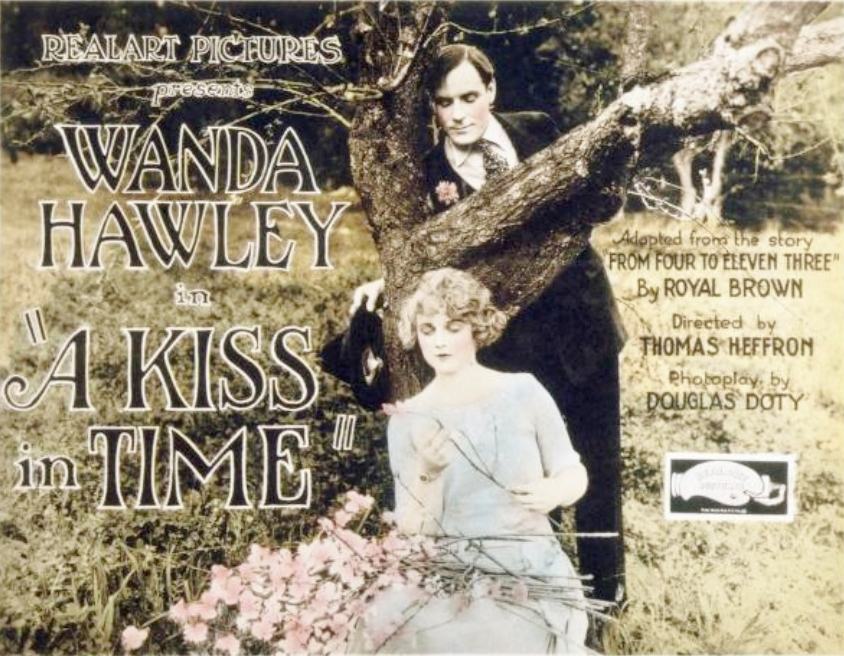
Stepping into the flickering glow of early 20th-century cinema, one finds a treasure trove of narratives that, despite their age, continue to speak volumes about human nature, societal strictures, and the enduring quest for connection. Among these cinematic artifacts, A Kiss in Time emerges not just as a film, but as a spirited debate on the very essence of romance. It’s a delightful, if perhaps subtly subversive, exploration of how genuine emotion can shatter the most entrenched of social conventions, proving that love, in its purest form, often defies logic and prescribed timelines.
At its core, the film presents a charmingly simple premise, yet one ripe with dramatic potential and philosophical undertones. We are introduced to Sheila Athlone, a woman whose artistic soul yearns for expression beyond the stifling confines of Bostonian high society. Her engagement to Robert Ames, a man whose manners are as stiff as his starched collars, serves as a poignant counterpoint to her own vibrant temperament. Sheila, an illustrator by trade, finds herself in a professional quandary when presented with a story to illustrate—a tale so outlandish in its romantic audacity that she dismisses it outright. The premise? A girl, after a mere four-hour acquaintance, bestows a kiss upon a man. To Sheila, this is not just improbable; it’s an affront to decorum, a fantastical leap of faith she simply cannot reconcile with her understanding of human interaction.
This dismissal, however, inadvertently ignites the spark of a grand experiment. Brian Moore, the author of this very 'absurd' story, is a man of conviction and perhaps a touch of mischievous determination. He takes Sheila’s artistic rejection as a personal challenge, a gauntlet thrown down in the arena of romantic possibility. Moore resolves to prove his point, not through intellectual discourse, but through direct, lived experience. His methodology is as audacious as his narrative: he will assume a disguise, that of a humble butcher boy, and endeavor to elicit the very kiss Sheila deems impossible, all within a self-imposed temporal constraint.
The ensuing narrative unfolds with a delightful blend of comedic masquerade and genuine romantic tension. Moore, in his working-class disguise, successfully engineers an encounter with Sheila, persuading her to accompany him to a picturesque country orchard. Here, amidst the blossoming trees and sun-dappled glades, the stage is set for his grand experiment. His initial overtures, predictably, are met with Sheila’s polite but firm refusal. Her ingrained sense of propriety, her societal conditioning, acts as a formidable barrier. Yet, the film masterfully introduces an unforeseen element that irrevocably alters the trajectory of their interaction.
In a moment of sudden peril, a child’s life hangs in the balance, threatened by an explosion. It is here that Brian Moore sheds his disguise, not literally, but metaphorically. His true character, one of innate bravery and selfless courage, shines through as he acts decisively, saving the child from harm. This act of heroism is the crucible in which Sheila’s skepticism is melted away. The 'butcher boy' transforms into a rescuer, a man of profound integrity and valor. In the dwindling moments of Moore’s four-hour challenge, with only two minutes remaining, Sheila’s admiration for his bravery, her recognition of his true worth, transcends all her prior reservations. The kiss, once deemed absurd, becomes an inevitable, beautiful conclusion, a testament to the power of spontaneous connection forged in the fires of shared humanity and heroic action.
The strength of A Kiss in Time lies not just in its engaging plot, but in the nuanced portrayals of its central characters, each representing a facet of the era’s social tapestry. Margaret Loomis, as Sheila Athlone, embodies the spirited woman caught between personal desire and societal expectation. Her artistic profession itself is a subtle rebellion, suggesting a mind that seeks beauty and truth beyond the superficial. Her fiancé, Robert Ames, though a minor character in terms of screen time, is pivotal as the embodiment of the rigid Bostonian elite. His presence serves as a stark reminder of the world Sheila is expected to inhabit, a world of stifling correctness and emotional restraint. It's a testament to Loomis's performance that we understand Sheila's internal conflict without much explicit dialogue, her expressions conveying a rich inner life.
Conversely, Bertram Johns, as Brian Moore, is a breath of fresh air, a charming provocateur who challenges not just Sheila, but the audience, to reconsider their preconceived notions of love. His disguise as a butcher boy is more than a plot device; it’s a symbolic shedding of class distinctions, suggesting that true character transcends social standing. Moore's actions, particularly his heroic rescue, elevate him beyond a mere trickster to a man of genuine substance. This transformation from intellectual challenger to unexpected hero is handled with a deftness that prevents his character from becoming one-dimensional. The chemistry between Loomis and Johns, even in the silent era's often exaggerated acting styles, feels authentic, building organically towards their climactic embrace.
The supporting cast, including Walter Hiers and Wanda Hawley, while not as central, contribute to the film's texture, filling out the social landscape against which Sheila and Brian's unusual romance unfolds. Their reactions, whether of surprise or disapproval, further highlight the unconventional nature of the central romance, grounding it within a recognizable social context.
A Kiss in Time is far more than a simple romantic comedy; it's a commentary on the societal mores of its period, a subtle critique of the suffocating expectations placed upon individuals, particularly women, in the realm of love and marriage. The film champions spontaneity and genuine connection over preordained matches and superficial decorum. Sheila’s initial resistance is not merely personal stubbornness but a reflection of a societal framework that dictated how, when, and with whom one should fall in love.
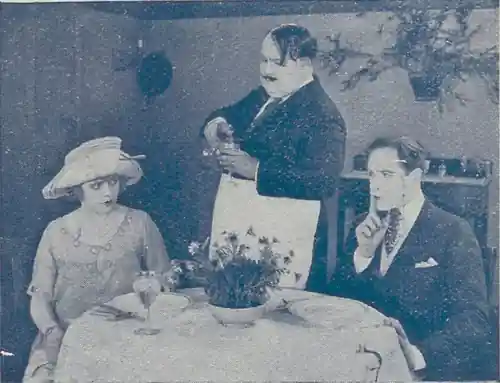
The 'four-hour' premise, which Sheila finds so 'absurd,' is a clever narrative device to explore the age-old question: Can love truly be instantaneous? The film argues, through Brian Moore's determined experiment, that while deep affection might take time to cultivate, the spark of attraction, the recognition of a kindred spirit, can indeed ignite with surprising speed. It's a romantic ideal that contrasts sharply with the more pragmatic, often arranged, marriages prevalent in many societies of the time.
Furthermore, the film touches upon themes of artistic integrity versus commercial compromise. Sheila’s initial refusal to illustrate the story stems from a genuine artistic and personal conviction. Her character arc suggests that true art, like true love, must align with one’s deepest beliefs. The film, therefore, subtly advocates for authenticity in both life and art.
As a product of the silent era, A Kiss in Time relies heavily on visual storytelling, expressive acting, and well-crafted intertitles. The direction, though not overtly flashy, demonstrates a clear understanding of how to build narrative tension and emotional resonance without spoken dialogue. The use of close-ups, where available and appropriate for the period's technology, would have been crucial in conveying Sheila's internal struggle and Brian's charming persistence. The setting of the country orchard, for instance, is not just a backdrop but a symbol of natural, uninhibited romance, a stark contrast to the urban stiffness of Boston.
The performances, as mentioned, are central. Silent film acting often required a heightened physicality and exaggerated facial expressions to convey emotion. Both Loomis and Johns navigate this style effectively, ensuring that the audience understands their characters' motivations and feelings. The dramatic climax, the child's rescue, would have been orchestrated for maximum impact, relying on quick cuts and dramatic staging to convey urgency and heroism, culminating in the tender, yet triumphant, final kiss.
Comparing this film to others of its era reveals some interesting parallels. For instance, the theme of disguised identity to achieve a romantic goal is reminiscent of films like Under False Colors, where characters assume different guises to navigate social landscapes or romantic entanglements. However, A Kiss in Time distinguishes itself by making the disguise a deliberate challenge to a philosophical premise, rather than merely a means to an end. The way it explores the collision of individual will with societal expectations also finds echoes in films like The Great Moment, which often delve into the dramatic consequences of defying or conforming to established norms.
Despite the passage of time and the evolution of cinematic language, A Kiss in Time retains a certain charm and relevance. Its central question—can love blossom instantly, defying logic and social rules?—is one that continues to fascinate and challenge audiences. In an age where dating apps often dictate a more structured, almost transactional approach to romance, the film's celebration of spontaneity and genuine human connection feels refreshingly idealistic. It reminds us that sometimes, the most profound connections are forged not through careful planning, but through unexpected encounters and acts of genuine courage.
The film also serves as a valuable historical document, offering a glimpse into the social anxieties and romantic ideals of the early 20th century. It highlights the shifting roles of women, the tension between tradition and modernity, and the perennial human desire for both security and adventure in love. While silent films often require a different kind of engagement from modern viewers, the universal themes presented in A Kiss in Time transcend its technical limitations, inviting us to reflect on our own perceptions of love, courage, and societal expectations.
The writing by Royal Brown and Douglas Z. Doty is remarkably prescient in its ability to craft a narrative that, while ostensibly lighthearted, probes deeper questions about the nature of human attraction and the arbitrary rules society often imposes. Their script, even without spoken dialogue, conveys a witty intelligence and a keen understanding of character motivation, ensuring that the film's message resonates clearly.
In conclusion, A Kiss in Time is more than just a quaint relic from a bygone era; it is a spirited and charming cinematic argument for the unexpected, the spontaneous, and the genuinely heroic in matters of the heart. It’s a film that, with a gentle smile and a knowing wink, reminds us that the most beautiful moments often occur when we dare to defy convention and embrace the unpredictable journey of human connection. It’s a compelling watch for anyone interested in the evolution of romantic narratives in film, or simply for those who appreciate a story where love, against all odds, finds a way to bloom, even if it’s just a kiss, in time.
IMDb 6.8
1929
Community
Log in to comment.