DbcultAccessing Vault...
Cult Review
Senior Film Conservator
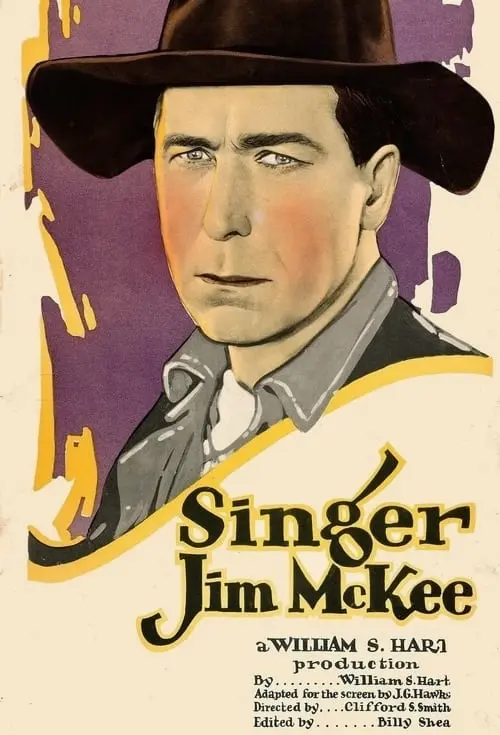
To witness William S. Hart in Singer Jim McKee is to observe the twilight of an era. By 1924, the cinematic Western was already shifting toward the high-octane, acrobatic spectacle of stars like Tom Mix, yet Hart remained a steadfast sentinel of realism. This film, directed by Clifford Smith and co-written by Hart himself alongside J.G. Hawks, serves as a quintessential vessel for the 'Good Bad Man' archetype—a persona Hart refined into a high art form. Unlike the polished heroes of later decades, Hart’s Jim McKee is a man etched out of the very granite of the Sierras, possessing a face that suggests a lifetime of unvoiced sorrows and a moral compass that, while occasionally pointing toward criminality, never wavers from its own internal north.
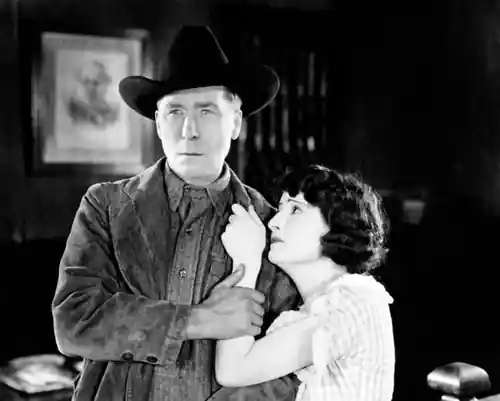
The narrative structure of Singer Jim McKee is built upon a foundation of sacrifice. The opening act, a visceral stagecoach robbery, is staged with a tactile sense of danger that puts many modern digital spectacles to shame. Here, the violence is not gratuitous but functional, a catalyst that sets the trajectory for the next decade and a half of McKee’s life. When Buck, played with a rugged vulnerability by William Dyer, falls to the lawmen's bullets, the film pivots from a crime caper into a profound domestic drama. The transition is jarring in the best way possible, reflecting the sudden, irrevocable shift in McKee’s existence as he transforms from a fugitive into a surrogate father.
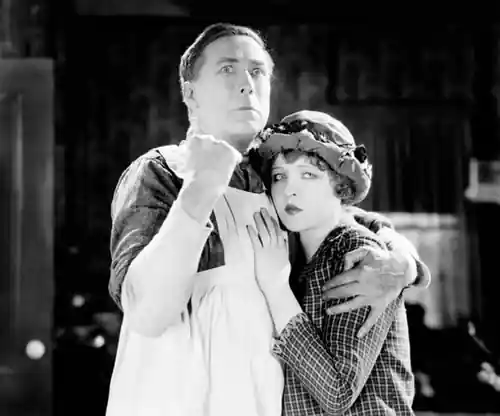
The temporal leap of fifteen years is where the film finds its psychological teeth. We see McKee not as a triumphant outlaw, but as a man living in a state of perpetual vigilance. The daughter, Mary, portrayed with luminous innocence by Patsy Ruth Miller (and earlier by Baby Turner), becomes the center of a universe built on a lie. Hart’s performance in these middle sequences is masterfully understated. He conveys the agonizing weight of his secret through subtle shifts in posture and a gaze that constantly scans the horizon for ghosts. The domesticity he achieves is fragile, a house of cards built on the dust of a long-forgotten heist.
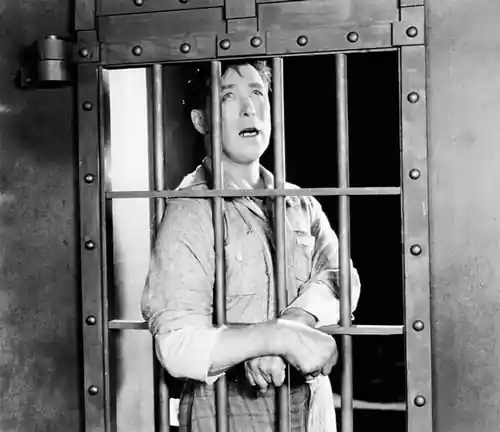
This thematic exploration of the 'sins of the father' is a recurring motif in Hart’s filmography, often echoing the moral ambiguities found in The Evil Thereof. However, in Singer Jim McKee, the stakes feel more intimate. The girl’s happiness is the only currency that matters to Jim, and as she nears adulthood, the financial requirements of her social elevation become a noose around his neck. The irony is palpable: the very love that redeemed him from his past is the force that eventually drags him back into it.
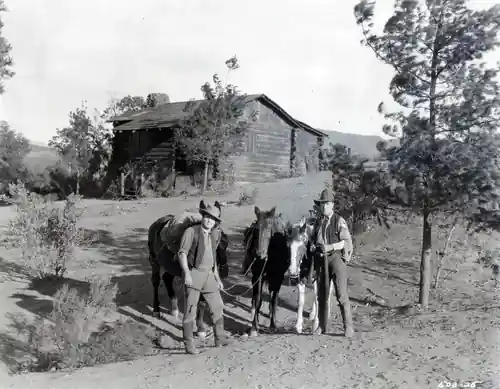
When the inevitable financial crisis strikes, the film descends into a somber, noir-adjacent atmosphere. McKee’s decision to return to robbery is portrayed not as a choice, but as a grim necessity. The visual language of the film shifts; the wide-open, sun-drenched vistas of the first act give way to more claustrophobic, shadow-drenched compositions. This stylistic evolution mirrors the protagonist’s internal descent. Unlike the lawless chaos seen in The Border Legion, McKee’s return to crime is methodical and joyless. He is a ghost haunting his own life, performing the rituals of a bandit to preserve the sanctity of a home he can no longer truly inhabit.
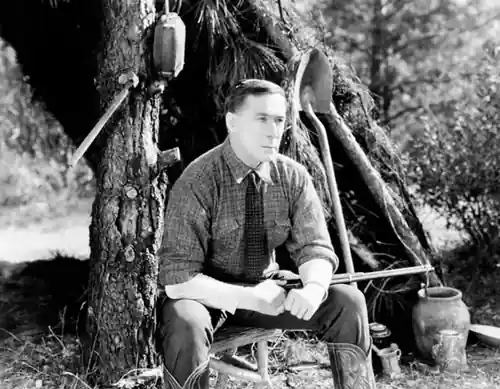
The supporting cast provides a rich tapestry against which Hart’s stoicism is measured. Phyllis Haver delivers a performance of surprising depth, moving away from her 'Bathing Beauty' roots to provide a grounded, emotional counterpoint to the masculine rigidity of the frontier. George Siegmann, as the antagonist, brings a palpable menace that serves as a reminder of the cruel world McKee is trying to shield Mary from. Even Fritz the Horse, Hart’s legendary equine companion, is treated with a level of characterization rarely seen in the genre, symbolizing a loyalty that transcends human fallibility.
Technically, Singer Jim McKee is a marvel of its time. The cinematography captures the rugged terrain with a clarity that emphasizes the harshness of the environment. There is no romanticization of the West here; the dirt is real, the sweat is visible, and the stakes are life and death. The editing, particularly during the climactic sequences, creates a rhythmic tension that rivals the pacing of The Wolf Man or other high-stakes dramas of the early twenties. The film avoids the melodramatic excesses often found in contemporaneous works like The Misleading Lady, opting instead for a gritty naturalism that would later influence the revisionist Westerns of the 1960s.
The screenplay by Hawks and Hart is remarkably tight, avoiding the episodic nature that plagued many silent features. Every scene serves a dual purpose: advancing the plot while deepening our understanding of McKee’s fractured psyche. The dialogue intertitles are used sparingly, allowing the visual storytelling to carry the emotional burden. This is a film that trusts its audience to interpret the subtext of a lingering shot or a shared glance between father and daughter.
In the broader context of 1924 cinema, a year that saw the release of diverse works ranging from Lombardi, Ltd. to the complex narratives of Chains of Evidence, Singer Jim McKee stands out as a singular achievement in character study. While it may not possess the controversial scale of The Birth of a Nation, it offers a far more nuanced and humanistic portrayal of American mythology. It is a story of a man who discovers that while he can outrun the law, he can never outrun the person he used to be.
The film’s conclusion is a masterclass in bittersweet resolution. It refuses to offer easy answers or a sanitized happy ending. Instead, it leaves the viewer with a sense of the profound cost of love and the inescapable nature of one's past. Jim McKee remains one of Hart’s most complex creations—a man who broke the law to save a life, only to find that the life he saved was the very thing that would eventually demand his total sacrifice. To watch this film today is to rediscover the power of silent cinema to communicate the deepest of human experiences through the simple, searing honesty of a man, a horse, and a horizon that never ends.
As we look back at the 1920s, a decade often characterized by the flapper-era exuberance of The Girl of My Dreams or the comedic escapades of The Man from Mexico, Singer Jim McKee reminds us of the somber undercurrents of the American soul. It is a film that demands to be viewed not merely as a historical curiosity, but as a vital, breathing piece of art that continues to resonate with anyone who has ever wrestled with the ghosts of their own history.
IMDb —
1926
Community
Log in to comment.