DbcultAccessing Vault...
Cult Review
Senior Film Conservator
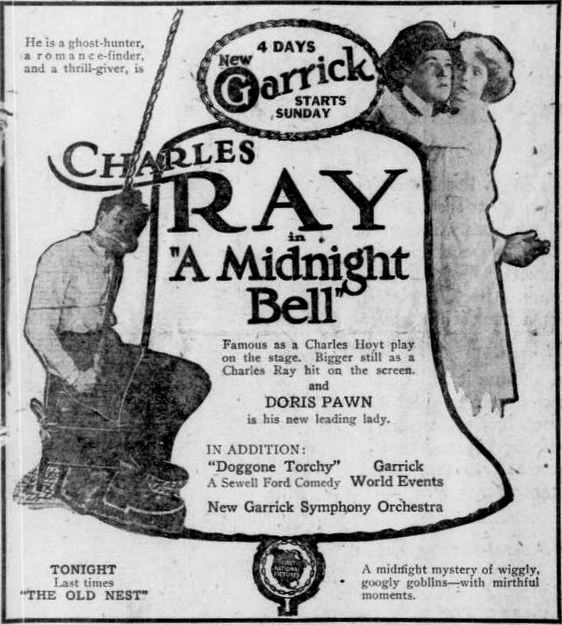
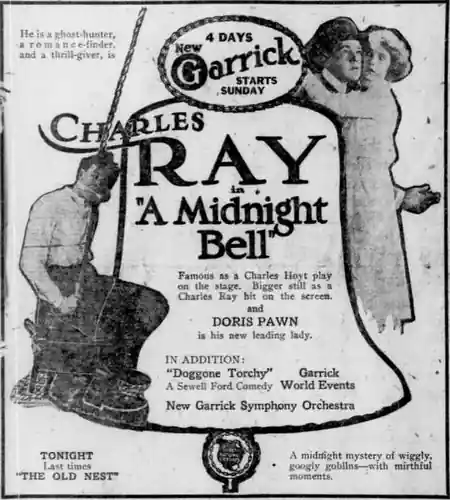
A Midnight Bell (1929) is a cinematic relic that thrives in the liminal space between genres. Directed with a meticulous eye for texture, the film marries the gritty realism of the Western with the eerie mystique of Gothic horror, all while maintaining the taut suspense of a heist thriller. At its core lies the enigmatic journey of Martin Tripp, portrayed by Monte Collins with a blend of weary charm and quiet resolve. This review delves into the film’s layered narrative, its exploration of moral ambiguity, and its enduring relevance in the pantheon of early American cinema.
Tripp’s character is a study in contrasts: a man of business in a town where tradition reigns supreme, a skeptic in a place where superstition lingers like smoke. His decision to remain in the town after being dismissed from his job is less a retreat than a recalibration. The general store, a symbol of both opportunity and burden, becomes his proving ground. The film’s early scenes meticulously detail his efforts—restocking shelves with precision, negotiating trade routes, and winning over locals with a mixture of pragmatism and wit. Yet, these moments of mundane triumph are shadowed by the town’s deeper fissures.
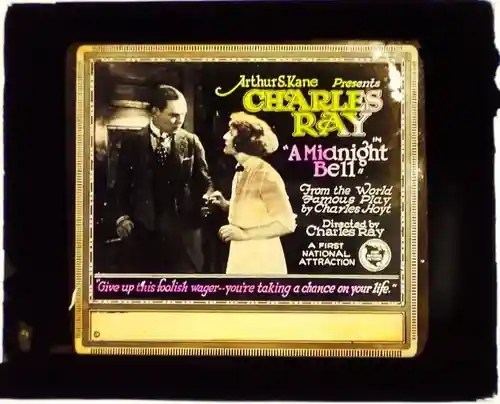
The subplot involving the haunted church introduces a haunting duality. While Tripp engages in a physical battle against bank robbers, the spectral elements of the story—whispers in the dark, flickering shadows, a bell that tolls at midnight—underscore a metaphysical conflict. The church, with its crumbling steeple and overgrown cemetery, becomes a nexus of collective memory and fear. The script, penned by Richard Andres and Charles Hale Hoyt, deftly uses the supernatural to mirror the town’s internal strife, as if the ghosts of the past are inextricably tied to the present corruption.
What elevates A Midnight Bell above its contemporaries is its nuanced approach to character arcs. Tripp is no hero in the conventional sense; his victories are hard-won and often bittersweet. When he confronts the bank robbers—a subplot that echoes the economic anxieties of the era—he navigates the terrain with a mix of daring and calculated risk. Yet, it is his interactions with the townsfolk, particularly the enigmatic Doris Pawn, that reveal the film’s heart. Their dynamic, though underexplored, hints at a deeper emotional landscape, suggesting that Tripp’s journey is as much about personal redemption as it is about communal salvation.
The supporting cast, including Clyde McCoy and Van Dyke Brooke, anchors the film’s social realism. Their portrayals of shopkeepers, farmers, and townsfolk are rendered with a matter-of-factness that contrasts sharply with the Gothic elements. This juxtaposition creates a unique tonal balance, where the mundane and the macabre coexist without dissonance. The film’s pacing, deliberate yet never sluggish, allows these elements to breathe, building a world that feels lived-in and authentic.
Visually, the film is a masterclass in atmospheric storytelling. The use of natural light during the day scenes evokes a sense of hope and possibility, while the night sequences—particularly those involving the church—are steeped in chiaroscuro lighting. The bell itself, a recurring motif, serves as both a literal and symbolic anchor. Its tolling marks pivotal moments in Tripp’s journey, from the initial moment of decision to the climactic resolution. This auditory motif, combined with the sparse but effective score, elevates the film’s emotional resonance.
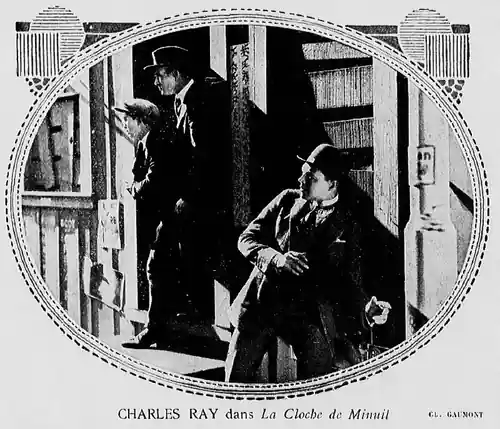
Thematically, A Midnight Bell grapples with the tension between individual ambition and collective responsibility. Tripp’s efforts to revitalize the general store are not without controversy; his methods, though effective, challenge the status quo. This conflict is mirrored in his dealings with the bank robbers, who represent a more overt form of greed. The film’s resolution—where Tripp finds a middle path between these extremes—offers a quietly optimistic vision of community cohesion.
For viewers familiar with the Western canon, the film will evoke comparisons to Other People's Money (1946), though A Midnight Bell predates it by nearly two decades. Both explore the clash between capitalist enterprise and social duty, but the earlier film is more introspective, focusing on the personal cost of such ideals. Similarly, Prudence on Broadway (1934) shares thematic elements of urban-rural contrast, but A Midnight Bell benefits from a more grounded, less stylized approach.
Critics of the film might argue that its supernatural elements feel tacked on, a concession to the Gothic trends of the era. However, these elements serve a narrative purpose: they externalize the town’s internal conflicts and provide a framework for Tripp’s moral growth. The haunted church is not merely a setting but a character in its own right, its mysteries unraveling in tandem with the protagonist’s self-discovery.
In conclusion, A Midnight Bell is a testament to the versatility of early American cinema. Its ability to merge genres, explore complex themes, and craft a compelling character arc remains remarkable. While it may not achieve the same cultural ubiquity as some of its peers, it stands as a poignant exploration of human resilience and the ghosts—both literal and metaphorical—that shape our lives.
IMDb 7.3
1932
Community
Log in to comment.