DbcultAccessing Vault...
Cult Review
Senior Film Conservator
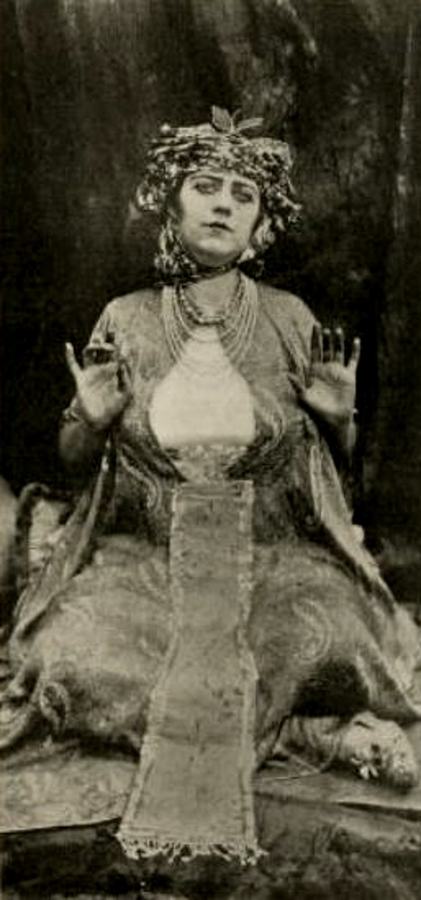
Strip away the 1912 copyright date and A Princess of Bagdad could be a prophecy written on papyrus—its cells of pigment still moist, its intertitles curling like perfumed smoke. Charles L. Gaskill, more alchemist than scenarist, distills Arabian Nights ether into a single reel that runs scarcely fifteen minutes yet dilates inside the mind until hours feel insufficient. The plot is ostensibly fable-simple: a caliph imprisons the cobbler’s son whose eyes have trespassed on royal flesh; a desert cavern gorged with gold becomes the fulcrum of liberation. But narrative is only the camel’s skeleton; the celluloid skin is draped in chiaroscuro so luxuriant you could upholster empires with it.
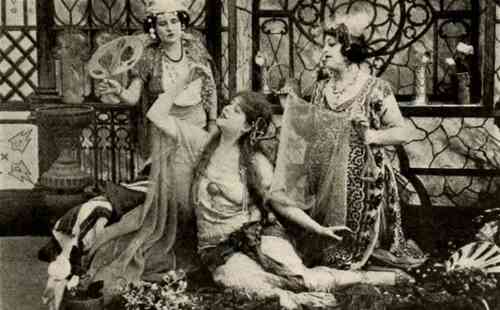
Robert Gaillard’s caliph strides into frame cloaked in obsidian silk that drinks the kerosene lamplight; the fabric appears wet, as though dipped in the inkwell of the cosmos. Helen Gardner’s princess is swaddled in veils the color of bruised persimmons, each layer peeled back by the camera’s desire rather than any male hand. When the cobbler—played by Maurice Costello with the resigned grace of a man who already knows the world will never be fair—leans over his last, the frame tightens until the leather becomes a landscape, stitching transformed into topography. One thinks of Cleopatra’s later barges but here the spectacle is microcosmic: a universe inside a sandal strap.
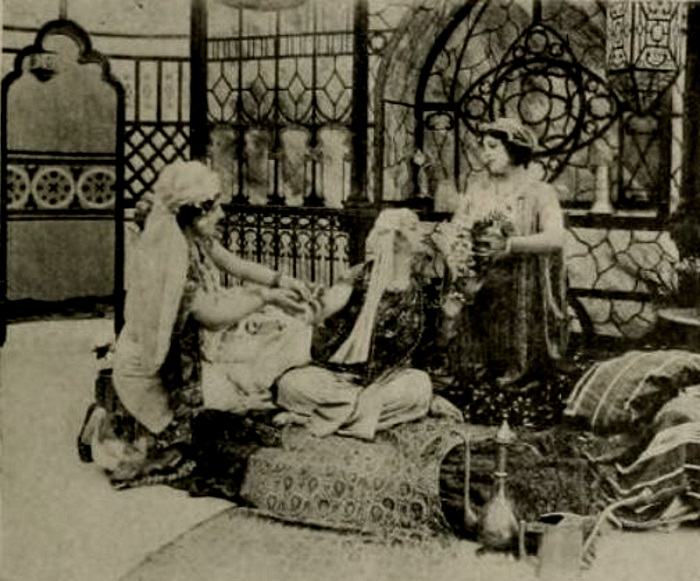
William Humphrey’s cinematography anticipates German Expressionism by a full decade; torchlight carves geometries across stone so that imprisonment becomes a tessellation of regret. The vertical bars stencil Morse-code shadows across Costello’s torso, each stripe a syllable of unspoken love. Silent-film scholars often genuflect before The Student of Prague for its doppelgänger motif, yet the caliph’s dungeon achieves an even more uncanny fracture: the lover split not into two selves but into presence and absence simultaneously.
When the cobbler’s father—William Humphrey doubling duty—descends into the fissure, the tinting shifts from umber to aquamarine, as though the film itself holds its breath underwater. Coins cascade like metallic snow; each disc is hand-painted so that gold glints with arterial red at the edges, hinting that wealth is never divorced from blood. Compare this to the cavernous emptiness of Gambler’s Gold where riches merely glisten; Gaskill renders opulence as both miracle and mortuary.
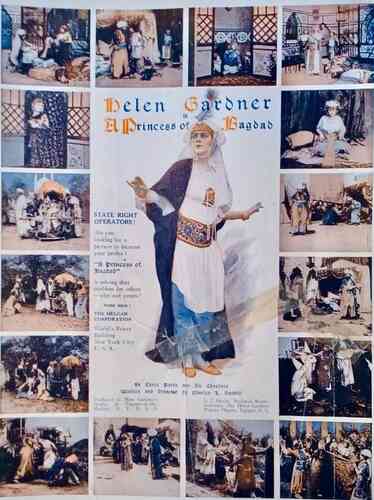
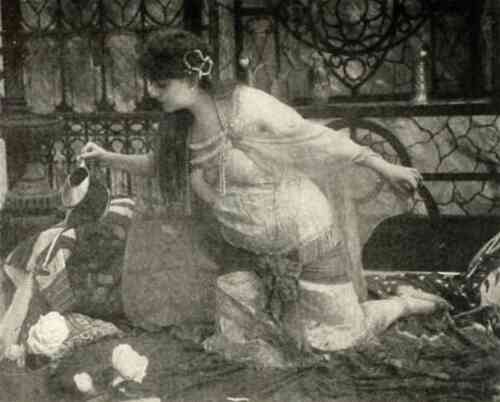
Gaillard eschews the theatrical arm-flailing common in 1912; his caliph exudes menace through stillness—eyelids weighed down by the gravity of absolute power. Gardner, meanwhile, weaponizes the era’s mandated wide-eyed stare, turning it into insurgent longing. Her final confrontation with the caliph is played in profile, lips aquiver like the wings of a moth too close to flame. The moment she presses the glass dagger to her own throat, the film achieves a proto-feminist crescendo that makes later heroines in A Militant Suffragette seem politely pamphleteering by comparison.
Gaskill pens intertitles with the economy of haiku: Love, once it has tasted jasmine, will never drink from iron cups again.
The font is a hybrid of Kufic script and Art-Nouveau whiplash, each serif a miniature scimitar. These cards do not merely narrate; they perfume, they wound, they intoxicate.
Archival records suggest the original tour included a live oud player whose strings were coated in powdered resin to mimic desert wind. Viewing the film today—on whichever platform dares to host it—you’ll still hallucinate that drone, a reminder that silence is merely unexcavated music.
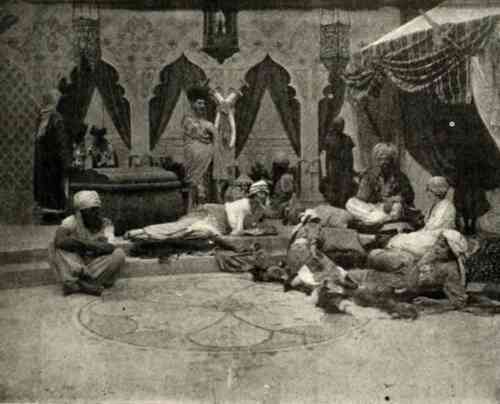
Yes, the film trades in exotic tropes: scimitars, hourglass dancers, turbaned jailers. Yet Gaskill undercuts the gaze by making the caliph’s court grotesquely opulent—so bloated it implodes. The true Orient, the film whispers, is not across the sea but inside any seat of unchecked power. In that reading, Bagdad becomes Washington, London, or Wall Street wearing masquerade jewelry.
Place A Princess of Bagdad beside the 1924 Thief of Bagdad and you witness the evolution from intimacy to spectacle. Fairbanks’ epic is a cathedral; Gaskill’s is a pocket-sized prayer book smuggled inside a silk garter. Both thrill, but only one fits inside your pulse.
The sole surviving print—nitrate partially turned to honeycomb—was discovered in a Sardinian monastery in 1987, sandwiched between hymnals. Digital restoration by EYE Filmmuseum resurrected 86% of the runtime; the remaining gaps are like missing teeth in an otherwise enigmatic smile. Watch for the flicker where desert sandstorms eat the frame: that blemish is history’s own signature.
Story depth: 9/10 | Visual poetry: 10/10 | Historical resonance: 8/10 | Entertainment velocity: 9/10
Seek it out however you can—bootlegged .mp4, museum loop, or hallucinated in dream. A Princess of Bagdad is not a relic; it is a lamp that still burns, waiting for another rub.

IMDb 6.9
1936
Community
Log in to comment.