DbcultAccessing Vault...
Cult Review
Senior Film Conservator
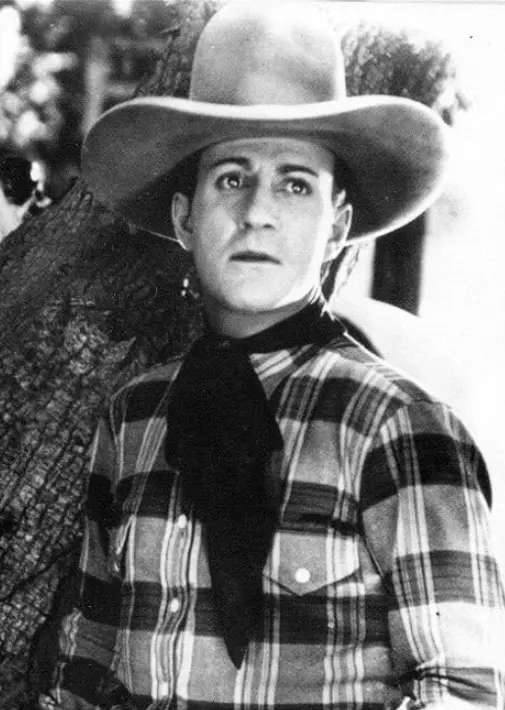
Is 'A Ridin' Gent' worth watching in today's rapid-fire cinematic landscape? Short answer: yes, but primarily for those with a keen interest in film history and the foundational elements of the Western genre. This 1922 silent picture is a fascinating artifact, not a modern entertainment spectacle.
It's a film for silent film enthusiasts, academic researchers of early cinema, and anyone curious about the roots of the cowboy hero archetype. Conversely, viewers accustomed to complex narratives, sophisticated visual effects, or even audible dialogue will likely find its pace and production values challenging. It demands a specific kind of patience and appreciation.
Before delving into the specifics, let's establish a baseline for what 'A Ridin' Gent' offers and where it stumbles.
This film works because: It perfectly encapsulates the straightforward morality and adventure that defined early Westerns, delivered with an endearing simplicity that is almost quaint by modern standards. It’s an honest, unpretentious slice of its time.
This film fails because: Its narrative predictability and the technical limitations of its era prevent it from achieving any profound cinematic resonance for a modern, general audience seeking complex character arcs or groundbreaking visuals. The lack of nuance is palpable.
You should watch it if: You are a student of film history, a silent film aficionado, or simply wish to see Jack Perrin in an archetypal cowboy role that helped shape the genre. It's a foundational text, not necessarily a thrilling contemporary watch.
The plot of 'A Ridin' Gent' is as straightforward as a dusty trail leading to a distant horizon. It adheres faithfully to the established tropes of the Western melodrama: a virtuous victim, an evil villain, a damsel in distress, and a heroic rescuer. The ranch owner’s will, intended for his foster-daughter, becomes the MacGuffin driving the entire conflict. The cousin’s immediate turn to murder is stark, almost cartoonish in its lack of preamble, but it effectively sets the stakes.
What's striking is the economy of storytelling. Without spoken dialogue, every gesture, every intertitle, and every scene transition must convey meaning efficiently. The film wastes no time establishing the core conflict, moving swiftly from the murder to the daughter's arrival and the Ridin' Gent's appearance. While this makes for a brisk pace, it also means character development is largely absent, relying instead on archetypes.
The discovery of the will by the Ridin' Gent, for instance, is less a moment of intellectual deduction and more a convenient plot device. This isn't a flaw for its time, but an expectation of the genre – the hero simply *knows* or *finds* what is needed to move the plot forward. It’s a testament to the audience’s willingness to suspend disbelief for a good, clean narrative of good triumphing over evil.
Jack Perrin, in the role of the Ridin' Gent, embodies the silent film cowboy with a quiet dignity. His performance is largely physical, conveying resolve through posture and a steady gaze. There are no grand monologues or complex emotional shifts; instead, Perrin relies on the subtle expressiveness of his eyes and a confident, almost aloof demeanor that defines the classic Western hero.
In one memorable sequence, after discovering the hidden will, Perrin's character doesn't erupt in rage or overt triumph. Rather, a tightening of the jaw and a determined set of the shoulders communicate his intent to act. This understated approach, while perhaps lacking the theatricality of some of his contemporaries, gives his character a grounded, believable quality within the film's simple moral framework.
His interactions with the foster-daughter are similarly devoid of overt romantic overtures until the very end. The relationship is built on trust and shared purpose, making the eventual marriage feel less like a sudden turn and more like the natural, inevitable conclusion of their partnership against injustice. Perrin’s charisma, while undeniably present, sometimes feels a little too 'one-note' for modern tastes, but it perfectly served the demands of early silent cinema.
The direction in 'A Ridin' Gent' is functional, prioritizing clarity and narrative progression over artistic flourishes. The camera work is largely static, favoring wide shots that capture the vastness of the Western landscape and allow the actors to move within the frame. Close-ups are used sparingly, often to emphasize key objects like the stolen will or a character’s reaction to a pivotal moment, such as the foster-daughter's initial confusion upon arriving at the ranch.
One particularly effective directorial choice, common in early cinema, is the staging of action sequences. The horse chases, while not as dynamic as later Westerns, are competently executed, relying on the sheer speed of the animals and the open terrain to convey excitement. The climactic capture of the cousin, featuring a chase and a struggle, demonstrates a practical approach to staging physical confrontation. It's rough, but effective.
Cinematographically, the film benefits from natural light, giving many outdoor scenes an authentic, unvarnished look. While the film stock and projection quality of surviving prints might vary, there are moments where the stark contrasts of light and shadow on the dusty plains hint at the visual potential that the Western genre would later fully exploit. The interiors, however, often feel flatly lit, a common characteristic of the era.
For the casual viewer, probably not. Its technical limitations and simplistic narrative can be a barrier.
For film historians and silent film enthusiasts, absolutely. It's a valuable document of early Western filmmaking.
It provides insight into genre conventions before they became fully codified.
The film showcases the acting style prevalent in the 1920s.
It's a quick watch, making it accessible for study or a nostalgic trip.
The pacing of 'A Ridin' Gent' is surprisingly brisk. The narrative moves with a propulsive energy, propelled forward by the clear objectives of its characters. There’s little time for introspection or complex subplots; the film is a direct path from injustice to resolution. The murder occurs early, the introduction of the hero is timely, and the discovery of the will is efficient. This directness keeps the audience engaged, even without the crutch of dialogue.
The tone is overtly moralistic and adventurous. It champions clear-cut good against unambiguous evil, a hallmark of early popular entertainment. There's a certain melodramatic flair, particularly in the cousin's villainy, which is played with broad strokes. However, this isn't a criticism; it's an observation of a stylistic choice that resonated deeply with audiences of the time, who sought clear moral victories on screen.
One unconventional observation is how the film inadvertently serves as a fascinating sociological document of early 20th-century American ideals of justice and property rights. The final act, where the cousin is not just captured but physically beaten, is a stark reminder of how moral codes and narrative resolutions have evolved in cinema. While perfectly acceptable, even expected, for its time, it feels jarringly brutal by modern standards, highlighting a different approach to 'deserved' punishment.
At its heart, 'A Ridin' Gent' is a story about the restoration of order and the sanctity of property. The ranch owner's will represents not just wealth, but a rightful legacy, which the cousin's actions threaten to dismantle. The Ridin' Gent steps in as an agent of this restoration, embodying the idealized figure who ensures that justice, even if rough, prevails.
The film subtly reinforces the idea that true ownership is not just about legal documents, but about moral rightness. The foster-daughter, despite being initially dispossessed, is portrayed as the 'rightful' owner due to the original owner's wishes and her inherent virtue. The villain, conversely, is defined by his greed and willingness to commit heinous acts for material gain, making his eventual downfall all the more satisfying for the audience.
While not as profound as later Westerns like The Sporting Venus (which, admittedly, isn't a Western at all, but highlights the evolution of film), 'A Ridin' Gent' lays down the fundamental thematic groundwork for many Westerns to come: the lone hero righting wrongs, the importance of land, and the triumph of a simple moral code in a wild landscape. It works. But it’s flawed.
Pros:
- Authentic Silent Era Charm: A genuine artifact offering a glimpse into early filmmaking techniques and storytelling.
- Jack Perrin's Archetypal Performance: Embodies the stoic, capable Western hero effectively.
- Straightforward, Engaging Plot: Despite its simplicity, the narrative moves briskly and holds attention.
- Foundational Western Tropes: A great example of the genre's nascent elements.
Cons:
- Extreme Predictability: The plot offers no surprises for experienced viewers.
- Lack of Character Depth: Characters are largely archetypes, with minimal development.
- Technical Limitations: Common to its era, these can be off-putting for modern audiences.
- Simplistic Moral Framework: Good and evil are black and white, lacking nuance.
'A Ridin' Gent' isn't going to redefine your understanding of cinema, nor will it likely grace any 'greatest films of all time' lists. What it does, however, is offer a valuable, unvarnished look at the foundational elements of the Western genre during the silent era. It's a film that serves as a historical document as much as it does entertainment.
Jack Perrin delivers a performance that, while simple, is perfectly suited to the material, cementing his place as an early Western icon. The film's straightforward narrative and brisk pacing ensure that it remains watchable, even if its predictable nature limits its broader appeal. It's a charming, if unsophisticated, piece of film history that deserves to be seen by those with an appreciation for where the genre began.
Ultimately, 'A Ridin' Gent' is a quaint ride through a familiar landscape. It's a film that asks little of its audience beyond a willingness to engage with the past, and in return, it offers a genuine, albeit basic, slice of cinematic Americana. It’s not a masterpiece, but it’s an honest effort, and for that, it earns its place in the archives.
IMDb 6.1
1936
Community
Log in to comment.