DbcultAccessing Vault...
Cult Review
Senior Film Conservator
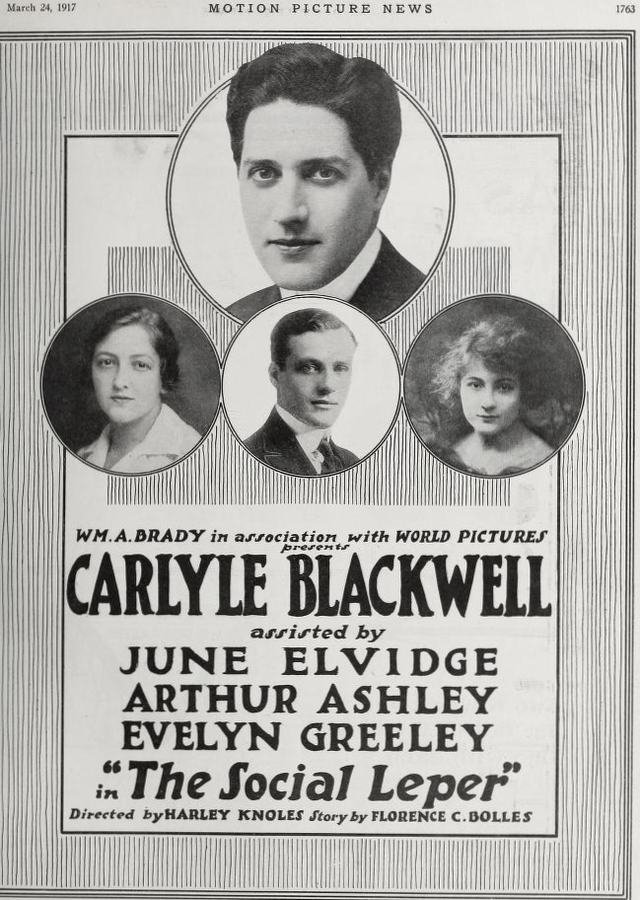
Stepping back into the nascent days of cinema, one occasionally unearths a narrative so potent, so laden with the raw, unfiltered emotionality characteristic of its epoch, that it transcends mere historical curiosity. Such is the case with 1917's The Social Leper, a film whose very title, stark and uncompromising, immediately signals its thematic core: the ostracization of an individual by societal decree, often for transgressions both real and perceived. This is not merely a tale of moral failing, but a meticulously woven tapestry of interconnected lives, each thread pulled taut by the relentless forces of love, betrayal, and a particularly cruel brand of fate.
At its heart lies Adrienne Van Couver, portrayed with a compelling, if perhaps morally ambiguous, intensity by Isabel Berwin. Adrienne is a divorcée, a status in the early 20th century that carried a significant social stigma, marking her as an outsider even before the narrative truly begins its tragic unraveling. Her initial foray into the mystical, a consultation with Mme. Melvina (Eugenie Woodward), serves as a potent dramatic device, a harbinger of the calamities to come. The clairvoyant's pronouncements are not vague prognostications but sharply delivered prophecies: a dark premonition concerning Robert Warren's obsessive love, and the crushing certainty that her heart's desire, Henry Armstrong, will never reciprocate her affections. This fatalistic beginning immediately establishes a tone of impending doom, trapping Adrienne and, by extension, the audience, in a web of preordained suffering. It’s a narrative technique that resonates with the operatic scope of much early cinema, where destiny often played as significant a role as individual agency.
The film's strength lies in its intricate, almost dizzying, plot construction. Just as Mme. Melvina's vision shifts to Lorraine, a young woman whose sorrow is mysteriously linked to Adrienne, the audience is plunged into another facet of this human drama. Lorraine (Muriel Ostriche), burdened by an unspoken grief, struggles to maintain composure before her fiancé, Henry Armstrong (Carlyle Blackwell). Her dejection hints at a deeper affection for another, a suspicion Henry himself voices, linking her to John Dean. Yet, Lorraine, perhaps out of loyalty or fear, attempts to dispel his concerns. This delicate dance of concealment and suspicion is a recurring motif, highlighting the era's social pressures to maintain appearances, even at the cost of genuine emotion.
John Dean (Arthur Ashley), the silent sufferer, embodies the tragic hero of this melodrama. His love for Lorraine is a quiet, enduring force, a stark contrast to the tumultuous passions swirling around him. His confession to his mother, a moment of profound vulnerability, underscores the depth of his unspoken devotion. The narrative then expertly interweaves these disparate threads when Robert Warren, driven by his own anguish, encounters John. In a scene of remarkable emotional candor for its time, John, recognizing a shared burden of sorrow, unburdens himself, recounting the devastating history of his marriage to Adrienne. This extended flashback is a masterclass in exposition, revealing the roots of Adrienne's 'leper' status: her coldness, her indifference to their child's death while she was 'away dancing,' and the subsequent divorce. This revelation paints Adrienne not just as a victim of societal judgment, but as an architect of her own misery, a complex figure whose actions ripple outward, causing untold pain.
John's narrative further complicates the love triangle involving Lorraine and Henry. After his divorce, he finds solace and renewed hope with Lorraine, only to have his happiness jeopardized by Adrienne's reappearance. Her taunts and demand for money, witnessed by Lorraine, lead to a catastrophic misunderstanding, cementing Lorraine's engagement to Henry. This sequence of events, driven by misconstrued actions and the destructive power of a manipulative ex-spouse, is a powerful exploration of how easily reputations can be shattered and lives irrevocably altered. It parallels the tragic miscommunications found in other melodramas of the era, where a single, misinterpreted glance could ignite a devastating chain reaction. One might draw a thematic parallel to The Root of Evil, where moral decay similarly unravels lives through deceit and hidden motives.
Robert Warren's reaction to John's story is the turning point, transforming him from a lovesick admirer into a vengeful force. The destruction of the 'halo' he had built around Adrienne propels him into a fit of maddened rage. This psychological breakdown, fueled by shattered idealism, is portrayed with a visceral intensity that must have been quite shocking for contemporary audiences. Adrienne, already on edge from Mme. Melvina's prophecy, finds herself confronted by Robert's haggard, menacing presence. Her desperate, half-uttered call to Henry for help is a moment of stark terror, brutally cut short as Robert seizes the instrument. This scene, though silent, would have conveyed immense tension through the actors' expressions and body language, a testament to the power of early cinematic storytelling.
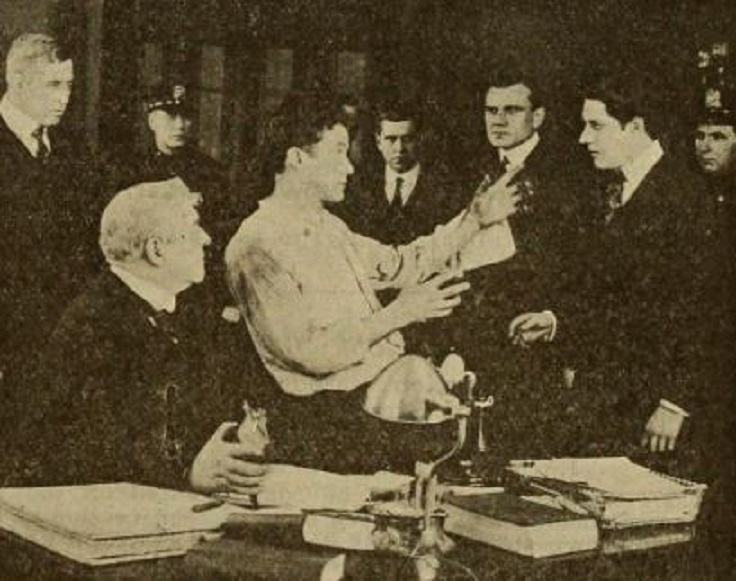
The ensuing chaos is both swift and brutal. Henry, alerted by Adrienne's truncated call, rushes to her aid, while John, fearing for Adrienne's safety despite her past actions, also makes his way to her. The timing is tragically precise: John arrives just after Robert has made his escape, finding Adrienne's lifeless body. The arrival of Henry and two policemen, finding John bending over the dead woman, seals his fate, leading to his immediate arrest. This classic trope of mistaken identity and circumstantial evidence forms the dramatic backbone of the film's climax, echoing the dramatic tension found in many early crime dramas.
Lorraine's heartbreak at John's arrest is palpable, driving her to plead with Henry, a lawyer, to take John's case. This moment highlights Henry's character, positioning him as a figure of justice and reason, capable of rising above personal rivalry. The subsequent investigation, a methodical search of Robert's apartment, yields the crucial piece of evidence: a coat with a missing button, matching one found in Adrienne's hand. This detail, a small but vital link in the chain of events, speaks to the film's commitment to a satisfying, if melodramatic, resolution of its central mystery. The ensuing struggle to apprehend Robert, described as a 'terrible fight,' adds a final burst of action to the unfolding drama, bringing the true culprit to justice.
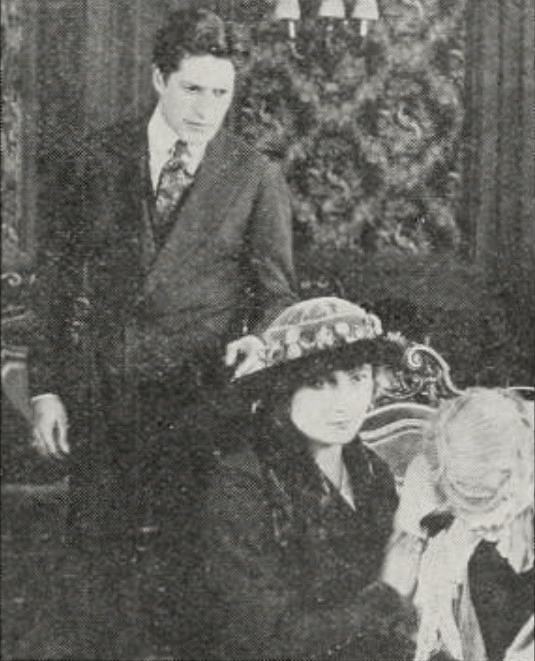
The Social Leper is more than just a thrilling melodrama; it's a fascinating window into the social anxieties and moral codes of the early 20th century. The titular 'leper' status of Adrienne, primarily due to her divorce and perceived moral failings, underscores the punitive judgment faced by women who deviated from societal norms. Her character, while manipulative, also elicits a degree of tragic understanding, trapped by her past actions and a prophecy she couldn't escape. Her complexity could even be compared to a character like Hedda Gabler, another woman constrained by societal expectations, albeit with vastly different methods of rebellion.
The film's exploration of obsession, particularly Robert Warren's destructive infatuation, resonates with the psychological dramas that would become more prevalent in later cinema. His descent into madness after his idealized image of Adrienne is shattered is a powerful portrayal of the dangers of unrequited love and unchecked passion. This thematic thread finds echoes in films like The Vampires: Hypnotic Eyes, which also delves into the dark corners of psychological manipulation and obsessive control.
The performance of the cast, particularly Isabel Berwin as Adrienne, must have been crucial in conveying the nuanced emotions of such a complex character without the aid of spoken dialogue. The silent era relied heavily on exaggerated facial expressions, grand gestures, and well-placed intertitles to communicate narrative and emotional depth. The story's reliance on fate and prophecy, delivered by the clairvoyant, also speaks to a cultural fascination with the supernatural and the unseen forces influencing human lives, a theme not uncommon in early cinema, where the dramatic stakes were often heightened by such elements.
Florence Bolles and Frances Marion, the writers credited, crafted a narrative that, while perhaps overly convoluted by modern standards, was exceptionally rich for its time. They managed to weave together multiple character arcs, a love triangle, a murder mystery, and a tale of redemption into a cohesive whole. Their ability to develop such intricate plots, relying heavily on visual storytelling and the audience's emotional engagement, speaks volumes about their skill as pioneers in screenwriting.
The film concludes on a note of cautious optimism. 'Happiness came with the morning,' a poetic phrase that encapsulates the dawn of a new, more just reality. Henry's selfless act of releasing Lorraine from their engagement allows her to finally unite with John Dean, whose innocence has been proven. This resolution, while perhaps a touch too neat for the preceding chaos, provides a satisfying closure to the emotional turmoil. It reinforces the idea that even after profound tragedy and injustice, truth can prevail, and love can find its rightful path. John's journey, from a man silently suffering the consequences of his past to finding vindication and love, mirrors the broader theme of finding oneself amidst adversity, a theme also explored in films like The Man Who Found Himself.
The Social Leper stands as a compelling artifact of early cinema, a film that, despite its age, continues to resonate with its exploration of timeless human themes: the destructive power of secrets, the weight of societal judgment, the complexities of love and betrayal, and the ultimate triumph of justice. It’s a powerful reminder of how foundational these melodramatic narratives were in shaping the cinematic language we still understand today, offering a rich, emotionally charged experience that transcends the limitations of its silent format.
IMDb —
1923
Community
Log in to comment.