DbcultAccessing Vault...
6.1/10
Senior Film Conservator
A definitive 6.1/10 rating for a film that redefined the boundaries of cult cinema. The Secret Game remains a cornerstone of transgressive art.
The silent era, often romanticized for its grand melodramas and slapstick comedies, also served as a fertile ground for sophisticated thrillers, a genre where "The Secret Game" unequivocally stakes its claim. This 1917 production, emerging from the crucible of the Great War, is far more than a simple narrative; it's a meticulously woven fabric of international intrigue, espionage, and cultural collision, set against the seemingly placid backdrop of a still-neutral United States. At its heart lies a kinetic struggle for supremacy between two formidable foreign intelligence apparatuses: the calculated machinations of Imperial Germany and the subtle, often inscrutable, operatives of Imperial Japan. The film, penned by the remarkably perceptive Marion Fairfax, transcends mere plot mechanics, instead delving into the psychological warfare inherent in covert operations, painting a vivid tableau of the anxieties and allegiances of a world in flux. It’s a testament to the era’s storytelling prowess, demonstrating how narrative complexity could be conveyed with visual nuance and compelling performances, even without the aid of spoken dialogue. The tension, palpable and pervasive, arises not merely from dramatic confrontations but from the constant, underlying threat of exposure and betrayal, a silent drumbeat accompanying every clandestine meeting and every coded message. This isn't just a historical artifact; it's a vibrant, living piece of cinema that continues to resonate with its masterful construction of suspense and its exploration of geopolitical undercurrents.

To speak of "The Secret Game" without immediately acknowledging the magnetic presence of Sessue Hayakawa would be to miss the very essence of its allure. Hayakawa, a star of unparalleled magnitude in his time, here delivers a performance that is nothing short of mesmerizing, embodying the Japanese agent with a gravitas and nuanced intensity that elevates the entire production. His portrayal is a masterclass in silent acting, relying on subtle gestures, piercing gazes, and an almost imperceptible shift in posture to convey layers of meaning. He is not merely a character; he is a force of nature, a silent storm brewing beneath a calm exterior. Hayakawa's unique appeal stemmed from his ability to project both exoticism and profound humanity, challenging the often one-dimensional portrayals of Asian characters prevalent in early Hollywood. In "The Secret Game," he is neither a caricature nor a villain in the simplistic sense; rather, he is a formidable adversary, driven by motivations that, while alien to the American audience, are depicted with a compelling internal logic. His scenes are charged with an electric energy, whether he is engaging in a tense standoff or orchestrating a complex scheme. His elegance and martial prowess, often showcased in his other works, are here channeled into a more cerebral, yet equally dangerous, form of combat. This performance cemented his status as a leading man, capable of carrying a film with sheer charisma and dramatic weight, a feat few actors, silent or otherwise, could achieve with such effortless command. One might draw parallels to the sophisticated villainy seen in some of the more complex characters in films like An Affair of Three Nations, where international agents operate with similar cunning, but Hayakawa’s portrayal possesses a unique, almost tragic dignity that sets it apart. His presence alone is a compelling reason to revisit this cinematic gem, offering a window into a performance style that was both groundbreaking and enduringly captivating.
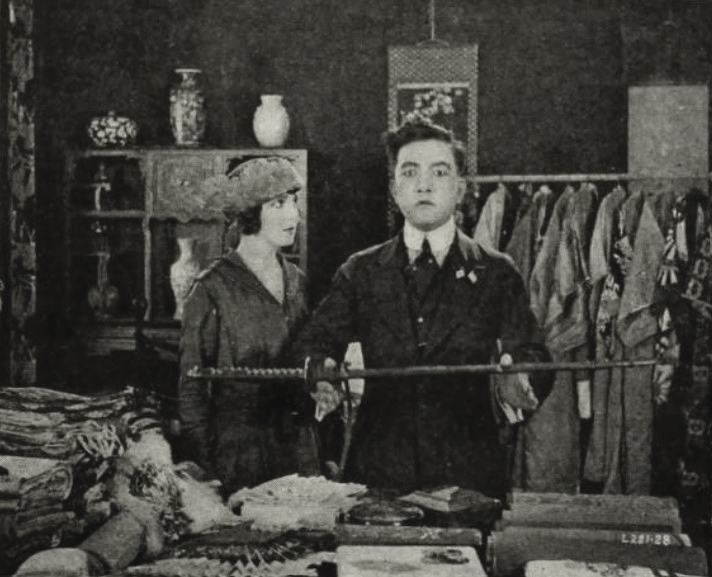
Opposite Hayakawa’s enigmatic brilliance stands Jack Holt, whose portrayal of the American protagonist provides a sturdy, unwavering anchor to the film's swirling currents of deceit. Holt, a stalwart of the silent screen, embodies the quintessential American hero of the era: resolute, morally upright, and possessing an inherent sense of justice. His character is the audience's point of entry into this labyrinthine world, representing the nation’s struggle to comprehend and combat the insidious threats posed by foreign powers. Holt’s acting, while perhaps less outwardly theatrical than Hayakawa’s, is effective in its grounded realism. He conveys a sense of earnest determination, his actions driven by a clear understanding of the stakes involved. The dynamic between Holt and Hayakawa forms the emotional and dramatic core of the film; it is a clash of ideologies and methods, a silent duel between two formidable wills. Their interactions are often understated, yet crackle with an unspoken tension, each man trying to anticipate the other's next move. Holt’s presence lends a palpable sense of authenticity to the narrative, grounding the fantastical elements of espionage in a believable human struggle. He represents the common man thrust into extraordinary circumstances, forced to navigate a treacherous landscape where trust is a luxury and vigilance is paramount. His performance, while perhaps overshadowed by Hayakawa’s iconic turn, is nonetheless crucial to the film’s success, providing the necessary balance and relatability for the audience to fully invest in the unfolding drama. It’s a testament to Holt’s enduring appeal that he could stand toe-to-toe with such a charismatic presence and still command the screen with his quiet strength and conviction.
Marion Fairfax's screenplay, even in an era often characterized by one-dimensional female characters, grants significant agency to the women of "The Secret Game." Mayme Kelso and Florence Vidor, though their roles might appear secondary at first glance, are integral to the plot's machinations and often serve as crucial pivots around which the espionage narrative turns. Kelso, with her expressive features, brings a vulnerability and fierce intelligence to her character, often finding herself entangled in the spies’ elaborate schemes. Her performance is not simply decorative; she is an active participant, her choices and predicaments directly influencing the trajectory of the male protagonists. Similarly, Florence Vidor’s presence adds another layer of complexity, her character often caught between conflicting loyalties or unknowingly holding keys to vital information. These actresses are not relegated to passive damsel-in-distress tropes; rather, they navigate a dangerous world with a surprising degree of resilience and cunning. Their performances underscore the film's understanding that in a world of espionage, everyone, regardless of gender, can become a pawn or a player. The film avoids the simplistic portrayal of women as mere romantic interests or victims, instead presenting them as individuals whose actions carry genuine weight within the narrative. This progressive approach, particularly for a film of its time, highlights Fairfax's keen insight into character development and her refusal to conform to conventional gender roles. Their contributions ensure that the human element of the story remains potent, reminding us that even in the grand chessboard of international conflict, personal stakes and individual lives are profoundly affected. Their roles add emotional depth and a touch of human frailty to the otherwise clinical world of intelligence gathering, making the overall experience richer and more engaging.
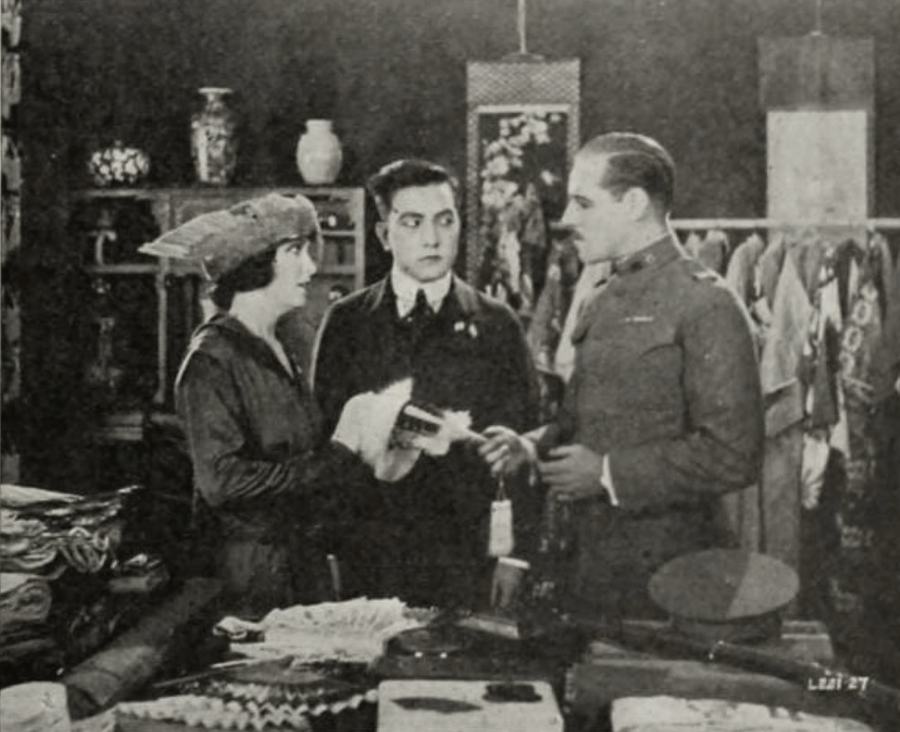
The structural integrity and narrative sophistication of "The Secret Game" are largely attributable to the prodigious talent of its writer, Marion Fairfax. In an era where screenwriting was often a less celebrated art form, Fairfax consistently demonstrated an exceptional ability to craft intricate, compelling plots that transcended the often simplistic storytelling prevalent in early cinema. Her script for "The Secret Game" is a masterclass in suspense, meticulously building tension through layered revelations and believable character motivations. She understood the power of ambiguity and the subtle art of misdirection, crucial elements for any effective espionage narrative. Fairfax didn't just write scenes; she engineered a complex world, populating it with characters whose actions had logical, if sometimes morally ambiguous, consequences. Her ability to weave together the disparate threads of German and Japanese espionage into a coherent, thrilling tapestry speaks volumes about her foresight and narrative control. Unlike some contemporary thrillers that relied on sheer spectacle, Fairfax grounded her story in intellectual combat, making the battle of wits as compelling as any physical confrontation. Her influence extended beyond just plot; she was known for developing strong, multi-dimensional characters, a trait evident in the nuanced portrayals by Hayakawa and Holt. Her work here stands as a testament to her pioneering efforts in elevating screenwriting to a respected craft, proving that silent films could be as intellectually stimulating as they were visually captivating. One might observe a similar narrative dexterity in films like The Million Dollar Mystery, which also boasted complex, serialized plots, but Fairfax’s work often carried a more pronounced psychological depth. Her contributions to cinema, particularly in genres demanding intelligent plotting, remain an often-understated but vitally important aspect of film history.
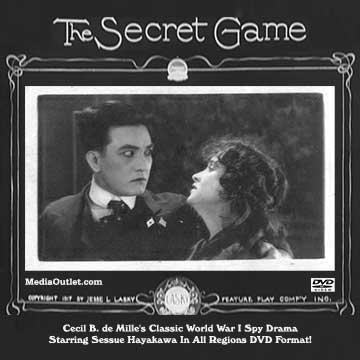
"The Secret Game" is inextricably linked to its historical context: the Great War. While the United States had not yet officially entered the conflict in 1917, the shadow of European hostilities loomed large, fostering a climate of paranoia and suspicion. The film ingeniously taps into this national unease, projecting the global conflict onto American soil through the clandestine activities of German and Japanese agents. This narrative choice was incredibly prescient, reflecting real-world anxieties about foreign influence and the potential for sabotage. The film serves as a fascinating cultural document, illustrating how a nation grappling with its neutrality processed the complex geopolitical landscape. It capitalizes on the prevailing public sentiment, where whispers of espionage and coded messages were part of the daily news cycle. The German threat, in particular, was a prominent concern, fueled by incidents like the Zimmermann Telegram, which had only recently come to light. The inclusion of Japanese spies adds another intriguing layer, reflecting shifting alliances and perceived threats in the Pacific, even as Japan was nominally allied with the Entente powers against Germany. This intricate dance of international loyalties and rivalries, played out in American cities, offers a compelling glimpse into the collective consciousness of the era. The film doesn't just entertain; it subtly educates, drawing its audience into a world where national security was a nascent but increasingly urgent concern. It highlights the vulnerability of a seemingly distant nation to the machinations of global power struggles, a theme that would only grow in relevance as the century progressed. The film, therefore, is not merely a spy thriller; it's a mirror reflecting the geopolitical anxieties of its time, a silent testament to the pervasive reach of global conflict.
Beyond its gripping narrative and stellar performances, "The Secret Game" stands as a commendable example of early cinematic craftsmanship. The direction, while not overtly flashy, is effective in building suspense and maintaining a brisk pace. The use of intertitles is judicious, providing necessary exposition without bogging down the visual storytelling. Cinematography, though constrained by the technology of the era, employs framing and lighting to enhance the mood of secrecy and danger. The film’s sets and locations, whether opulent drawing rooms or shadowy back alleys, contribute to a pervasive atmosphere of intrigue, making the American setting feel simultaneously familiar and dangerously permeable. The pacing is particularly noteworthy, avoiding the sluggishness that sometimes afflicted longer silent features, instead propelling the audience forward with a sense of urgency. The film’s legacy is complex; while perhaps not as universally remembered as some of the colossal epics of its day, it remains a significant touchstone for understanding the evolution of the spy genre. Its influence can be seen in later thrillers that explore similar themes of international espionage and moral ambiguity. The very notion of foreign agents operating within the homeland, a concept explored here with such conviction, would become a staple of cinema for decades to come. "The Secret Game" demonstrated that intelligence and psychological warfare could be just as compelling on screen as overt action, paving the way for more sophisticated narratives in the genre. Its impact, though subtle, reverberated through the industry, influencing how future filmmakers approached stories of clandestine operations. For enthusiasts of silent cinema and students of film history, this movie offers invaluable insights into the narrative sophistication and thematic depth achievable in an art form still in its infancy. It's a film that demands re-evaluation, not just as a historical curiosity, but as a genuinely thrilling and intellectually stimulating piece of entertainment. Comparing its narrative ambition to films like De mystiske z straaler, which also delved into mysterious threats, "The Secret Game" distinguishes itself with its grounded, geopolitical realism. Its enduring appeal lies in its timeless portrayal of human cunning and the ever-present shadow of international conflict.
One of the film's most remarkable achievements lies in its ability to communicate complex ideas and emotional nuances without spoken dialogue. This required a heightened reliance on visual cues, character blocking, and the expressive power of its actors. Sessue Hayakawa, in particular, excelled at this, conveying entire internal monologues with a slight tilt of his head or a flicker in his eyes. The filmmakers understood that silence could amplify tension, making every rustle of a curtain or creak of a floorboard resonate with heightened significance. The narrative unfolds with an almost balletic precision, each scene building upon the last, guiding the audience through a maze of deception and discovery. The use of close-ups, though not as pervasive as in later cinema, is effective in drawing attention to crucial details or emotional reactions, allowing the audience to intimately connect with the characters' internal states. The absence of sound also forces a greater engagement from the viewer, who must actively interpret the visual language presented on screen. This active participation creates a more immersive and intellectually rewarding experience, distinguishing silent films like "The Secret Game" from their sound-era counterparts. The film’s ability to sustain suspense over its entire runtime, relying solely on visual storytelling, is a testament to the skill of its creators. It reminds us that cinema's fundamental power lies in its visual narrative, and that dialogue, while a powerful tool, is not always a prerequisite for profound storytelling. The intricate plot, often involving double-crosses and hidden motives, is conveyed with remarkable clarity, a tribute to Marion Fairfax's well-structured screenplay and the director's ability to translate it effectively to the screen. This film, much like The Shadow of a Doubt, thrives on the subtle interplay of suspicion and revelation, proving that a story's power can be amplified by what remains unsaid.
"The Secret Game" played a significant role in cementing Sessue Hayakawa's status as a bona fide international superstar. At a time when opportunities for non-white actors were severely limited, Hayakawa transcended racial barriers to become one of Hollywood's highest-paid and most adored performers. His roles, particularly in films like this, often challenged prevailing stereotypes, presenting him not as a subservient figure but as a powerful, intelligent, and often morally complex individual. This film, by showcasing his dramatic range and commanding screen presence, further solidified his appeal, particularly among female audiences who were captivated by his exotic charm and sophisticated demeanor. His popularity was a cultural phenomenon, demonstrating a thirst for diverse representation and complex characterizations that Hollywood, for a time, was willing to provide. The film also contributed to the popularization of the spy genre, tapping into a collective fascination with covert operations and international intrigue that would only intensify in the decades to come. Its themes of loyalty, betrayal, and national security resonated deeply with audiences navigating a rapidly changing world. "The Secret Game" was more than just entertainment; it was a cultural mirror, reflecting both the anxieties and the evolving tastes of a society on the cusp of significant global shifts. Its success helped pave the way for other complex narratives and for greater, albeit still limited, representation in cinema. The film’s lasting impact can be measured not only in its artistic merits but also in its contribution to the careers of its stars and its role in shaping public perception of global events. It stands as a testament to the power of cinema to both reflect and influence the cultural landscape of its time, much like the social commentary found in films such as The New South, which explored contemporary issues through dramatic narrative. Hayakawa's unique position as a leading man of color during this era makes "The Secret Game" an especially important artifact, highlighting a moment when Hollywood briefly embraced a more diverse vision of stardom.
Placing "The Secret Game" within the broader cinematic landscape of its era reveals its distinctive qualities and enduring relevance. While films like The Gilded Cage might have explored social dramas, or A Yankee from the West delved into frontier adventures, "The Secret Game" carved out a niche in the burgeoning espionage thriller. It distinguished itself by focusing on the intricate psychological battle rather than overt action, a nuance that set it apart from more straightforward adventure serials of the time. The film's portrayal of foreign agents, particularly the German and Japanese operatives, was more sophisticated than the often cartoonish villains found in other wartime propaganda pieces. It allowed for a degree of complexity in their motivations, making them formidable rather than simply evil. This sophistication is a hallmark of Marion Fairfax's writing, which consistently sought to elevate the narrative beyond simple good-versus-evil dichotomies. In contrast to the more fantastical elements of films like Ipnosi, which explored hypnotic powers, "The Secret Game" grounded its intrigue in the very real, very pressing anxieties of international conflict. Even films focused on mystery, such as More Truth Than Poetry or In the Shadow, tended to operate on a more localized, personal scale. "The Secret Game," however, broadened the scope to a global level, demonstrating the universal reach of war and its clandestine operations. Its exploration of espionage on home soil resonated with audiences who were becoming increasingly aware of the interconnectedness of nations. This global perspective, combined with its high-caliber performances and intelligent script, positions "The Secret Game" as a foundational work in the spy genre, influencing countless films that would follow. It's a reminder that even in the silent era, filmmakers were capable of producing sophisticated, thought-provoking thrillers that continue to captivate audiences today. The film’s nuanced approach to international relations and clandestine operatives makes it a timeless piece, more relevant than ever in an age still grappling with the complexities of global power dynamics and covert actions. It stands as a testament to the enduring power of well-crafted storytelling, proving that a compelling narrative can transcend the limitations of its era and speak volumes to future generations.
"The Secret Game" is far more than a historical curiosity; it is a vibrant, compelling piece of cinema that offers a rich viewing experience even a century after its release. It serves as a powerful reminder of the artistic and narrative sophistication achievable during the silent era, often underestimated by modern audiences accustomed to sound and color. The film's ability to create a world of palpable tension and intricate intrigue, relying solely on visual storytelling and the expressive power of its cast, is a remarkable feat. Sessue Hayakawa’s performance remains iconic, a benchmark for silent acting that continues to inspire. Jack Holt provides the grounding force, while Mayme Kelso and Florence Vidor add crucial layers of human drama and agency. Marion Fairfax’s screenplay is a testament to her pioneering vision, crafting a narrative that is both thrilling and intellectually engaging. The film’s historical context, deeply embedded in the anxieties of the Great War, makes it an invaluable document for understanding the cultural and geopolitical landscape of its time. Its exploration of espionage, loyalty, and betrayal remains universally resonant, speaking to fundamental human experiences. For anyone seeking to understand the breadth and depth of early cinema, "The Secret Game" is an essential watch, offering a unique blend of historical insight, dramatic tension, and stellar performances. It challenges preconceptions about silent films, revealing them not as primitive precursors but as fully realized works of art capable of profound impact. This film, much like the compelling narratives found in The Bitter Truth or Medicine Bend, uses its dramatic framework to explore deeper societal or personal realities. It stands as a powerful argument for the enduring power of silent cinema, a genre that continues to offer rich rewards to those willing to look beyond the absence of sound and embrace the sheer artistry of its visual language. Its intricate plot, compelling characters, and historical resonance ensure its place as a silent masterpiece, a game well played, and a story well told.
IMDb 5.5
1935
Community
Log in to comment.