DbcultAccessing Vault...
Cult Review
Senior Film Conservator
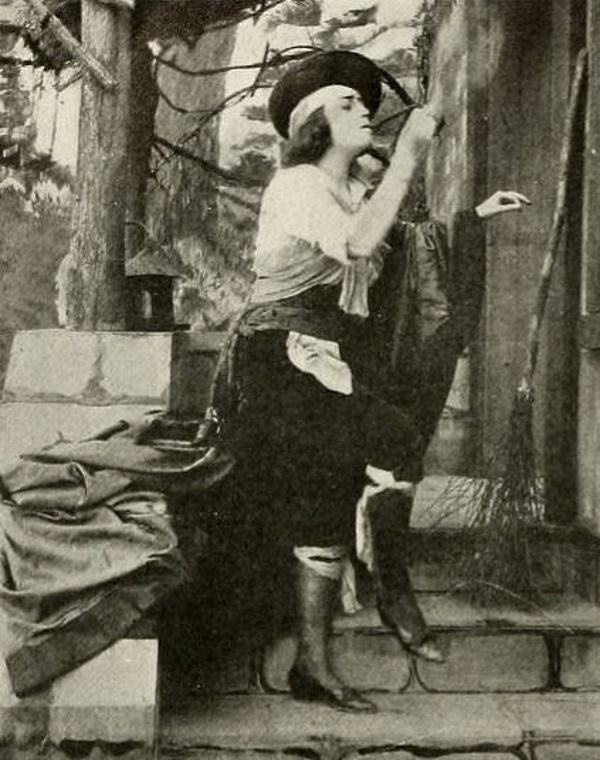
There are films you watch, and there are films that watch you—A Sister to Carmen belongs to the latter coven, a 1913 one-reel succubus that fixes you with kohl-ringed eyes and dares you to blink first.
Most silents merely age; this one ferments, its nitrate perfume headier now than when Helen Gardner first unfurled her lace mantilla and stepped into frame as the hermana left unnamed by Prosper Mérimée, a shadow-Carmen burning with the heat that Bizet’s opera could only musicalize. Director-writer Charles L. Gaskill, a forgotten cartographer of erotic doom, compresses Andalusian myth into a fever-chart thirteen minutes long, yet the after-image lingers for days, like blood in a glass of milk.
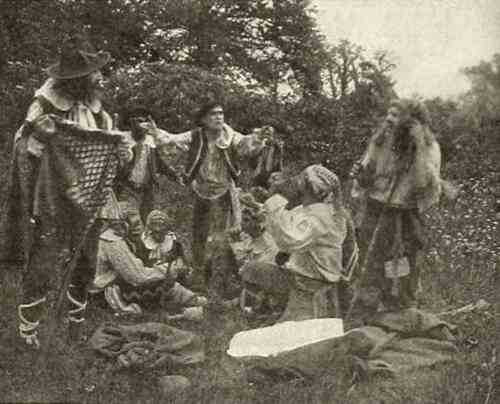
Forget the pastel postcards of 1909’s From the Manger to the Cross or the stately pageantry of With Our King and Queen Through India. Gardner’s Seville is chiaroscuro carnality: hand-stenciled crimson drips across tobacco leaves, ultramarine smears the night sky, and every cut feels like a pulse inside the throat. The camera—probably a hand-cranked Pathe—breathes, inching closer each time the heroine leans toward her next conquest, so that by the fourth shot the frame itself seems to sweat.
The cigarette factory becomes a cathedral of female labour, smoke rising like incense to a saint who never arrives.
Before Traffic in Souls trafficked in white-slavery sensationalism, before The Cheat let Sessue Hayakawa brand Fannie Ward, Gardner patented a brand of liquid-metal sexuality: part defiance, part invitation. Notice how she enters—back to camera, shawl slipping like a secret—then pivots only when the cigarillo embers flare, so her face ignites in the same heartbeat as the match. It is an entrance Giorgio Strehler would’ve applauded, a proto-Salome unveiling minus the biblical alibi.
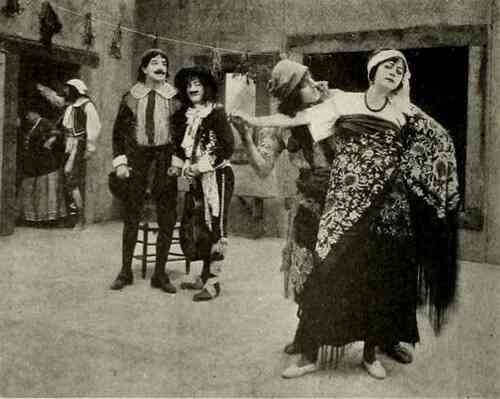
Watch her wrists: they speak a language older than flamenco. Each flick dismisses suitors the way a priest flicks holy water, yet the gesture is more erotic than any kiss captured on American screens that year—not even Les Amours de la Reine Élisabeth allowed Sarah Bernhardt this much corporeal intelligence.
Gaskill’s plot—ostensibly a cautionary fable—plays like a magic-lantern hallucination. A bullfighter (played, one suspects, by a studio stagehand who owned a bolero jacket) swears fidelity; our unnamed sister reciprocates with the languor of a cat regarding a canary. Enter a rival picador, all swagger and pomade. Jealousy detonates, blades glint, and suddenly the Plaza de Toros becomes an amphitheatre of fate where gender roles somersault: the men bleed, the woman watches, and the camera—shockingly—avoids the coup de grâce, cutting instead to Gardner’s smile widening like a tear in silk.
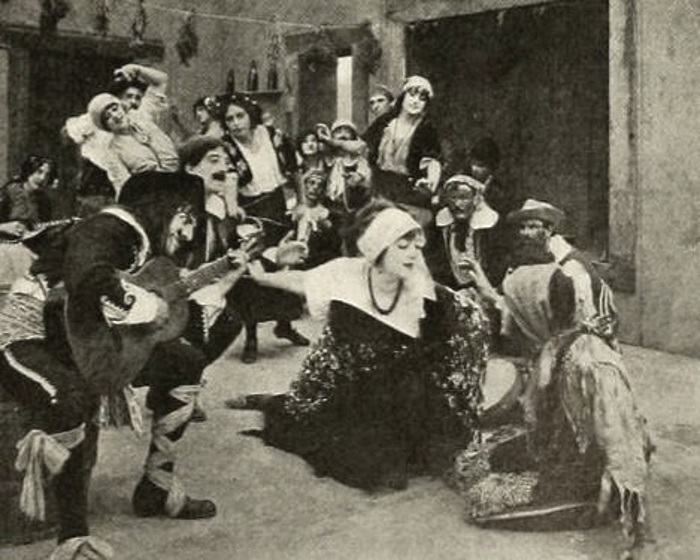
That ellipsis is modernity itself. Griffith, still rehearsing last-minute rescues in The Battle of Gettysburg, would not embrace such narrative cruelty for another year. The refusal to show the kill anticipates Hitchcock’s shower-scene mosaic by four decades.
Strip away the mantillas and castanets and you find a disquisition on erotic theology: woman as both seraph and serpent, promising transcendence while delivering annihilation. Yet Gardner complicates the myth; her Carmen-sister is no cold-blooded siren but a cartographer of her own pleasure, mapping the male body the way conquistadors once mapped the New World—by renaming, dominating, then discarding it.
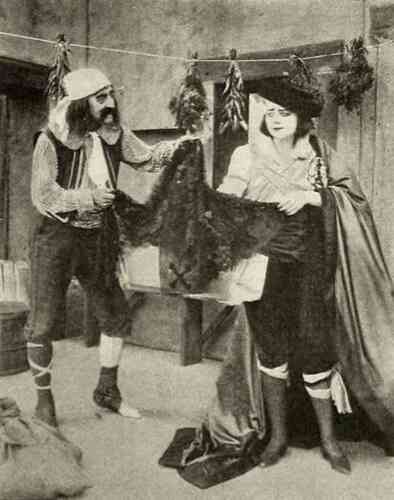
When she loosens her corset in close-up (a heartbeat before the censors of 1914 slammed the door on such freedoms), the gesture is less striptease than manifesto: My flesh, my rules. It is the same insurgent spirit that would roar to full throttle in What 80 Million Women Want seven years later, but here it is unfiltered, raw, dangerous.
Place A Sister to Carmen beside Cleopatra of the same cycle and you see how Gardner’s minimalism outshouts Theda Bara’s lavish decadence. Bara lounges on sphinx-shaped chaises; Gardner merely leans against a stucco wall, and the wall seems to blush. Contrast it with the sanctified tableaux of The Life and Passion of Jesus Christ: both traffic in iconography, but where Pathé’s Christ elevates, Gardner profanes, dragging the sacred into the sawdust of the corrida.
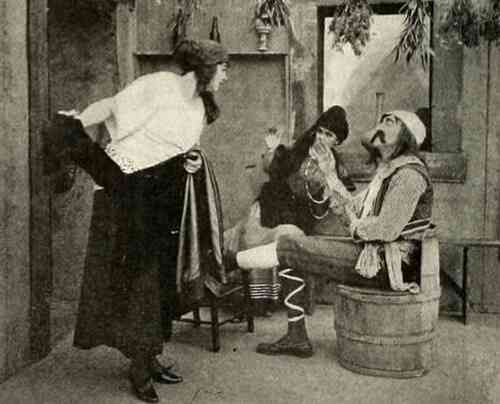
Even the Australian bushranger cycle—The Story of the Kelly Gang, Captain Starlight—offers masculine outlawry as civic romance. Gardner inverts the paradigm: her outlaw is gendered, her rebellion intimate, her bullets the curt punctuation marks of a woman rewriting the sentence men began.
Archival notes suggest the original tour engagements projected the film alongside live habanera renditions; today we watch in monk-like silence, and still the ears ring. How? Because every gesture is percussion: the snap of Gardner’s fan, metallic rasp of a switchblade, the hush when a body hits sand. The absence of synchronized sound transmutes the auditorium into an echo-chamber of our own heartbeats—an effect no Vitaphone symphony could purchase at any price.
For decades historians classed the picture among the lost, a casualty of nitrate decay and studio indifference. Then a 38 mm paper-print surfaced at the Library of Congress, smelling of vinegar and desertion. Digital 4K scans reveal pockmarks, yes, but also the grainy topography of desire: every pock is a pore, every scratch a scar. The tints—originally applied by stenciling sweatshops in Fort Lee—have been reinstated using photochemical witchcraft; the result is neither sterile nor mummified, but feral.
Scroll through contemporary prestige television—Killing Eve, Dark, even Bridgerton—and you will meet Gardner’s offspring: women whose allure is inseparable from menace, whose agency scalds. Yet none possess the temporal vertigo of this one-reel oracle, a film made when airplanes were canvas and Europe still had czars. To witness it is to step into a Möbius strip where 1913 and 2024 fold onto each other like lovers who cannot decide which century to deflower first.
Approach A Sister to Carmen not as museum piece but as séance. The lights drop, the projector’s shutter stammers like a pulse, and suddenly Gardner steps from the moth-curtain of history, eyebrows arched in amused recognition: So, you still don’t know what women want? She laughs—silent, merciless—and tosses her carnation into the lens. The petals explode into crimson dust that settles, not on the screen, but on your own skin. You leave the theatre marked, fragrant, complicit. The bullring is empty; the blood has dried; yet somewhere in the echo of your chest the crowd keeps roaring, demanding the next fool who mistakes passion for possession.
Verdict: 9.5/10 – A phosphorescent bullet fired from the birth-cinema chamber, still searing a century later.

IMDb —
1934
Community
Log in to comment.