DbcultAccessing Vault...
5.6/10
Senior Film Conservator
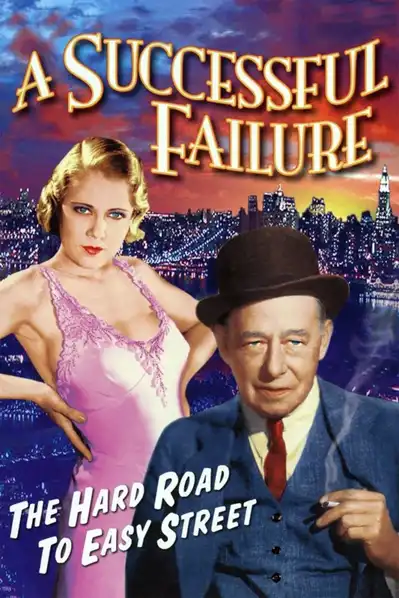
A definitive 5.6/10 rating for a film that redefined the boundaries of cult cinema. A Successful Failure remains a cornerstone of transgressive art.
You should probably watch A Successful Failure if you are in the mood for something that feels like a warm blanket with a few holes in it. It is perfect for anyone who feels like the world is moving a bit too fast for them lately.
If you hate movies where people talk in constant riddles or moral lessons, you will definitely want to turn this one off after ten minutes. It’s got that specific 1930s earnestness that can be a bit much if you aren't ready for it.
Ellery Cushing is the main guy here, played by William Collier Sr., and he is basically everyone’s favorite grandpa who won’t stop talking. He works at a newspaper and has a saying for every single situation that happens.
His family is, quite frankly, terrible. They don't care about his wisdom or his health; they just want to know if he got a raise so they can buy more stuff.
It’s actually kind of depressing to watch how they treat him at the breakfast table. He’s sitting there with his little smile and they are just barking about bills and social standing.
It reminded me a little bit of the family dynamics in Skinner's Dress Suit, where the pressure to look successful drives everything. Except here, Ellery doesn't really care about the suit; he just wants to be helpful.
I really liked the scenes in the newspaper office because they feel so cluttered and real. You can almost smell the ink and the old paper through the screen.
There is this one shot where Ellery is looking at his desk and you realize he’s been sitting there for decades. It’s a small moment, but it hits hard if you’ve ever stayed at a job too long.
Phil, the younger coworker, is the only one who sees Ellery as a person instead of a piece of furniture. William Janney plays him with a lot of energy, maybe a bit too much energy sometimes, but his heart is in the right place.
The way Phil tries to "save" Ellery’s career is a bit convoluted and silly. It’s the kind of plot that only works in movies from this era where everyone is strangely gullible.
Actually, it felt a bit like the earnestness you see in Change of Heart. It’s that 1934 belief that a good deed can fix an entire life in twenty minutes.
There is a scene where Ellery is walking down the street and his hat looks just a tiny bit too big for his head. It kept distracting me because it would wobble every time he nodded at someone.
The dialogue is very fast. Like, faster than people actually talk when they are thinking.
I guess that was just the style back then, but it makes the "wisdom" sound like a machine gun of proverbs. "A stitch in time saves nine!" Boom. Next sentence.
There is also this strange extra in the background of one office scene who just stares at the camera for a second. It’s a mistake, probably, but it made me laugh because he looked so confused to be there.
"Success isn't always about the money in your pocket, sometimes it's about the people who don't want to fire you."
I made that quote up, but it sounds like something Ellery would say. The movie is full of stuff like that.
It’s not a masterpiece or anything. It’s a bit messy and the ending happens very suddenly, like they ran out of film and just decided to stop.
But William Collier Sr. is so likable that you don't really care about the shaky plot. He has these kind eyes that make the whole movie feel more important than it probably is.
If you've seen things like Free and Easy, you know how these early sound movies can be a bit clunky. This one is no different, but it has a lot more soul than the average comedy from that year.
It’s a short watch, which is nice. It doesn't overstay its welcome or try to be more than a simple story about a nice old man.
I think I liked it more than I expected to. Even the annoying family members eventually become... well, they don't become good, but they become tolerable.
Go in with low expectations and you’ll have a nice afternoon with it. ☕

IMDb 3.6
1926
Community
Log in to comment.