DbcultAccessing Vault...
Cult Review
Senior Film Conservator
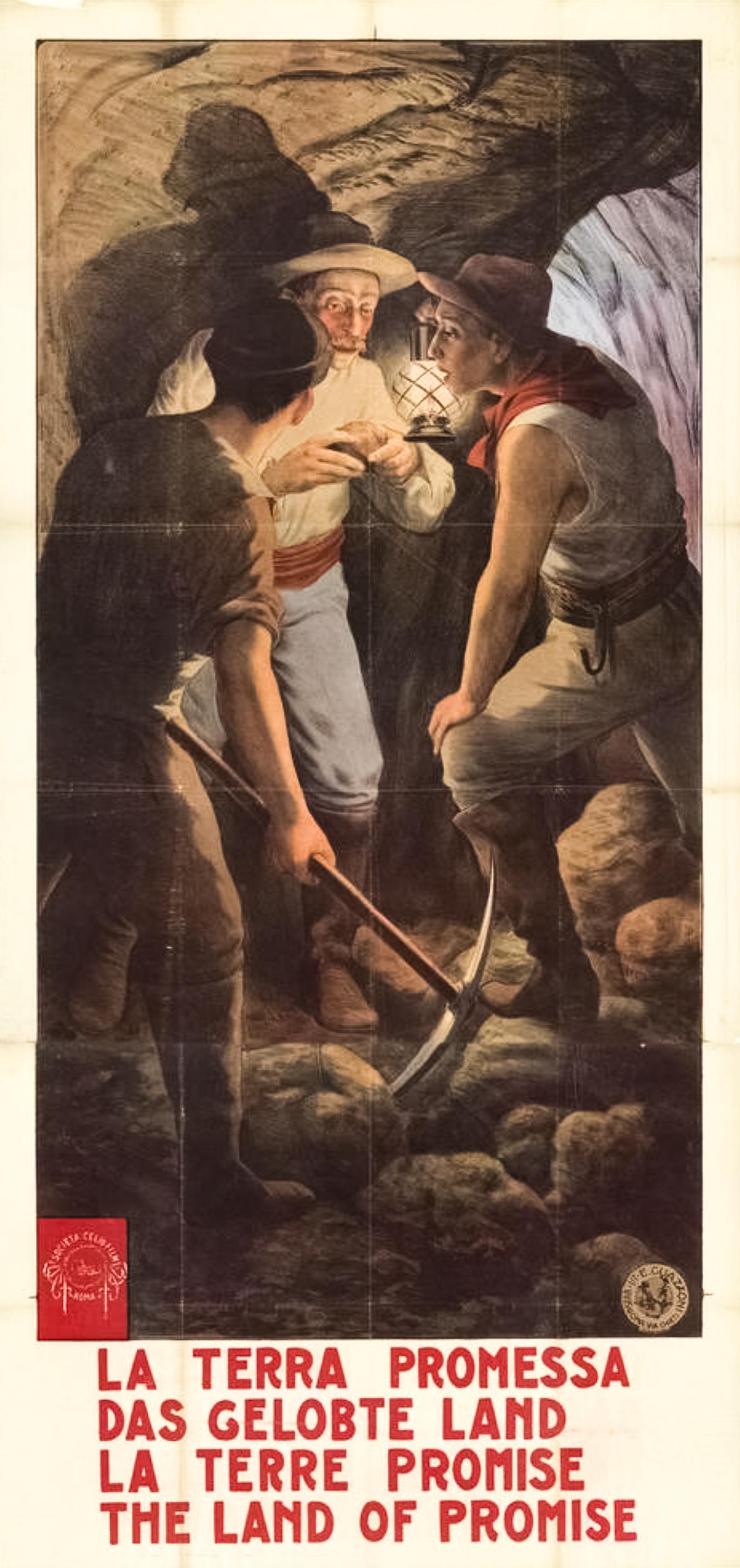
Imagine a Sicily where the soil itself sweats yellow crystals that grind lungs into parchment; where baronial balconies cast arabesque shadows across contracts written in human sweat. The Land of Promise—shot in the broiling summer of 1913 while Europe still flirted with monarchic certainty—opens on such terrain, camera perched on a clattering dolly that drinks in the sulfurous haze as if it were perfume. Enter Francesca Bertini, twenty-one, already a pagan goddess of the Italian screen, cheekbones sharp enough to slice the concept of nobility itself. She plays Countess Margherita di Rovasenda, a woman whose inherited acres are mortgaged up to the crucifix on the chapel wall. One eyeful of her and you know the land may be pledged, but she is not.
Opposite her looms Emilio Ghione—black fedora, cane tipped with a silver wolf’s head, smile that never reaches the eyes. His Tito Varona is a Milanese venture capitalist who smells of coal and cologne. Tito arrives with a proposition: sign over your sulphur rights, marry me, and I’ll cancel the debts plus ship half your starving peasants to America—steerage of course, but free. The scene is staged in a candle-lit library whose shelves groan under genealogies older than Vesuvius. Bertini lets the silence hang until dust motes freeze mid-air, then utters the line that shocked censors from Turin to Tunis: "My body is not a futures contract." She signs anyway—ink like arterial blood—turning the moment into a proto-feminist crucifixion.
Meanwhile Alberto Collo’s Dottor Sandro Lupo—agrarian idealist, sleeves rolled to reveal forearms mapped with veins—tramps through the sulphur mines cataloguing silicosis like a priest counting beads. He loves the Countess in the way one loves a season: hopelessly, seasonally. Their tryst occurs not in boudoirs but among lemon groves at dusk, the fruit glowing like paper lanterns. Cinematographer Alberto G. Cartio (borrowing tricks from Glacier National Park’s panoramic awe) rigs the camera on a lemon-branch swing, so when they kiss the world tilts 30°—a visual gasp that prefigures Vorkapich’s montage ecstasy a decade later.
The wedding sequence is a banquet of baroque cruelty: orchestras competing like rival stock exchanges, priests blessing freight manifests, and Tito auctioning the dowry silver while the bridal waltz still lingers. Ghione choreographs it like a pagan rite, circling handheld lights among the guests until faces become gilt grotesques. When the band strikes up Verdi, Bertini’s eyes spark with the realization that her marriage bed is merely an extension of the sulphur pits—yellow, acrid, lethal. She faints, veil cascading like a surrender flag. Intertitle cards (hand-tinted amber for the 1914 US release) read: "In the chamber of coins, even angels suffocate."
What follows is a swirl of sabotage: irrigation sluices dynamited under moonlight, share certificates fed to citrus presses, love letters smuggled inside crates of blood oranges. Collo’s agronomist leads the miners—faces powdered white to highlight black-lung despair—in a strike that feels less like labor agitation and more like liturgy. They chant in dialect, palms smeared with sulphur, resembling Byzantine mosaics come to vengeful life. Censors in Naples clipped the sequence, claiming it could "inflame the rural glands." The missing 9 minutes survive only in a 16mm print discovered in a Hoboken basement in 1978; the images are scarred, but the emulsion burns like scripture.
The final act catapults us across the Atlantic—an audacious on-location shoot. Director Giuseppe Ghezzi wrangled a derelict freighter, outfitted its hold with Italian extras paid in cigarettes, and sailed into New York harbor weeks after the La Follette Seamen’s Act began rattling steamer lines. Ellis Island scenes unfold in raw daylight: immigrants herded like dazzled cattle, doctors chalking chests, Bertini clutching a single valise monogrammed with a coat of arms now meaningless. The camera—hand-cranked on a pier—captures actual officials, actual detainees; reality intrudes so bluntly that fiction becomes its guest. When Margherita steps onto American soil, the Statue of Liberty is kept resolutely off-frame; Ghezzi’s radical choice insists that liberty is not a monument but a horizon one walks toward, forever receding.
The closing shot is a close-up for the ages. Bertini, wind off the Hudson whipping her widow’s veil, stares past lens and spectator, past history itself. A single tear forms—holds—refuses to drop. Over this Ghezzi superimposes steam from an unseen tugboat so the tear appears to evaporate into industrial mist. That suspended droplet anticipates every grainy post-war street face that Rossellini, De Sica, and Visconti will later coax from their non-actors. In other words: neorealism did not bloom in 1945; it crystallized here, in 1913, inside the glistening refusal of a Countess to let grief fall.
The 2018 Cineteca di Bologna restoration scanned two incomplete nitrate positives (one from Buenos Aires, one from Moscow) into 4K, then painted out scratches frame by frame. The sulphur clouds now billow in gradients of ochre and bruise; the lemon-grove dusk glows radioactive. Composer Timothy Brock rescored the film for a 38-piece ensemble, weaving Sicilian harvest songs with slow-burn dissonance reminiscent of Parsifal’s spiritual ache. The result is less accompaniment than contrapuntal argument—music that lifts images into the uncanny valley between opera and reportage.
Place The Land of Promise beside Life and Passion of Christ and you watch two modes of salvation: one mythic, one migratory. Pair it with Traffic in Souls and the Atlantic becomes a conveyor belt of bodies, 1913’s white-slavery panic rhyming with Ghezzi’s emigrant dread. Or juxtapose its sulphur mines with the gladiatorial arena in Spartacus: both spaces turn pigment into profit via pulverized lungs. Yet where Kubrick’s epic ends in cruciform revolt, Ghezzi’s whispers that revolt is merely the prologue to exile.
Because every frame is a negotiation between rust and gold, because Bertini’s gaze could indict empires, because the film invents neorealism while its contemporaries still chase theatrical tableaux. Because when the Countess steps onto that fog-shrouded pier, she carries centuries of unpaid wages in her pupils, and for a flicker we recognize our own passports stamped in debt. Stream it, archive it, teach it—just don’t embalm it in academic mothballs. Let its sulphur sting your nostrils until America feels less like a country than a creditor, less like destiny than an overdue bill finally, brutally, called to account.
IMDb —
1918
Community
Log in to comment.