DbcultAccessing Vault...
Cult Review
Senior Film Conservator
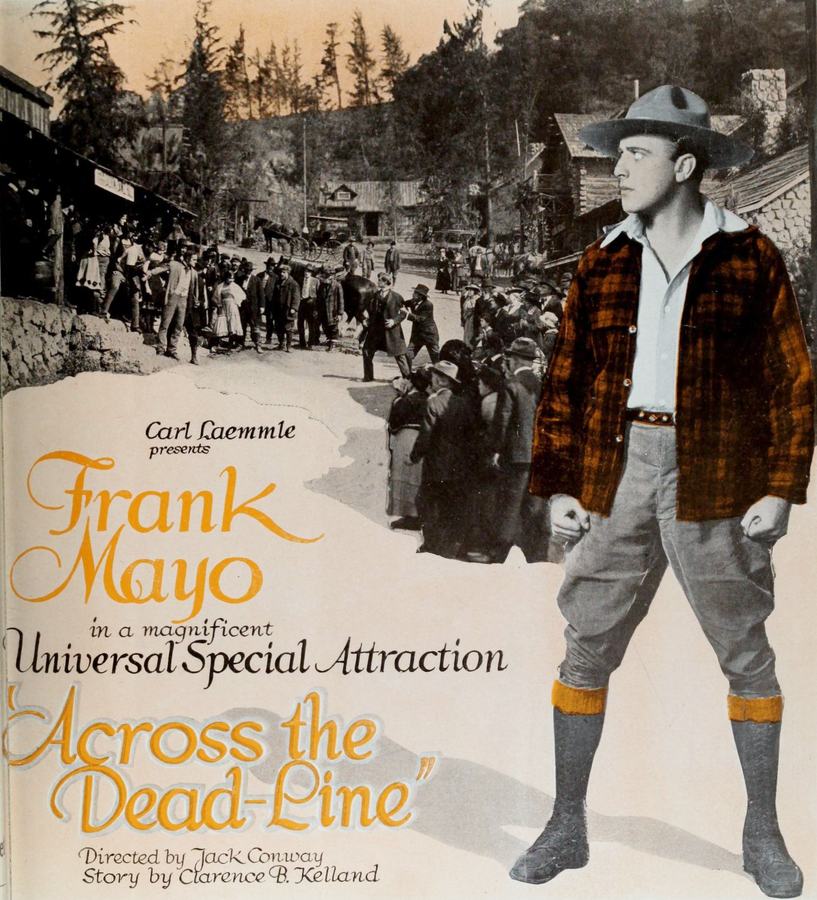
Gilead’s skyline is a graph of competing ambitions: church steeple versus derrick, both piercing heaven yet pulling opposite directions. Director George C. Hull inscribes this polarity into every frame, letting the camera linger on logs stacked like execution blocks while hymnals echo off corrugated tin. The town is less a place than a mechanism—each gear greased by either sanctimony or gin. When Aaron’s saloon pianist pounds out a ragtime riff, the tempo syncs with the sawmill’s blade, suggesting that debauchery and industry share the same arterial pulse. The effect is hypnotic: virtue and vice locked in a danse macabre atop a conveyor belt feeding into some cosmic shredder.
Amnesia plots usually reek of contrivance, yet here the device feels existential. The unnamed girl—played by Molly Malone with porcelain fragility that can crack into steel—embodies the American myth of self-reinvention. Her blank slate is Aaron’s canvas; he splashes color in the form of silk dresses and champagne trills, hoping to paint a siren capable of capsizing John’s Puritan vessel. But the performance is double-edged: while Aaron sculpts her outer temptress, interior memories bleed through like watercolor on over-soaked paper. Malone telegraphs this duality in micro-gestures: a blink held half-second too long when a familiar lullaby plays, a hand that clenches as if gripping an invisible child’s finger. The result is suspense not of action but of ontology—will she become the siren, or remember she was once someone’s daughter?
Wilfred Lucas endows John with the restless gait of a man forever outgrowing his shadow. Raised on catechism, his pupils nevertheless dilate at the first glimpse of ankle beneath a petticoat. Lucas’s body language oscillates between jerking away from temptation and leaning in with carnal curiosity—a tension so palpable it practically vibrates the intertitles. Watch him in the moonlit sequence where he first unshackles the kidnapped girl: every motion is a battle, fingers trembling like tuning forks struck by guilt. The scene lasts mere seconds, yet Lucas layers it with baptismal gravity. One senses that when the padlock clicks open, something equal in John also unlocks—maybe conscience, maybe chaos.
Russell Simpson crafts Aaron not as moustache-twirling villain but as weary Dionysus, bored with orgies and seeking a grander stimulation: moral corruption on an epic scale. His eyes gleam with the cold warmth of candlelight on pewter—inviting yet metallic. Note how he delivers exposition through a half-smile, as if every confession is also a seduction. When he confides to John that "virtue is just vice with bad marketing," the line hisses like a serpent quoting scripture. Simpson’s genius lies in showing that Aaron’s libertinism is itself a puritanism—an inverted absolutism every bit as rigid as Enoch’s.
In Josef Swickard’s hands, Enoch becomes a man whose spine seems forged from the same iron as the church bell he polishes each dawn. His performance is economy incarnate: a raised eyebrow carries the weight of thunder. The film’s most chilling moment arrives when he learns of his son’s transgression; without words, Swickard lets the color drain from his face until he resembles a marble effigy—God’s statue toppled yet unbroken.
Though dialogue is absent, the film is scored by the ghost of sound: the rasp of timber against saw, the syncopated clack of locomotive wheels, the hush of prayer that feels louder than gunfire. Contemporary exhibitors often accompanied Across the Deadline with a cue sheet blending Protestant hymns and saloon rag, creating a cognitive dissonance that mirrors the narrative’s schism. Today, viewed in pristine 2K restoration, those phantom melodies still echo in the cranium; one finds oneself mentally inserting the dampened thud of boots on pine needles, the serrated inhale before a kiss.
Cinematographer Frank Thorwald lights faces like Renaissance canvases: saints bathed in ethereal key lights, sinners gnawed by Rembrandt shadows. A pivotal dolly shot glides from the saloon’s amber haze to the church’s frigid blue, traversing the moral spectrum in a single unbroken breath. Such bravura technique predates the more celebrated expressionism of Murnau, hinting at what Hollywood might have pioneered had commerce not shackled experimentation.
Unlike The Girl-Woman’s compliant ingénue or True Heart Susie’s self-sacrificing saint, the heroine here wields oblivion like a weapon. Her lack of history destabilizes the patriarchal ledger; both factions seek to inscribe upon her body their preferred narrative. In reclaiming her memory, she rewrites the power dynamic, becoming the author—albeit at terrible cost. The film thus anticipates later femme-noir fatalism, though it tempers empowerment with tragedy: to seize agency is to invite catastrophe.
Set the film beside The Tavern Knight’s swashbuckling penance or Anna Karenina’s adulterous doom and you’ll find a missing link: a morality tale that refuses to moralize. The Four-Flusher treats sin as farce; His Naughty Night titters at titillation. Across the Deadline gazes deeper, asking whether purity and perdition share the same bed, only arranging the blankets differently.
Modern viewers weaned on TikTok tempo may fidget at the deliberate first act, yet patience yields dividends. Each scene functions like a tuning peg, tightening thematic strings until the climactic confrontation thrums with Wagnerian tension. The kidnapping occurs at the reel-change of act one, a narrative hinge disguised as cliffhanger. From there, the plot coils inward, eschewing external spectacle for psychological chess, culminating in a showdown whose violence is more metaphysical than sanguinary.
Scriptor Clarence Budington Kelland transposes theological debates onto frontier soil, letting predestination square off against free-love paganism. Enoch’s sect treats grace as a ledger; Aaron’s congregation worships the moment’s nectar. John’s journey becomes a microcosm of America’s perpetual pendulum between revival-tent fervor and roaring-twenties hedonism, foreshadowing the cultural whiplash of Prohibition’s rise and fall.
"Deadline" evokes both journalistic urgency and Civil War prison camps—lines beyond which life becomes forfeit. In context, it’s the invisible frontier between self-mastery and self-annihilation. Every character strides that line, some retreating into safety, others plummeting. The genius lies in never literalizing the metaphor; the word hovers like a buzzard above every frame, letting viewers map their own moral cartography.
Watch for Lydia Knott as the silent aunt who, in a single tear-smeared close-up, exudes decades of maternal disappointment—a masterclass in micro-acting. Or Frank Mayo’s turn as the logging foreman whose shrug at moral ambiguity speaks entire manifestos. These fragments stitch the film’s tapestry, proving that silent cinema’s power often resides in the aperture between intertitles.
The 2022 restoration sourced a 35mm nitrate print from the Cinémathèque de Paris, riddled with vinegar syndrome yet retaining charcoal-rich blacks. Digital artisans employed 8K scanning, particle-based dirt removal, and re-grading to match 1920s cyan-tinted night sequences. The result is paradoxically pristine yet haunted, like a cathedral freshly sandblasted but still echoing centuries of whispers.
Too many silents gather dust, caricatured as quaint stepping-stones to sound. Across the Deadline rebukes that condescension. It is a raw nerve of a film, pulsating with questions America still fails to answer: Can freedom exist without restraint? Does memory liberate or shackle? Is salvation transactional? Viewing it today feels less like archaeological excavation than staring into a mirror smeared with soot—reflection distorted yet unmistakably ours.
Stream the restoration, dim the lights, and let the sawmill’s dirge score your own reckoning. Just don’t expect comfort; comfort here is as alien as a sermon in a speakeasy. What you’ll find instead is a testament to cinema’s adolescence—gangly, impulsive, yet capable of depths talkies wouldn’t match until the noir cycle of the mid-’40s. Across the Deadline doesn’t just deserve rediscovery; it demands confrontation. Cross it, and there’s no uncrossing.
IMDb 2.1
1919
Community
Log in to comment.