DbcultAccessing Vault...
Cult Review
Senior Film Conservator
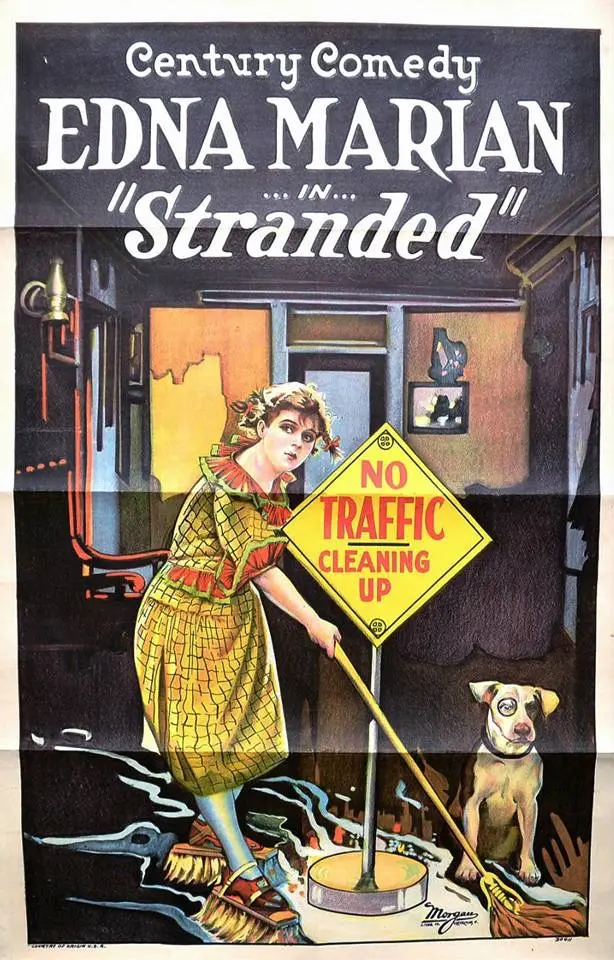
Is Stranded (1925) worth watching today? Short answer: Only if you are a dedicated historian of silent-era slapstick or a fan of Edna Marion’s specific brand of frantic energy. This film is for viewers who appreciate the 'B-side' of 1920s cinema—those who have already exhausted the catalogs of Keaton and Lloyd and want to see how the other half lived. It is decidedly NOT for anyone looking for a cohesive narrative or the high-production values found in epics like The Four Horsemen of the Apocalypse.
William Watson’s 'Stranded' is a fascinating relic of a time when the line between vaudeville and cinema was still incredibly thin. It operates on a logic of pure momentum, where characters exist solely to facilitate the next gag or the next costume change. It is loud in its silence, aggressive in its pacing, and surprisingly cynical in its portrayal of the 'theatrical life.' While it lacks the poetic grace of the era's masterpieces, it offers a raw, unpolished look at the low-budget comedy mills of the mid-20s.
This film works because it captures the frantic, multi-tasking reality of the 1920s working girl through Edna Marion, who carries the entire production on her back with genuine comedic timing.
This film fails because its second half devolves into a repetitive 'peek-a-boo' routine with the Follies girls that feels more like a marketing gimmick than a narrative choice.
You should watch it if you want to see a rare example of a female lead in a 1920s slapstick role that isn't just a 'damsel' but a gritty, blue-collar entrepreneur.
At the heart of 'Stranded' is Edna Marion, an actress who deserves more recognition in the pantheon of silent comedians. Unlike the ethereal stars of Chickie, Marion is grounded in the dirt. In the opening sequence, her rivalry with Hilliard Karr’s character isn't just about driving; it’s about survival. The way she maneuvers her bus—a clunky, rattling beast of a machine—is played for laughs, but there’s an underlying grit to it. She isn't just a driver; she’s a hustler.
One of the most striking moments occurs when the scene shifts to the hotel. Marion’s character isn't just the driver who brought the troupe; she is the hotel's entire staff. We see her transition from steering a wheel to flipping flapjacks and scrubbing floors in a series of quick cuts. This 'Swiss Army Knife' approach to characterization is where the film finds its best rhythm. It’s a satirical take on the exploitation of labor, though Watson likely just saw it as a way to keep his lead actress in every frame. It works. But it’s flawed.
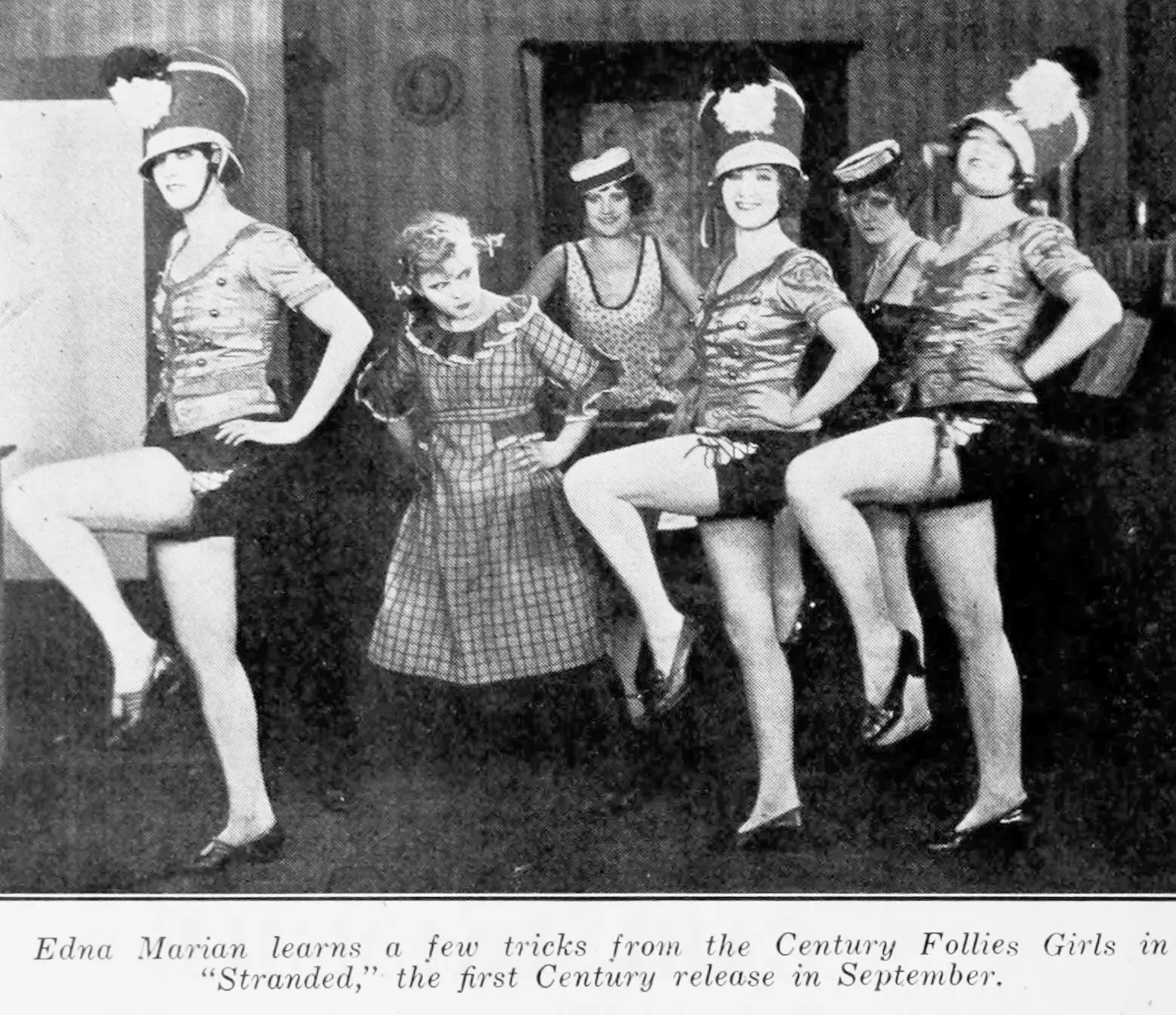
The introduction of the 'Century Follies Girls' changes the film’s DNA. Suddenly, the blue-collar comedy turns into a proto-musical farce. The plot point involving the 'undress rehearsal' is a clear attempt to draw in the 'tired businessman' demographic of 1925. While it’s tame by modern standards, there is a voyeuristic energy to these scenes that feels distinct from the more wholesome comedies of the time, such as Let's Go.
The rehearsals attract a crowd within the film, and Watson uses this to create a meta-commentary on the audience’s own desire to see the 'forbidden.' The camera lingers on the performers in a way that feels slightly disconnected from the bus-driving rivalry of the first act. It’s a tonal whiplash that the film never quite recovers from. One moment we are watching a clever gag about a broken engine, and the next, we are peeking through keyholes. It’s a debatable choice—some might call it variety, others might call it a lack of focus.
If you are looking for a quick, 20-minute burst of historical curiosity, yes. 'Stranded' provides a window into the transitionary period of silent comedy where slapstick began to merge with more suggestive, 'follies' style entertainment. It is a short, punchy experience that doesn't overstay its welcome, even if it doesn't leave a lasting emotional impact.
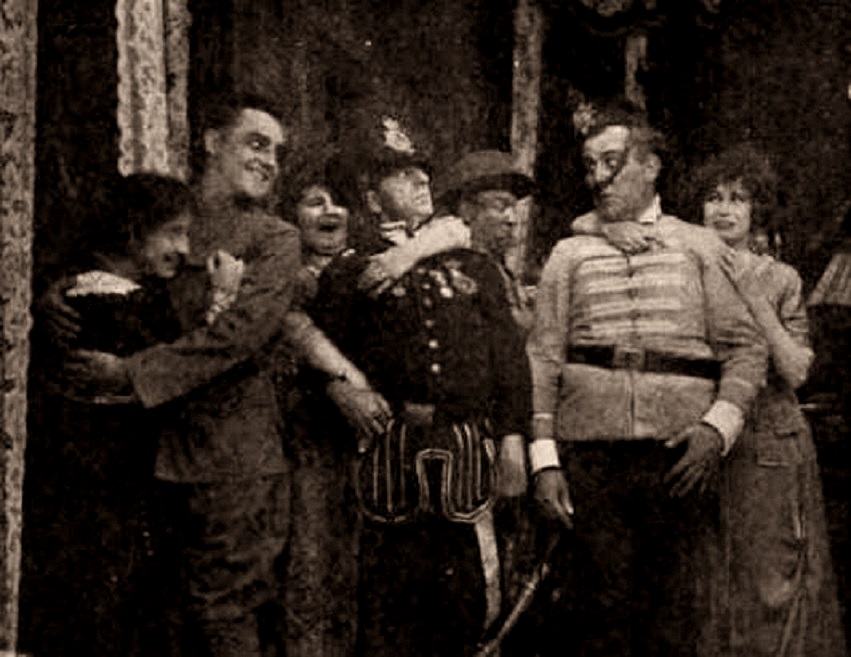
The cinematography in 'Stranded' is functional rather than artistic. Unlike the moody, shadowed frames of Assunta Spina, Watson keeps everything in flat, bright light. This is standard for comedy, as it ensures every facial expression and every trip-and-fall is visible. However, the final chase sequence shows some technical ambition. As the actors try to flee without paying, the camera moves with a frantic energy that mirrors the desperation of the hotel staff.
The way luggage is seized during the chase is a highlight. It’s a literal 'stripping' of the actors' status. They go from being glamorous performers to being 'stranded' once again, but this time without their costumes or their dignity. This circularity in the plot is one of the few sophisticated narrative touches in the film. It suggests that in the world of 'Stranded,' everyone is just one unpaid bill away from disaster. This is a recurring theme in many films of the era, including the more dramatic Alone in London.
The pacing of 'Stranded' is its greatest asset and its greatest liability. It moves at a breakneck speed, which prevents the viewer from questioning the absurdity of the plot. How does one woman run an entire hotel? Why are the actors rehearsing in their underwear in a public-facing room? The film doesn't care, and by the time you ask, the scene has already changed. It lacks the disciplined structure of Plain Clothes, opting instead for a 'throw everything at the wall' approach.
"Stranded is a film that treats the human body like a prop and a hotel bill like a death warrant. It is the definition of 'disposable' entertainment that somehow managed to survive for a century."
'Stranded' (1925) is a fascinating, if messy, piece of cinematic history. It doesn't have the emotional depth of Shattered Idols or the refined wit of The Sporting Venus, but it possesses a kinetic energy that is hard to ignore. Edna Marion proves she could stand toe-to-toe with the best of them, even when the material is beneath her. It’s a film about the grind—the grind of work, the grind of show business, and the grind of survival. It’s not a masterpiece, but it’s a vivid, sweaty, and occasionally funny snapshot of a world that was moving too fast to look back. Watch it for the history, stay for the luggage-throwing chaos, but don't expect it to change your life.
IMDb —
1935
Community
Log in to comment.