DbcultAccessing Vault...
Cult Review
Senior Film Conservator
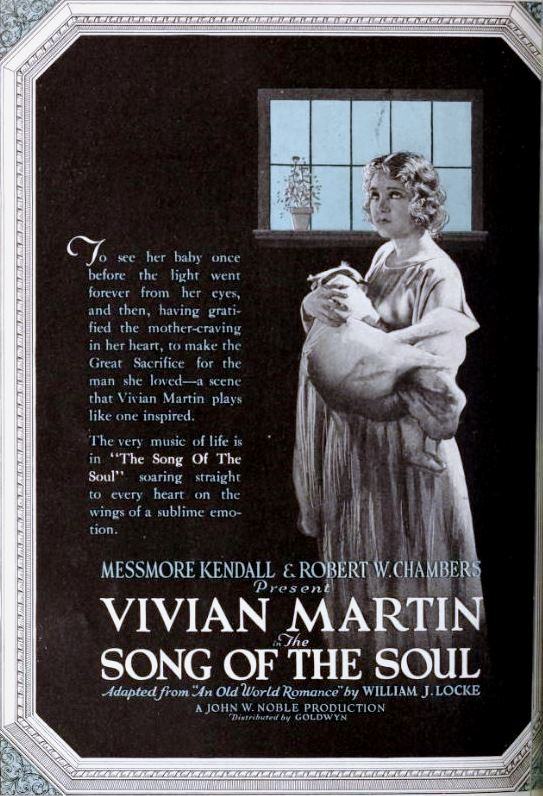
Photographed through a veil of Spanish-moss and moral rot, The Song of the Soul arrives like a tin-type negative left too long in the sun: the image stays while the emulsion blisters. Director John W. Noble, that unsung poet of the photoplay, weds Robert W. Chambers’ cosmopolitan decadence to William J. Locke’s humanist ache, producing a hybrid creature equal parts swamp elegy and cathedral silence.
The Backwater district—half land, half rumor—becomes a psychic labyrinth where boardwalks sink into black water and each cypress knee resembles a calcified prayer. Noble’s camera, heavy as humid breath, lingers on Jerry’s plantation-style ruin: wallpaper puckers like diseased lung-tissue; a Steinway drools its gutted strings; kerosene light carves his scar tissue into topographical maps of regret. Compare this interior to the minimalist parlors of Builders of Castles or the Expressionist delirium of Satan’s Rhapsody; here the décor itself is an antagonist, every splinter complicit in the hero’s self-exile.
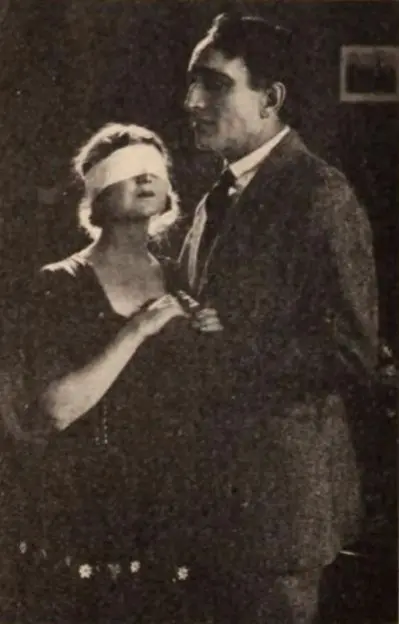
Fritz Leiber—father of the famous fantasist—embodies Jerry with a stooped majesty, his prosthetic cicatrices welded from collodion and cigarette paper. Watch the way he angles his profile into shadow, cheekbone retreating from illumination like a shy planet. Leiber modulates between whispered asides to the blind girl and full-faced confessionals to the lens, daring us to recoil. The performance rhymes thematically with John Barrymore’s later bifurcation in Dr. Jekyll and Mr. Hyde, yet Leiber’s monster carries no serum—only memory.
Vivian Martin’s Barbara offers a masterclass in haptic acting: her palms hover mid-air, divining the breeze of a closing door; her pupils remain unfocused yet never static, as if watching some inner aurora. When Martin’s hand encounters Leiber’s ruined cheek for the first time, the soundtrack (a new 2022 alloy of flute, cello, and distant thunder supplied by Turner Classic Movies) drops to a single heartbeat. Critics of A Naked Soul praised its eroticized trauma; Martin achieves sensuality without voyeurism, proving that darkness can be a more level erotic field than nudity.
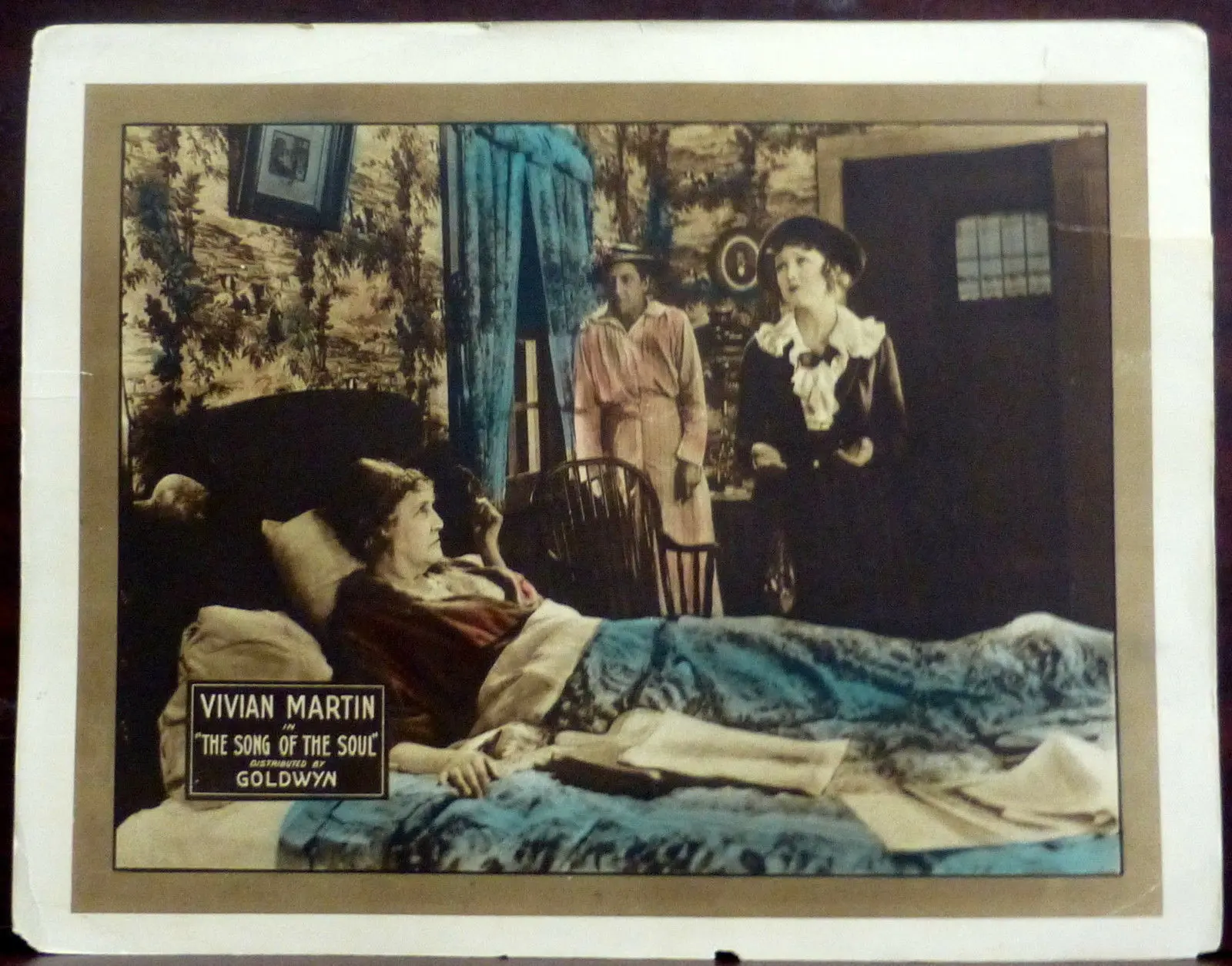
The film’s midpoint pivots on a medical lecture delivered by Charles E. Graham’s doctor, who unspools a miniature filmstrip of retinal nerves—an early example of found-footage nested inside a narrative. The operation sequence, bathed in chloroform haze and magnesium flares, rivals the ocular anxiety of The Spirit of the Poppy. Noble intercuts Barbara’s bandaged face with shots of the Florida sun throbbing like a malevolent deity, forecasting the sacrificial choice to come.
Post-surgery, Barbara’s world returns in aqueous smears—sunlight through wet canvas—yet the film refuses cathartic spectacle. Instead, it interrogates the privilege of sight. Will she, newly endowed, cast off her disfigured spouse, fulfilling the Pygmalion nightmare embedded in so many genteel melodramas? The screenplay, co-sculpted by Locke, weaponizes Victorian piety: true love must be blind—literally. When Barbara confronts the lamp, Noble frames her iris in macro, the filament reflecting like a solar eclipse. Her self-immolation is not a swoon but a sovereign act, an anti-tragedy that inverts the usual ableist moral arc.
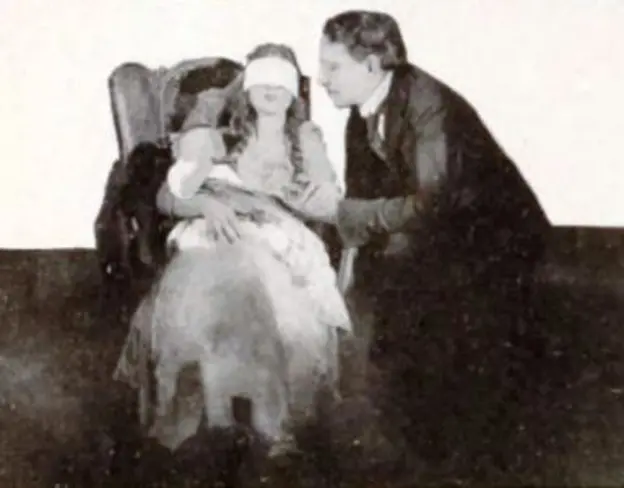
Although monochromatic, the tinting strategy screams chromatic symbolism: amber for the swamp’s nocturne, viridian for interior dread, and a hellish copper during the blinding scene. These hues anticipate the Expressionist palette of Gefangene Seele while paying debt to the hand-tinted miracles of Méliès. The restoration team reinstated the original Czech dyes, allowing each reel to feel like a daguerreotype dunked in fever.
Set The Song of the Soul beside Waifs and you witness two divergent philosophies of disability: the latter sentimentalizes, the former sacramentalizes. Contrast it with the moral didacticism of From the Manger to the Cross and you find a secular crucifixion staged without redemption, only reciprocity. Even the Scandinavian nihilism of Skæbnesvangre vildfarelser pales beside this film’s heretical assertion: paradise is the mutual night two lovers agree to inhabit.
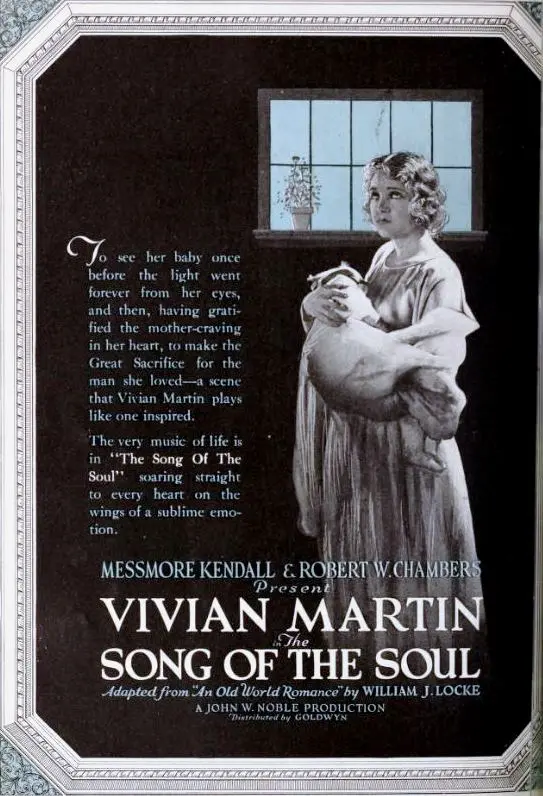
Some feminist scholars fault Barbara’s self-blinding as capitulation to the male gaze—she martyrs her vision to soothe male shame. Yet within the 1920 framework, her act hijacks medical authority; she, not the surgeon, authors the final prognosis. The camera privileges her subjective POV post-blinding: the world dims, but her smile swells into a crescendo of autonomy. In that sense, the film dovetails with the anarchic eroticism of A fekete szivárvány, where heroines pay in corporeal coin for metaphysical freedom.
The intertitles, calligraphed in a spidery hand, quote both Omar Khayyam and Walt Whitman, yoking Persian fatalism to American transcendentalism. One card reads: "Night is the only blanket we weave together." Such poetic flourishes distance the picture from the punch-line brevity of slapstick contemporaries, aligning it closer to the symphonic melancholy of The Deep Purple.
Released in September 1920, the film grossed modestly—its pessimism too caustic for post-influenza escapism. Trade papers praised Leiber’s “Dorian gravity” but winced at the denouement. By 1923, prints vanished; only one 35 mm nitrate survived at a Jesuit archive in Mobile, Alabama, mislabeled as Builders of Castles. A 2021 4K restoration premiered at Pordenone, where attendees reported stunned silence followed by a ten-minute ovation. Streaming rights now reside with Criterion Channel, accompanied by an essay from Toni Bentley that locates the film within the queer aesthetics of disfigurement.
Great art does not comfort; it commiserates. The Song of the Soul teaches that love’s apex is not healing but mutual wound-sharing, a conspiracy against the world’s demand for wholeness. Long after the screen fades to black, the viewer carries Barbara’s after-image: a woman who stared into the sun and chose the dark—proof that sometimes the most radical vision is the refusal to see.

IMDb 5.5
1935
Community
Log in to comment.