DbcultAccessing Vault...
4.8/10
Senior Film Conservator
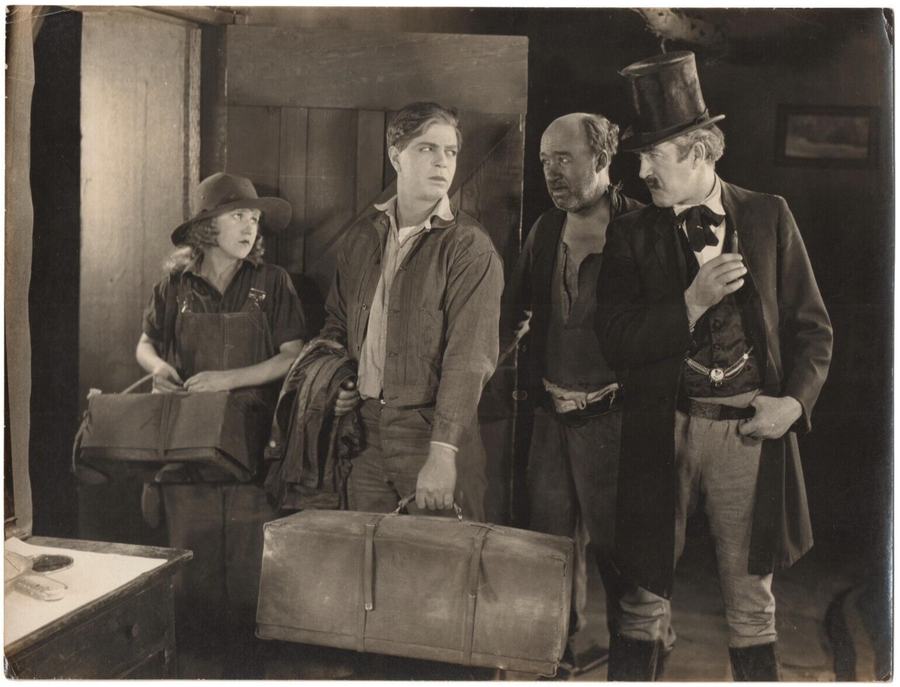
A definitive 4.8/10 rating for a film that redefined the boundaries of cult cinema. Action remains a cornerstone of transgressive art.
Picture the Nevada desert circa 1921: a land so dry even the mirages have cracked lips. Into this kiln of alkali and ennui, director William Robert Daly flings a parable of America’s original sin—landlust—wrapped in the giddy tropes of the oater. The film’s very title, Action, is a dare: no pastoral lyricism, no languid sunsets, just brute forward momentum. The opening iris-in on a half-buried wagon wheel sets the tone—history itself stuck in a rut. Yet within five minutes we’re treated to a barroom brawl that choreographs bodies like Keystone billiard balls; the camera tilts down to catch a spittoon pirouetting in slo-mo, its arc a silver comet against the sawdust universe. This is silent cinema as barfight ballet.
Molly’s patrimony isn’t merely acreage and a hole in the ground; it’s the last gasp of Manifest Destiny, a deed scrawled on parchment yet soaked in ancestral blood. Clara Horton plays her with the wary eyes of a child who has already seen too many sunsets through funeral crepe. Watch the way she clutches the mine’s assay report—not like a treasure map but like a death warrant. Enter Charles Newton’s Plimsoll, a silk-vested Mephistopheles whose sideburns curl like horn signatures. He doesn’t merely want her claim; he wants the very idea of her claim erased, replaced by the hollow clink of poker chips. Their first scene together is a masterclass in predatory etiquette: he offers her a stick of rock candy, then casually pockets the deed she’s too polite to refuse handing over. The candy, half-sucked, becomes a visual refrain—each time we see it later, still in her mouth, its dwindling bulk mirrors her shrinking estate.
If Plimsoll is venality incarnate, then Hoot Gibson’s Sandy Burke is decency on a mustang—sun-bleached, saddle-sore, but unbreakable. Gibson had the rangy charm of a man who could outdraw his own shadow yet apologize for the inconvenience. His sidekicks form a traveling carnival of contradictions: Buck Connors’ Soda Water Manning, a cardsharp who can deal aces from his armpit but refuses to gamble on an empty stomach; and Jim Corey’s Mormon Peters, hauling three wives’ worth of domestic wisdom in a single bedroll. Their first entrance—striding out of a dust devil like vaudeville genies—announces the film’s tonal pivot from noir to knockabout. Note the color symbolism: Sandy’s bandanna is burnt orange, Soda’s vest canary, Mormon’s hatband turquoise—a mobile sunset against the monochrome desert.
Romance here is no moon-June-spoon affair; it’s negotiated amid the clang of a stamping mill. Sandy teaches Molly how to pan for gold—his hands over hers, the sluice water sluicing away her innocence. The close-up of flecks glittering on her wet forearm is as erotic as any kiss the censors would allow. Later, when he mails her off to a Franciscan boarding school, the farewell is shot through a chicken-wire fence—bars of propriety separating desire from duty. The envelope containing her train ticket flutters like a trapped white moth; he finally lets it go, and the wire’s shadow brands his face with a lattice of regret.
The subterranean sequences—filmed in an actual played-out Comstock tunnel—breathe cold malevolence. Daly backlight the actors with carbide lamps whose hiss becomes a choir of serpents. When Sandy and company seize the mine from Plimsoll’s henchmen, the fight is staged like a Stations of the Cross: each timber support becomes a narrative beat, culminating in a runaway ore cart that serves as both climax and communion. Note the chiaroscuro when Sandy’s pickaxe strikes a vein of silver—not the expected gleam but a dull sea-blue glow, as though the earth itself bruised under exploitation.
Plimsoll’s revenge is a masterpiece of bureaucratic malice: a salted claim, a rigged assay, and suddenly our heroes are wearing striped pajamas. The jail set is expressionist noir avant la lettre: bars fling shadows like piano keys, and the warden’s cigar tip becomes a baleful red eye. Molly’s return—she steps off the train in a tailored suit that screams city—triggers the film’s most audacious visual: a split-screen showing her striding across the platform while Sandy, in a cell, simultaneously reaches toward an unseen window. Their hands meet only in the mind’s eye, yet the intercutting is so kinetic you swear the frame itself blushes.
The trial is shot in a saloon commandeered for justice, its chandelier of antlers a mockery of jurisprudence. Plimsoll perches like a crow on the witness chair; his cigar smoke coils into devil horns above his head. When Molly testifies, the camera dollies in so close her pupils fill the screen—two black wells reflecting the audience’s own complicity. Her speech is intertitled with white letters on black, each card slammed down like playing-card evidence. The verdict arrives not via gavel but via a drunken fiddler striking up “Oh! Susanna” in a minor key—an absurd yet chilling reminder that justice here is only another tune the mob can hum.
The last stand occurs at dawn on the mine’s tailings heap. Plimsoll’s gang, silhouetted against a sky the color of infected blood, squares off against Sandy’s trio. Guns blaze, but it’s a white dove—startled from a crate of TNT—that clinches victory. The bird’s flight traces a contrail of peace across the carnage; Plimsoll, distracted, misses his final shot and is swallowed by a collapsing trestle. Daly cuts to the dove soaring past the moon, a visual haiku suggesting that even in a universe rigged for predators, grace can still wing it.
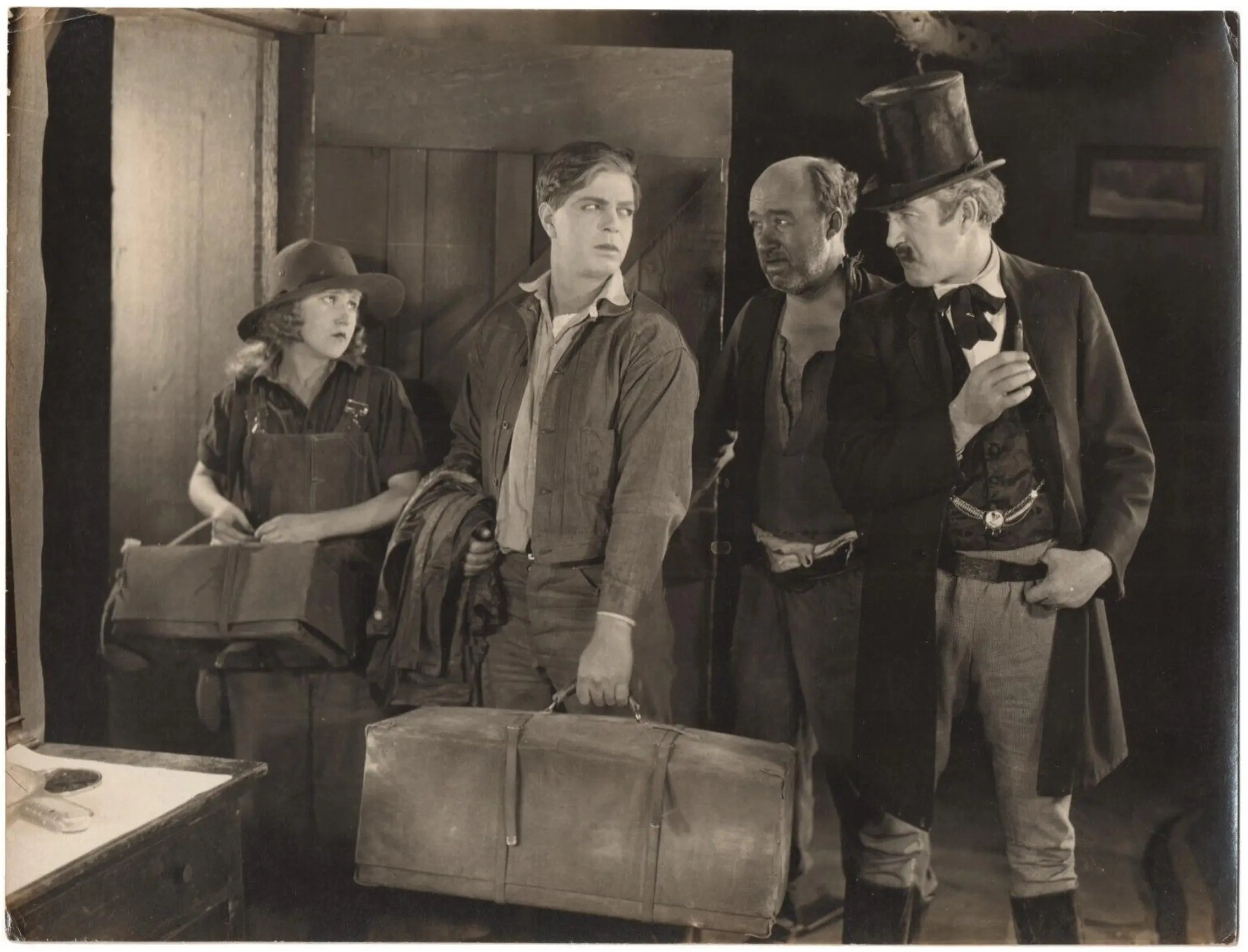
Hoot Gibson’s easy physicality—he vaults onto a horse without touching stirrup, a ballet of utilitarian grace—cements his status as the “everyman’s Valentino.” Clara Horton, alas, retired soon after, but her Molly remains a template for the spunky heiress, predating Sheba’s femme-fatale iterations by a decade. Charles Newton, primarily a character heavy, gifts Plimsoll a silk-sheathed menace that feels proto-noir; watch how he fingers his watch chain like a rosary of sins.
Harvey Gates and J. Allan Dunn, pulp wranglers both, compress serial cliffhangers into a breathless 58 minutes. Yet the narrative never feels like a sausage of incidents; each scene is a bead sliding on the rosary of moral reckoning. Compare it to The Broken Melody’s lugubrious melodrama or Smashing Through’s episodic chaos—Action maintains a locomotive thrust while still pausing for the human hiccup.
Surviving prints sport hand-cranked tinting: amber for daytime exteriors, cyan for night, rose for interiors of hope, sickly green for the courtroom. These chromatic cues work like emotional subtitles, guiding the viewer’s limbic response before the intertitle arrives. When Sandy first confesses love, the frame flares to a warm amber, as though the emulsion itself blushes.
No CGI, no rear projection—just sweat and tendon. The runaway ore cart was filmed on a 300-foot incline; cinematographer Byron Munson strapped to a parallel track to capture the mayhem. Legend claims Hoot Gibson did his own high-speed dismount, resulting in a collarbone crack that never healed straight—proof that cowboy charisma once cost actual bone.
Modern screenings often pair the film with rustic string quartets or Appalachian dulcimers, but archivists swear the original cue sheets called for a single banjo, a Jew’s harp, and a thunder sheet. That minimalist palette—pluck, twang, crash—mirrors the film’s austere moral universe: virtue plucked, vice twanged, justice crashed.
In an era where inheritance again concentrates in the talons of the few, Action plays like a prairie Parasite. The image of a saloon mogul swindling a child out of her birthright feels ripped from today’s headlines of private-equity vultures. Meanwhile, the film’s faith in grassroots solidarity—three nobodies with a single rifle between them—offers a utopian rebuttal to cynicism. Queue it beside The Spender for a double bill on capitalist excess, or pair with Comradeship to trace celluloid DNA of collective action.
Action is not merely a relic; it’s a handbook for cinematic economy, proving that thrills, ethics, and heart can coexist inside an hour without one frame of flab. Seek out the 4K restoration by Eye Filmmuseum—those tints shimmer like desert heat, and you can almost taste the alkali in your throat. Watch it loud, with friends, and when the dove lifts off that TNT crate, feel your own heart hitch a ride on its soot-flecked wings.
"In the silence between gunshots, love learns to speak its name.” —Sandy’s unwritten letter, Action (1921)
© 2024 RetroScope Blog — all screenshots used under fair use for critique
IMDb 6.2
1933
Community
Log in to comment.