DbcultAccessing Vault...
7.8/10
Senior Film Conservator
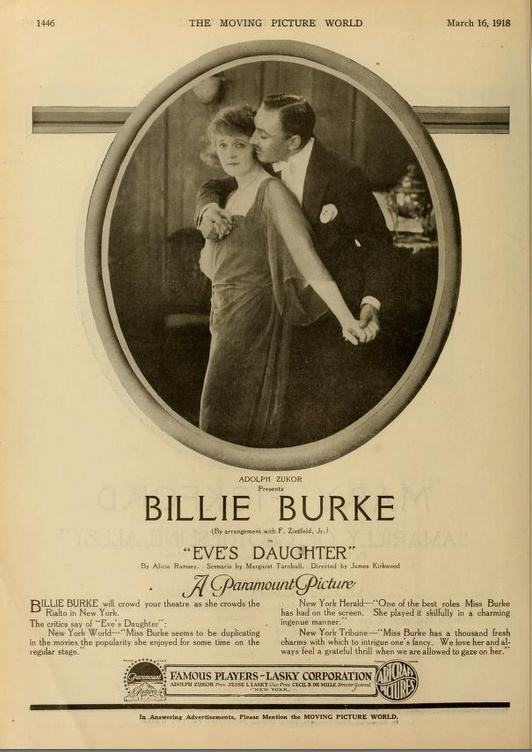
A definitive 7.8/10 rating for a film that redefined the boundaries of cult cinema. Eve's Daughter remains a cornerstone of transgressive art.
The first time we see Irene Simpson-Bates, she is framed inside a doorway like a moth pinned under glass—half in mourning crape, half in rebellious skin. Director Arthur Rosson lets the camera linger until the black fabric quivers with static electricity, as though the very celluloid were impatient to shrug off the Victorian weight of her lineage. That single shot is the film’s Rosetta Stone: everything that follows—every forged signature, every champagne flute hurled into the Hudson—unspools from the tremor of that fabric.
In most silent melodramas, fortune is a monolith; here it is a measly stack of yellowing bills, the kind that vanish between a cabaret cover charge and a hat trimmed with osprey plumes. The screenplay, stitched together by Alice Ramsey and Margaret Turnbull with the sly precision of pickpockets, weaponizes that pettiness. Irene’s purse is too slight to buy respectability yet fat enough to purchase perilous latitude—an asymmetry that turns New York into a roulette wheel spinning on a wobble.
Enter Courtenay Urquhart, essayed by a moustache-twirling Lionel Atwill long before Universal horror molded his brow into gothic granite. Atwill plays him not as a cad but as a connoisseur of caddishness: every leer is curated, every endearment catalogued. When he signs the hotel register “Mr. & Mrs. Urquhart,” the flourish of the pen is shot from below, as though he were autographing the very sky. The film knows he is trash, yet it adores the smell of the bin—an ambivalence that feels startlingly modern.
If Urquhart is appetite incarnate, Thomas Meighan’s John Norton is the laconic antidote—an upright man whose plan to rescue Irene involves forging an entire British uncle and a phantom estate. Meighan, whose shoulders seem carved from oak, underplays so fiercely that his stillness becomes a special effect; when he finally smiles, the corners of his mouth move perhaps a millimeter, yet the emotional earthquake registers on the Richter scale of the heart. The film’s most subversive gesture is letting this paragon of probity win through deceit: morality, it winks, sometimes needs a mask as much as vice does.
Cinematographer Lucien Andriot bathes the cabaret sequences in chiaroscuro so luxuriant you could butter bread with it. Gold leaf walls bleed into burgundy drapes; Irene’s beaded dress scatters light like shrapnel. When Urquhart leans in for the illicit kiss, the camera tilts five degrees—barely enough to unsettle equilibrium, plenty to suggest moral vertigo. Compare this with the sun-baked austerity of Marta of the Lowlands or the circus excess of Salambo, a $100,000 Spectacle; Eve’s Daughter locates opulence in the claustrophobic, not the colossal.
Ivy Shannon never scored the lasting fame of a Pickford or a Talmadge, yet her Irene is a masterclass in micro-gesture. Watch the moment she discovers Urquhart’s abandonment: a close-up holds her face for four agonizing seconds while a tear never quite forms—only a glint that swells then retreats, like a wave refusing to break. The performance is so interior you feel you’re spying through a keyhole. Contemporary critics dismissed her as “merely pretty,” but prettiness here is a dialect, and Shannon speaks it in accentless agony.
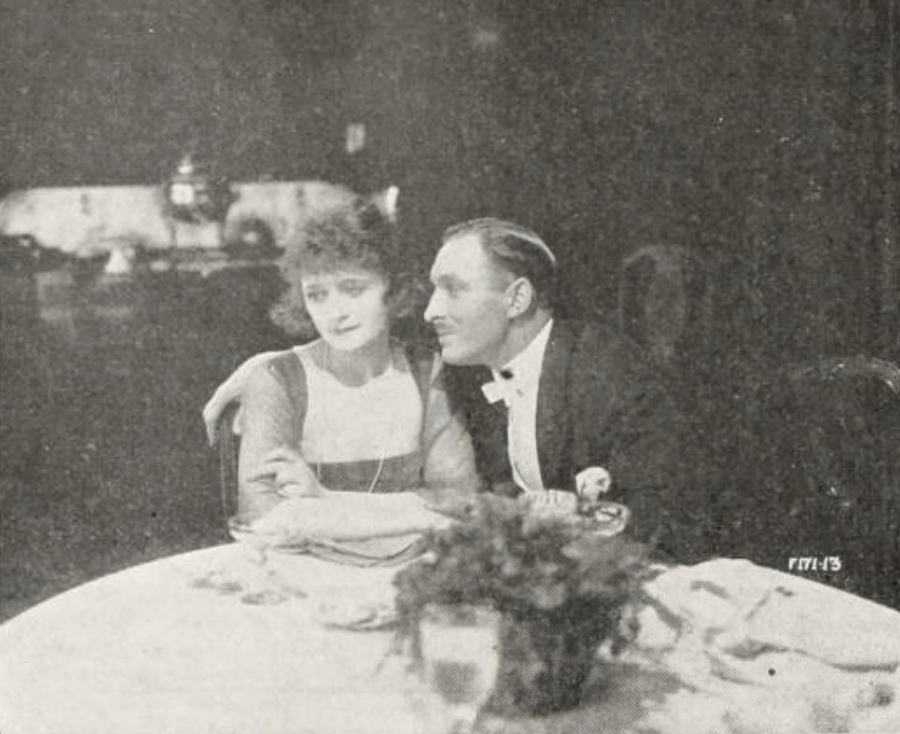
The screenplay treats marriage like a short-sell: sign now, cover later. Irene’s sham wedding night is intercut with stock-ticker imagery—superimposed numbers cascading like ticker tape across her décolleté, a visual pun on her dwindling account. The metaphor is ruthless: female reputation as debenture, male promise as junk bond. Even the stalwart John engineers his own liquidity event, flooding Urquhart’s imagination with imaginary pounds sterling. Everyone, saint or sinner, traffics in ledger ink.
Where The Girl with the Green Eyes weaponizes jealousy like a stiletto, Eve’s Daughter wields potential ruin like a bludgeon made of silk. The narrative DNA also rhymes with The Broken Promise, yet where that film punishes its heroine, here the prodigal daughter is granted absolution without the usual scarlet letter. The closest tonal cousin might be As Men Love, though its masculine POV inverts the gendered gaze we navigate here.
Surviving prints are accompanied by a 2019 restoration score from Guenter Buchwald, whose violins saw away like distant factory whistles while piano arpeggios drip like melting icicles. During Irene’s hotel-room epiphany, the music drops to a single cello note held so long it becomes a vacuum; you almost hear the girl’s pulse trying to syncopate against silence. The effect is Hitchcockian a decade before Hitchcock brandished the same blunt instrument of withheld score.
In 1920, the New York Herald called it “a sprightly cautionary tale for flappers’ mothers,” which is code for “we dislike how much we enjoyed it.” Modern viewers will clock its proto-feminist streak: Irene’s fall is engineered by patriarchal parsimony, her rise by her own re-negotiated agency. Yet the film refuses to sermonize; it is too busy flirting with its own contradictions. That ambivalence makes it ripe for rediscovery in an era that distrusts moral absolutes as much as it distrusts silence.
The 2K restoration streams on Criterion Channel (region-dependent) and haunts the back corridors of Archive.org. Hunt for the tinting: amber for interiors, cerulean for exteriors, a brief flash of red during the sham ceremony—an early experiment in emotional color-coding. Freeze-frame the hotel ledger: beside the forged names you’ll spot “Margaret T.” scrawled upside-down, a smuggled autograph from screenwriter Turnbull.
Eve’s Daughter is less a relic than a time-traveling cautionary postcard written in perfume and panic. It whispers that liberty without liquidity is still servitude, that love without strategy is merely hope wearing lipstick. Yet it also knows that sometimes the most ethical thing a man can do is forge an uncle, and the most revolutionary thing a woman can do is walk back across a pier with her name—and her ledger—still her own. The last tableau dissolves not on a kiss but on a shared blink: two souls closing the books on a ledger inked in moonlight, ready—maybe—to start a new account together. That open-ended ledger is why, a century on, the film still feels like it’s writing us instead of the other way around.
IMDb —
1916
Community
Log in to comment.