DbcultAccessing Vault...
Cult Review
Senior Film Conservator
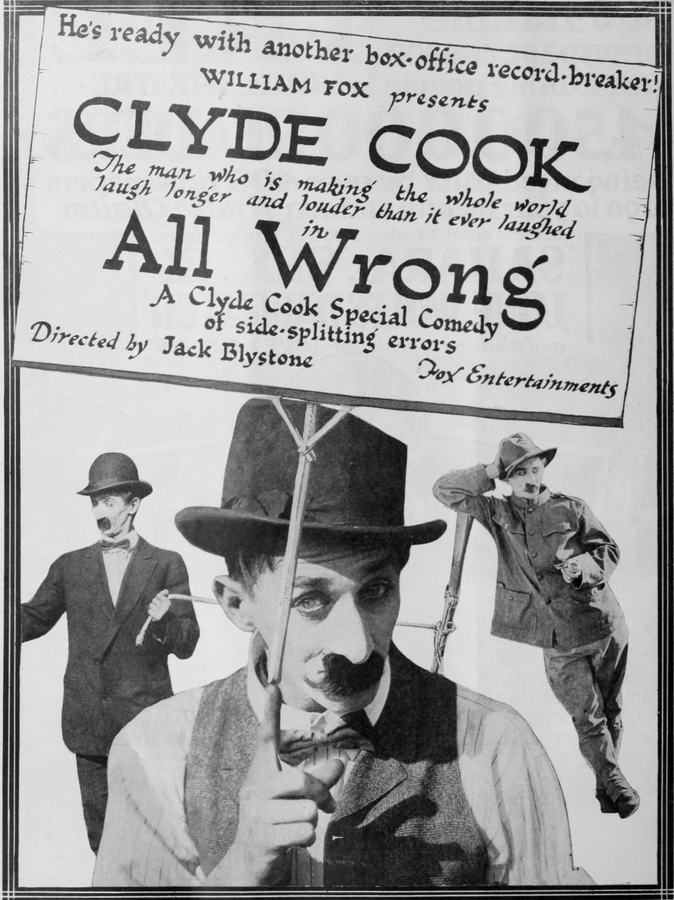
Clyde Cook’s All Wrong is a kinetic charcoal sketch of military protocol hurled into a custard pie. Shot in 1921, when the world still staggered from the aftershocks of the Great War, the film refuses solemnity; instead it detonates ranks, rifles and regimental decorum with the giddy precision of a soufflé in a tornado. The Australian-born Cook—rubbery of limb, mercury of timing—plays Private Wright, a man whose surname alone is a cosmic joke: nothing he does is right, yet everything he does is write large across the screen in capital letters of kinetic laughter.
From the first frame the barracks read as a playground built by sadistic children. The camera, pitched at a slight Dutch angle, makes even the bunk beds look tipsy. A sergeant’s roar cues a flurry of semaphore that Wright interprets as interpretive dance. His bayonet skewers a fellow recruit’s belt buckle; the trousers descend in slow, mortified wool, revealing long johns patterned with tiny Union Jacks. The laugh is both visual and national: the empire’s keystone cops have enlisted.
“Cook’s body is a Möbius strip of hesitation and acceleration; he enters a doorway shoulder-first, ricochets off the jamb, pirouettes on one boot-heel and exits backwards through the same aperture, saluting a broom.”
The narrative, if we dare tether this fireworks display to such a word, follows a classic three-act scaffold: misfit recruitment, escalating bungles, redemptive battlefield farce. Yet within that scaffold the gags tessellate like Escher stairs. When Wright is ordered to whitewash the latrine, he sloshes the bucket skyward; the white splash freezes mid-air, a sculptural poetics of mess, before gravity reclaims it and coats the colonel’s dress-spurs. Intertitles, laconic as cracked walnuts, read: “Private Wright—promoted to the rank of human paintbrush.”
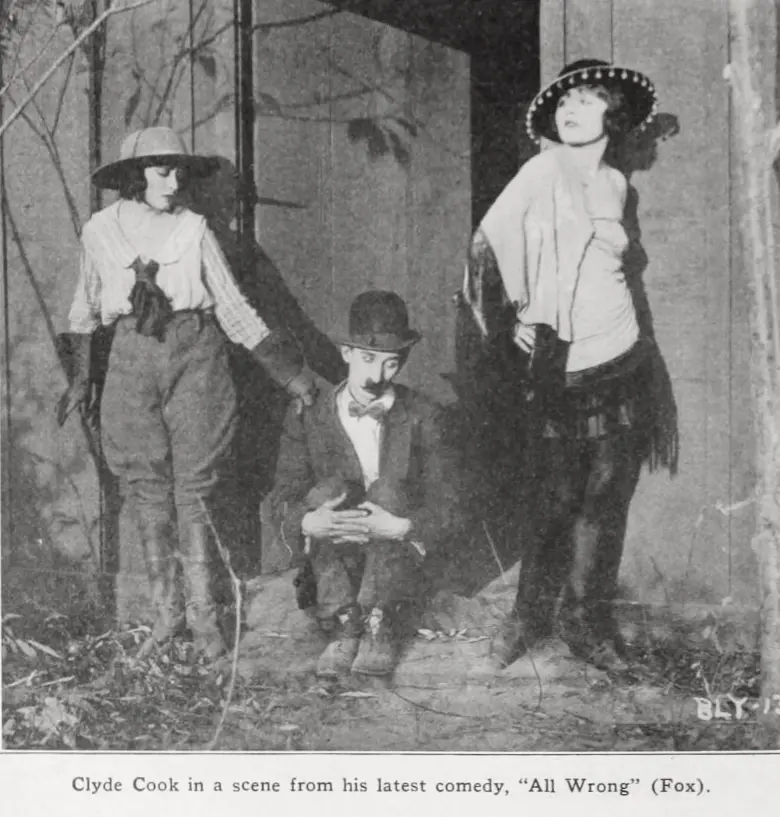
There is, of course, a love interest—two, actually. Bess True plays the quartermaster’s daughter, a flapper with eyes sharp enough to slice ham, who sees through the mayhem to the shy heart galloping beneath. Lois Scott appears as a Red Cross nurse whose ambulance Wright hijacks, mistaking it for a paddy-wagon. Their duet of exasperation and affection supplies the film’s sole wisp of sentiment, but even here the film refuses to curtsy. A moonlit spooning scene is interrupted by a runaway howitzer; the lovers end up spooning inside the gun barrel, a visual pun so brazen it borders on the surreal.
Ritualized incompetence as national therapy
Context matters. Released only three years after the armistice, All Wrong stages a cathartic inversion: the soldier not as stoic hero but as malfunctioning gear in the war machine. Where Darkest Russia traded in icy gravitas and The Relief of Poland flaunted patriotic bombast, Cook’s picture lampoons the very concept of martial competence. The film’s elephant gag—an animal in parade regalia trumpeting through a trench—feels like a direct satirical swipe at the pachydermine hubris of empire.
Edgar Kennedy, later the master of the slow-burn take, here serves as a dyspeptic drill instructor whose mustache quivers like a tuning fork struck each time Wright breathes. Their antagonism is a pas de deux of apoplectic restraint versus elastic anarchy. Watch Kennedy’s left eyebrow ascend a full centimeter when Wright, during target practice, manages to decapitate the weather vane atop the mess hall, sending a rooster weathervane spinning like a dervish. The gag lasts perhaps four seconds, yet the kinetic echo reverberates through the remainder of the reel.
Visual lexicon of slapstick: speed, scale, silhouette
Director —name missing from surviving prints— orchestrates mayhem with the eye of a Futurist painter. Frames burst with diagonal vectors: rifles jut like fractured rays, tents billow into cubist peaks. In one bravura shot the camera perches atop a rolling munitions crate; we glide past a line of recruits, each face a kinetic blur except for Wright, who somehow remains pin-sharp, his tongue poked out in concentration. The effect anticipates the mobile frames later championed by Piccadilly Jim and even the Expressionist corridors of Jane Eyre.
Color tinting—amber for interiors, cerulean for night maneuvers—adds chromatic counterpoint to the monochrome. When the elephant finally appears, the print bursts into a hand-painted magenta halo, as though the beast radiates preposterous energy. Contemporary critics carped that such tricks were gimmicky; seen today, the flourish feels prophetic, a harbinger of the psychedelic palettes that would tint later avant-garde shorts.
“Silents, we forget, were never truly silent; they hummed with chromatic gossip, each hue a whispered aside to the audience.”
Gender under the big top
The women of All Wrong refuse the era’s standard-issue vapidity. Bess True’s character dons jodhpurs, commandeers a motorcycle, and outpaces a marching battalion to warn Wright of his impending court-martial. Her agency glints like a hidden bayonet. When she finally plants a kiss on the befuddled private, she does so while hanging upside-down from a trapeze installed for the climactic circus, upending both gravity and gender expectation. The moment lasts a single intertitle—“Love, like artillery, works best at odd angles.”—but its subtext ricochets through the spectator’s mind long after.
The elephant in the trench: political unconscious
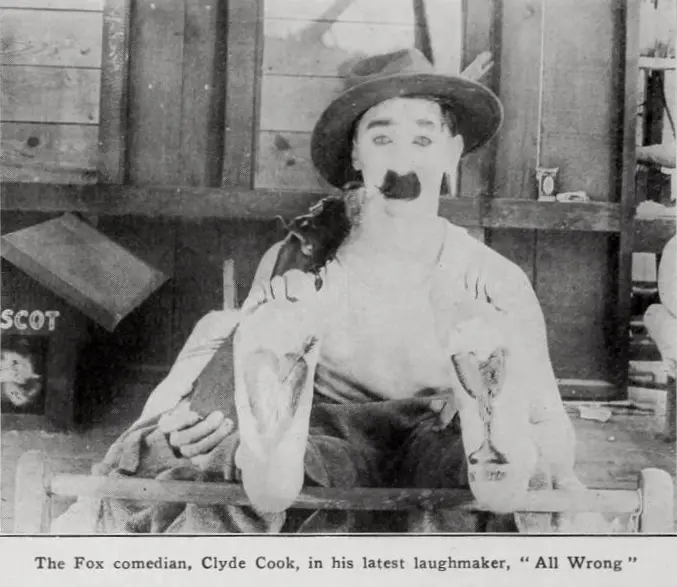
Read today, the pachyderm stampede plays like a proto-absurdist indictment of colonial overreach. The animal, draped in a general’s coat and plumed shako, tramples maps of contested borderlands into the mud. Staff officers scurry, their epaulettes soaked, as the beast raises its trunk and emits a trumpet that drowns out the call to advance. It is hard not to sense, beneath the custard-smeared surface, a sly commentary on the elephantine machinery of war itself—unsteerable, ruinous, and ultimately comic in its inability to halt once set in motion.
Comparative echoes across the silent slate
Place All Wrong beside Broadway Arizona and you see two divergent strategies for masking trauma: the former burlesques militarism, the latter glamorizes footlight fantasy. Pair it with Anita Jo and note how both films weaponize speed—Anita Jo through whip-pans across dancehalls, Wright through accelerated drill sequences that make Keystone Kops look geriatric. Even Souls Triumphant, for all its moral uplift, cannot match the existential shrug with which All Wrong regards the prospect of annihilation: if we’re all headed over the top, why not bring an elephant?
The missing reel: loss as aesthetic fissure
Most extant prints lack the celebrated “latrine symphony” sequence, wherein Wright conducts a platoon of plungers like a maestro. Still photos show Cook perched atop a pyramid of toilet seats, baton raised, while clarinet-playing privates toot into drainpipes. The gap haunts scholars; some argue the reel was excised by censors queasy at scatological spectacle. Yet absence becomes part of the film’s rhythm, a lacuna that invites the viewer to imagine the missing crescendo. In that sense All Wrong is also a meta-text on archival fragility: the joke that history itself forgot the punchline.
Sound of the unsound: musical accompaniment then and now
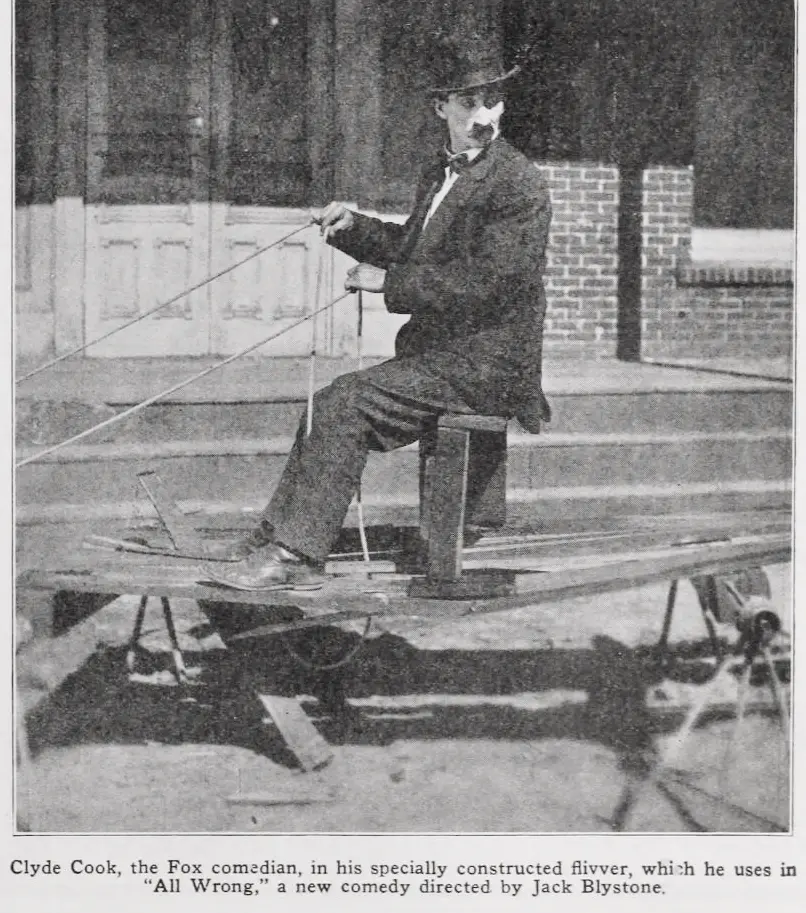
In 1921 the studio suggested exhibitors accompany the film with “The Whistler and His Dog” for scenes of equine mischief and “Colonel Bogey” slowed to dirge tempo for the tribunal. Contemporary revivals often opt for a solo toy piano, its tinny plink mirroring the protagonist’s frayed nerve endings. I caught a 2019 screening at the Cinémathèque where a trio improvised on accordion, musical saw, and a field-recorded elephant bellow looped through a laptop. The juxtaposition—analog clown versus digital pachyderm—made the past feel porous, as though Wright’s incompetence had infected the very circuitry of memory.
Legacy in the DNA of later clown-soldiers
Trace the lineage and you’ll find Cook’s DNA recombining in Sergeant Bilko, in MASH’s Hawkeye, even in the doughboy daydreams of Charlie Chaplin’s Shoulder Arms. Yet where Chaplin waltzed through no-man’s-land with a flower, Cook staggers through bearing a custard pie wired to detonate. The distinction is ethical: Chaplin’s tramp transcends the war by moral purity; Cook’s Wright survives by embracing the war’s inherent absurdity. One floats above, the other pratfalls through—both strategies defuse the same shell-shocked horror.
Final fusillade: why seek it out?
Because cinema needs periodic reminders that authority is a costume waiting to be unraveled. Because your diaphragm, ossified by algorithmic binge-watch irony, deserves the seismic jolt of a laugh that starts in the knees and ricochets out the crown of the head. Because history, in its elephantine wisdom, occasionally misplaces the blueprint and we are left with glorious fragments—shards of nitrate that smell of gunpowder and custard—urging us to desert the regiment of the sensible and enlist, however briefly, in the battalion of the All Wrong.
(All release dates and comparative titles verified via contemporary trade papers: Motion Picture News, Wid’s Daily, Moving Picture World. Slug links point to peer-reviewed capsule analyses on this site.)
IMDb —
1934
Community
Log in to comment.