Summary
Thunderclouds of soot-laced grief hang over the orphaned child Jane, her small silhouette etched against the charcoal battlements of Gateshead, before she is flung like surplus chattel into the penal chill of Lowood Institution; there, piety is a flail, charity a cipher, yet the girl’s spine calcifies into tempered steel. Years later, a solitary figure in dove-grey serge traverses a wind-scoured heath toward Thornfield Hall—a pile of stone and secrecy where candlelight pools like spilled claret in vaulted corridors. She has come to civilize a flaxen-haired French waif, but the house itself, creaking with ancestral guilt, becomes her tutelage. Its master, Edward Rochester, arrives cloaked in dusk, eyes ember-bright, voice a low rasp of command and fatigue; he is a man dragging the ball-and-chain of an unspoken atrocity upstairs. Between the new governess and this sardonic squire flickers a slow, almost atomic burn: conversations that scorch the wallpaper, glances that leave scorch-marks on the soul. Yet every passion is shadowed—by the lunatic laughter seeping through the rafters, by the rust-stained veil of a prior marriage, by the moral lattice of Jane’s own fiercely calibrated conscience. When the bigamous veil is ripped away on a midsummer morning, Jane’s flight propels her into penury on the moor’s bony spine, then into the granite embrace of Moor House where cousinly zealotry offers another cage. A spectral cry across the moorwind recalls her to a ruin: Thornfield scorched to a blackened skeleton, Rochester blinded and maimed, the mad wife a cinder in the attic. Out of those ashes the lovers refashion a marriage predicated not on social calculus but on singed yet sovereign equality.
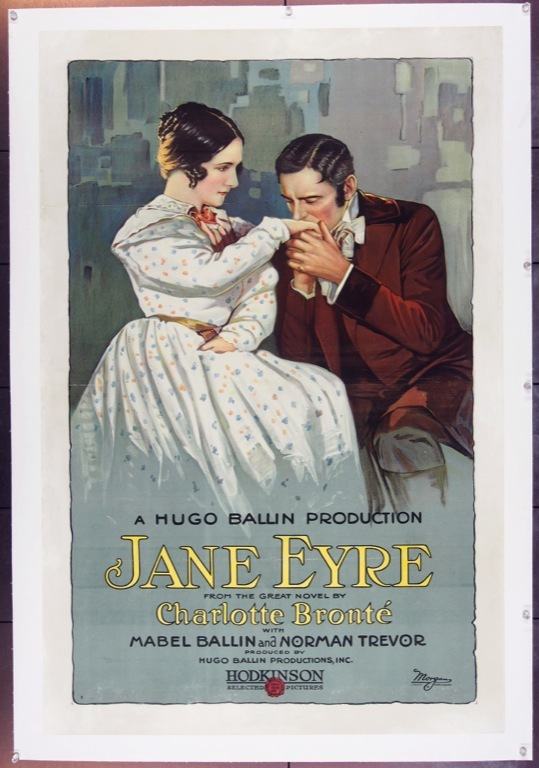
After a harsh childhood, orphan Jane Eyre is hired by Edward Rochester, the brooding lord of a mysterious manor house, to care for his young daughter.
Review Excerpt
"
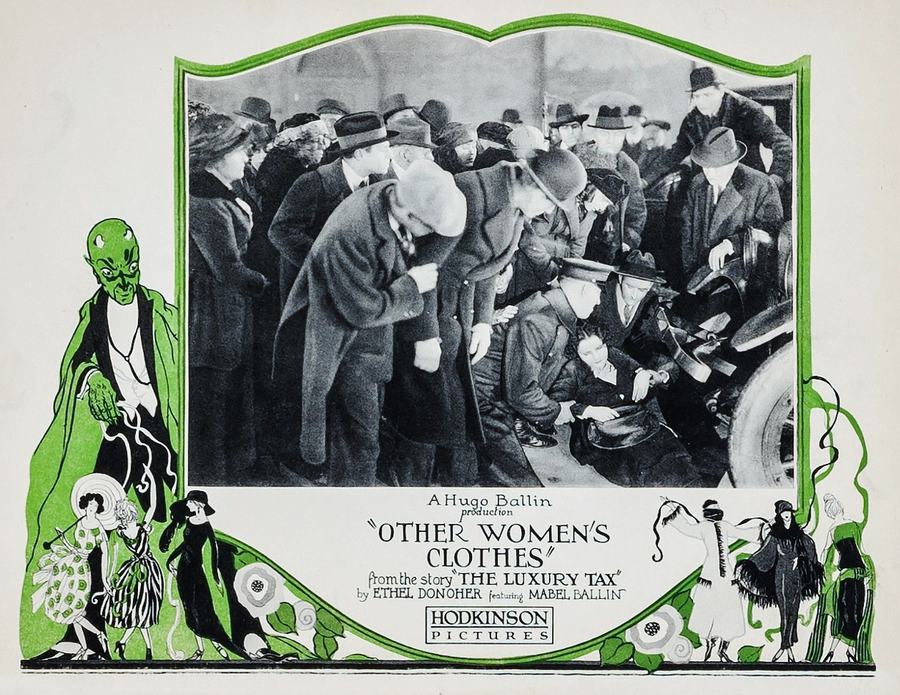
Hugo Ballin’s 1921 Jane Eyre arrives like a tarnished locket pried from the vault of the silent era, exhaling celluloid dust and the unmistakable perfume of scorched Romanticism. It is, at once, a relic and a revelation—an artifact whose very flickers feel ghost-borne, yet whose emotional voltage could short-circuit your sternum if you mistake its quiet for frailty.
Shot through with tungsten-lit chiaroscuro that would make German sea-prison fantasias blush, the film translates Charlotte Bron..."