DbcultAccessing Vault...
5.3/10
Senior Film Conservator
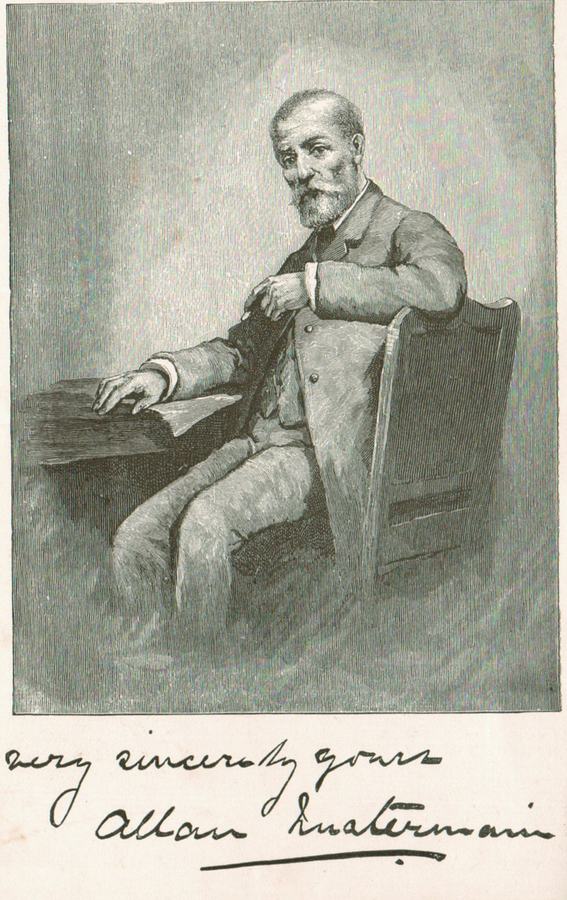
A definitive 5.3/10 rating for a film that redefined the boundaries of cult cinema. Allan Quatermain remains a cornerstone of transgressive art.
Stepping into the world of Allan Quatermain is akin to unearthing a time capsule, a cinematic relic that speaks volumes about an era captivated by the allure of the unknown and the romanticized figure of the intrepid explorer. This film, rooted in the foundational narratives of H. Rider Haggard, doesn't merely present a story; it encapsulates a cultural phenomenon, an archetype that has permeated literature and cinema for over a century. It's a journey into the heart of what it meant to be an 'adventurer' at a time when vast swathes of the globe remained largely uncharted by Western eyes, a profession fraught with peril, moral ambiguity, and an undeniable sense of grandeur.
Our protagonist, Allan Quatermain, embodies the quintessential English big game hunter and adventurer. But to simply label him thus would be to overlook the nuanced layers beneath the surface. He is not just a man with a rifle and a thirst for discovery; he is a product of his time, navigating the complex interplay between colonial expansion, the pursuit of scientific knowledge, and the raw, untamed power of nature. The film, in its essence, becomes a canvas upon which these multifaceted themes are painted, often with broad, sweeping strokes, yet occasionally with surprising intimacy. It forces us to confront the very nature of exploration: Is it about conquest, understanding, or simply survival? Quatermain's character, as portrayed by Raymond Brown, carries the weight of these questions, his grizzled demeanor hinting at countless encounters with both beast and man, triumphs and losses that have shaped his very soul.
The narrative, though seemingly straightforward in its premise of a professional adventurer, quickly unfurls into a more profound exploration of human ambition and the exotic allure of distant lands. The very act of big game hunting, a contentious practice in contemporary discourse, is presented within its historical context, not just as a sport but as a means of livelihood, a test of skill, and a confrontation with the wild. Yet, even within this framework, the film subtly hints at the inherent tension between man's desire to dominate and nature's immutable power. Quatermain is not merely a hunter; he is an observer, a guide, and often, a reluctant participant in the unfolding dramas of the African continent.
The supporting ensemble, featuring talents such as Albert Lawrence, Elise Hamilton, and Florence Roberts, contributes significantly to the tapestry of Quatermain's world. While specific roles aren't detailed, one can infer their archetypal contributions: the loyal companion, perhaps a damsel in distress or a spirited fellow adventurer, and the various figures representing indigenous populations or rival explorers. Each character, no matter how briefly they appear, adds another brushstroke to the expansive portrait of this untamed frontier. The interactions between Quatermain and these individuals likely illuminate his character further, revealing his leadership, his vulnerabilities, and his moral compass in a world where conventional rules often cease to apply.
Visually, one imagines the film striving to capture the breathtaking grandeur of the African landscape. The cinematography, even in its earliest forms, would have been tasked with conveying the vastness of the savannas, the dense mystery of the jungles, and the raw power of its wildlife. These visual elements are crucial in establishing the sense of adventure and danger that defines Quatermain's existence. The film's aesthetic likely aimed to transport audiences from their mundane realities into a world of exotic wonder, a common aspiration for adventure films of its era. This sense of immersive escapism is a hallmark of the genre, echoing the grand scale and perilous journeys found in films like Der Tunnel, which similarly sought to awe audiences with monumental human endeavors against formidable backdrops.
H. Rider Haggard's literary legacy looms large over Allan Quatermain. Haggard was a master storyteller, known for his vivid descriptions, intricate plots, and the creation of iconic characters who traversed the mystical and dangerous corners of the world. The film, in adapting his work, attempts to translate this rich literary tradition into a visual spectacle. It's a delicate balance, capturing the spirit of the novels while making it accessible to a cinematic audience. Haggard's influence is evident not just in the character of Quatermain but in the very fabric of the adventure genre, laying groundwork for countless subsequent tales of exploration, lost civilizations, and heroic quests. The film, therefore, stands as an early testament to the enduring power of his imagination, a direct lineage from the printed page to the silver screen.
The thematic richness of Allan Quatermain extends beyond mere exploration. It delves into themes of courage, resilience, and the often-fraught encounter between different cultures. Quatermain, as an 'outsider,' is constantly confronted with customs and beliefs alien to his own, forcing him to adapt, to learn, and sometimes, to challenge his preconceived notions. This cultural interplay is a significant, if sometimes understated, aspect of the adventure narrative. It speaks to the broader human experience of encountering the 'other,' a theme also subtly explored in films that delve into human conscience and moral choice, such as The Conscience of John David, though in vastly different contexts. Both films, in their own ways, examine the internal and external pressures that shape an individual's ethical framework.
Moreover, the film implicitly tackles the concept of the unknown, the allure of the 'land of the lost' that beckons adventurers. This fascination with what lies beyond the map is a powerful driver for Quatermain and, by extension, for the audience. It taps into a primal human curiosity, a desire to push boundaries and uncover secrets. This resonates with the spirit of discovery found in films like The Land of the Lost, where the very premise revolves around venturing into uncharted territories and encountering wonders, or horrors, previously unimagined. The sense of wonder, mingled with trepidation, is a critical component of such narratives, drawing viewers into a world ripe with possibility and danger.
The casting choices, including Mabel May, Edward Vincent, A.O. Glisson, and Umpikayiboni, suggest a deliberate attempt to create a diverse group of characters who contribute to the unfolding drama. Umpikayiboni's inclusion, in particular, hints at the representation of indigenous characters, which, while potentially problematic through a modern lens, was an essential aspect of these colonial-era narratives. Their roles, whether as guides, allies, or antagonists, are crucial in shaping Quatermain's journey and providing insight into the cultural complexities of the setting. The performances, even without specific details, would have been pivotal in conveying the raw emotions and physical demands of such an arduous adventure, much like the intense struggle against overwhelming forces depicted in The Juggernaut, where human resolve is tested to its limits.
Considering the technical limitations of early cinema, the creation of a believable and engaging adventure film like Allan Quatermain would have been a monumental undertaking. The portrayal of wild animals, the staging of action sequences, and the depiction of exotic locales all required ingenuity and innovative filmmaking techniques. These early efforts laid the groundwork for the spectacular adventure films we enjoy today, demonstrating how filmmakers, even with nascent technology, could transport audiences to fantastical realms. The film stands as a testament to the pioneering spirit of early cinema, much like the audacious ambition seen in films striving for grand spectacle or profound emotional depth. The sheer scale of the undertaking, even if implied, contributes to its historical significance.
The enduring appeal of the Quatermain character, both in literature and cinema, lies in his blend of rugged individualism, moral fortitude, and a deep, albeit sometimes conflicted, respect for the natural world. He is a figure who stands at the crossroads of progress and preservation, a man who understands the dangers of the wilderness but also its profound beauty and spiritual significance. The film, in its portrayal, aims to capture this duality, making Quatermain more than just a hero; he is a symbol of a particular kind of adventurous spirit that continues to resonate with audiences. His adventures are not just about finding treasure or conquering foes; they are about understanding the world and one's place within it, a journey of self-discovery as much as geographical exploration.
Further cast members like Violet Woolls-Sampson, Abe Barker, H.J. Hamlin, and George Taylor would have filled out the diverse cast, each contributing to the rich narrative tapestry. Their presence underscores the communal nature of such expeditions, where survival often depends on the skills and camaraderie of the entire group. Whether playing fellow explorers, local guides, or perhaps antagonists, their performances would have been integral to building the tension and human drama inherent in any grand adventure. The interplay of these characters, their loyalties and conflicts, forms the human heart of the story, preventing it from becoming a mere travelogue.
In conclusion, Allan Quatermain is more than just an early adventure film; it's a cultural artifact that reflects the societal fascination with exploration, exoticism, and the hero archetype. It stands as a testament to the enduring power of H. Rider Haggard's imagination and the nascent capabilities of cinema to bring such grand visions to life. While contemporary viewers might approach some of its colonial undertones with a critical eye, its historical significance and its contribution to the adventure genre are undeniable. It's a film that invites us to ponder the complexities of courage, the allure of the unknown, and the indelible mark left by those who dared to venture beyond the familiar horizon. It reminds us that the greatest adventures are often those that challenge not just our physical limits, but our understanding of ourselves and the world around us.
IMDb 5.6
1933
Community
Log in to comment.