DbcultAccessing Vault...
7/10
Senior Film Conservator
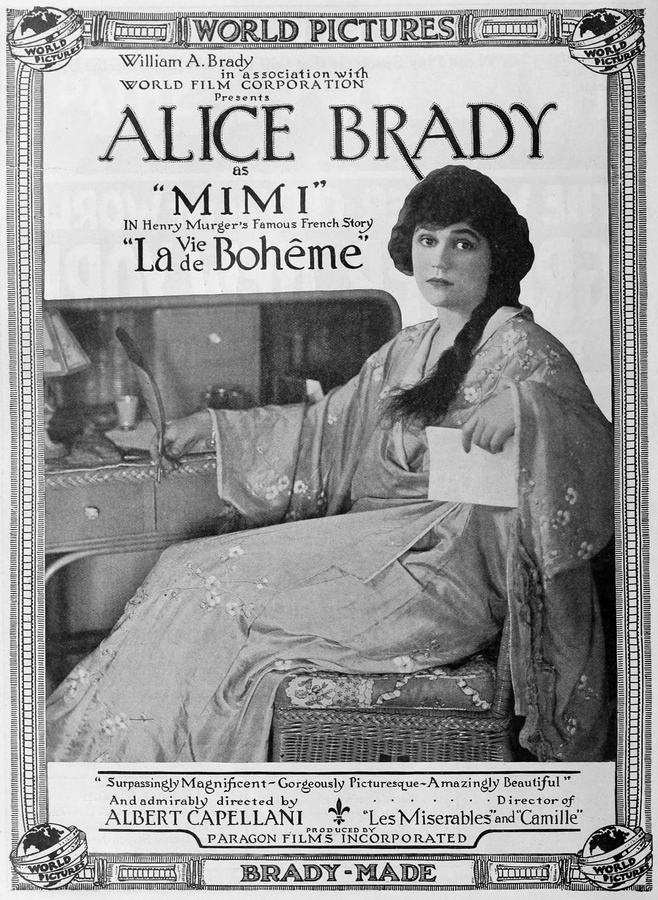
A definitive 7/10 rating for a film that redefined the boundaries of cult cinema. La vie de Bohème remains a cornerstone of transgressive art.
Ah, the silent era. A time when emotions were writ large on the screen, conveyed through the subtlest flicker of an eye or the grandest gesture of despair. And among the myriad gems from that foundational period, La vie de Bohème stands as a particularly poignant, almost excruciatingly beautiful, testament to the enduring power of doomed romance. This isn't just a film; it's a deeply felt experience, a journey into the heart of human vulnerability and the relentless cruelty of societal expectations.
Directed with an understated elegance that belies the tumultuous narrative, this 1916 adaptation of Henri Murger's beloved novel, famously the inspiration for Puccini's opera, offers a stark, unvarnished look at love struggling to survive in the shadow of poverty and class distinction. Frances Marion, a titan of early cinema screenwriting, masterfully distills the essence of Murger's work, translating its poetic melancholy into a visual language that resonates even today. Her script understands that true tragedy often arises not from grand villains, but from the insidious pressures of circumstance and the fragility of human resolve.
At its core, the film revolves around Mimi, brought to life with an arresting blend of fragility and inner strength by the incomparable Alice Brady. Brady, a formidable presence in her own right, was already a star by this point, and her performance here solidifies her status as one of the silent screen's most compelling actresses. From the outset, we encounter Mimi as an orphaned maid, a figure of quiet suffering, tethered to the whims of a perpetually inebriated innkeeper. Her existence is one of relentless toil and little joy, a stark contrast to the romantic idealism often associated with the 'bohemian' lifestyle. Brady imbues Mimi with a profound sense of innocence, an almost ethereal quality that makes her eventual descent all the more heartbreaking. You feel her weariness, her longing for something more, for a touch of kindness in a world that offers little.
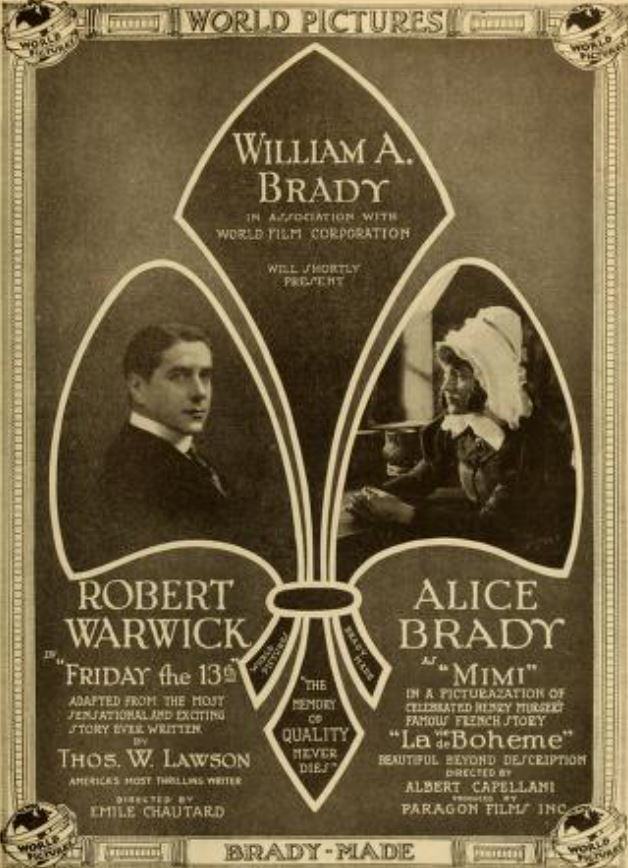
Her fateful encounter with Rudolphe, portrayed by the dashing Paul Capellani, is the spark that ignites the narrative. Capellani, with his aristocratic bearing and earnest gaze, perfectly embodies the conflicted heir. His rescue of Mimi from the lecherous advances of a drunken hotel guest is not merely a plot device; it's a moment of chivalry that transcends the mundane, forging an instant, undeniable connection between two souls from vastly different worlds. Their burgeoning love affair is painted with broad strokes of cinematic romanticism, yet it feels genuinely earned, a desperate embrace of joy in a world designed to deny it.
The chemistry between Brady and Capellani is palpable, a silent dialogue of longing glances and tender gestures that speaks volumes without a single uttered word. They convey the intoxicating rush of first love with an authenticity that many modern films struggle to capture. Their moments together, brief respites from the encroaching darkness, are imbued with an almost luminous quality, making the subsequent unraveling of their happiness all the more devastating. It's a testament to their skill that their romance feels both epic and intimately personal.
However, this idyll is destined to be shattered by the harsh realities of their respective stations. Rudolphe’s uncle, M. Durandin, a figure of stern patriarchal authority, embodies the rigid societal structures of the era. He represents the immovable force of tradition and expectation, demanding that Rudolphe marry Madame De Rouvre, a woman of suitable lineage. Durandin’s calculated intervention, a letter to Mimi that coldly informs her of her 'ruinous' effect on Rudolphe's future, is a masterstroke of emotional manipulation. It’s a quiet cruelty, far more insidious than any overt villainy, designed to undermine Mimi’s self-worth and sever the ties that bind her to Rudolphe. This plot point echoes the class-driven romantic conflicts seen in films like Sins of Her Parent, where societal expectations frequently trump genuine affection, often at the expense of the female protagonist.
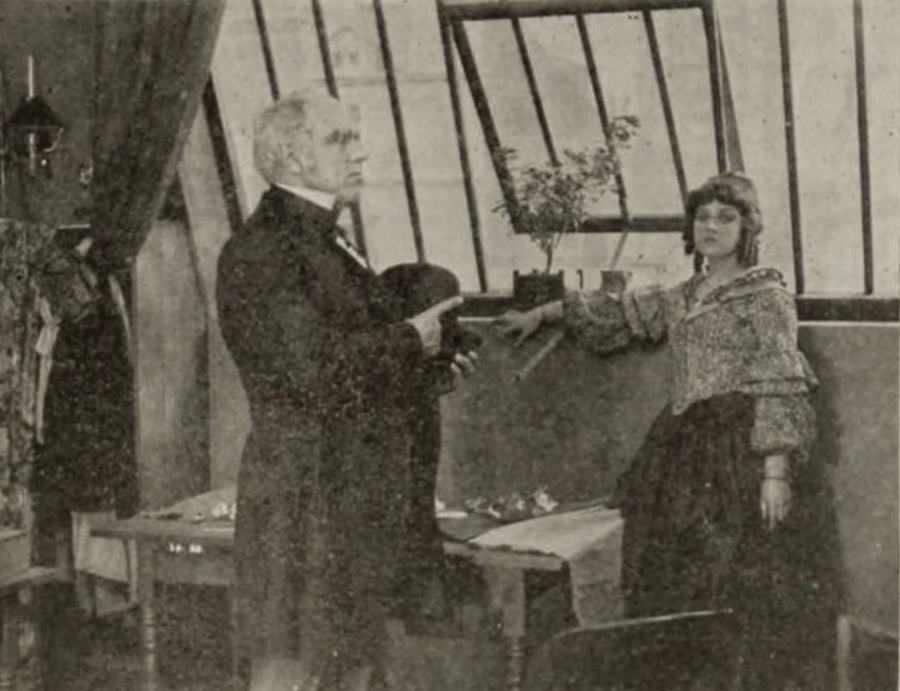
Adding another layer of tragic complexity are Mimi’s well-meaning but ultimately misguided friends, Musette and Marcel. Their attempts to 'help' Mimi by introducing her to other men, ostensibly to make Rudolphe jealous, backfire spectacularly. This subplot highlights a recurring theme in silent melodramas: the unintended consequences of human intervention, even when driven by affection. Rudolphe's jealousy, a raw, human emotion, is expertly portrayed by Capellani, leading to his impulsive, heartbreaking departure. This moment marks the true turning point, a precipitous fall from grace for both lovers. The emotional weight of this separation is immense, a chasm opening between them that seems insurmountable.
From this point, the film becomes a relentless march towards an inevitable, tragic conclusion. Mimi’s health, already delicate, declines rapidly under the crushing weight of heartbreak and abandonment. Brady’s portrayal of this physical and emotional deterioration is nothing short of masterful. Her gaunt face, her weary movements, the profound sorrow in her eyes – every element contributes to a portrait of a woman fading away. It’s a performance that demands empathy, drawing the audience into her suffering with an almost unbearable intimacy. This portrayal of declining health due to emotional distress is a common, yet always impactful, trope in silent cinema, often seen in films like The Model, where the fragility of life and love is starkly contrasted against harsh realities.
The scene where Mimi, in utter despair, throws herself into the river is a powerful cinematic moment, a desperate act born of profound hopelessness. While she is rescued, the act itself underscores the depth of her pain and the feeling of having nothing left to lose. Her subsequent hospitalization is a brief reprieve, a temporary pause before the final, heart-wrenching act. It’s here that the film truly leans into its operatic roots, building towards a grand, albeit mournful, crescendo.
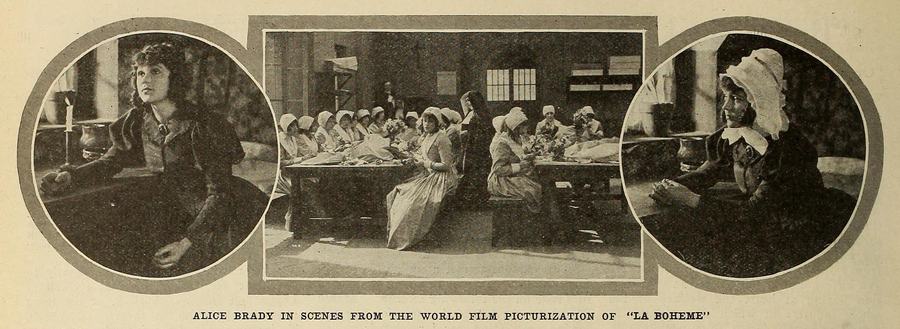
Realizing her end is near, Mimi, with a last surge of will, drags herself back to the room where she and Rudolphe had shared their happiest moments. This pilgrimage is a testament to the enduring power of memory and the human need for closure, for a final connection to what was most cherished. The scene is bathed in a melancholic glow, a quiet dignity accompanying her final journey. And there, in that hallowed space, Rudolphe awaits. The reunion is not one of joyous reconciliation, but of profound, tender sorrow. He is there, and in his arms, Mimi finds her peace, dying knowing that she was loved, even if their love was destined to be tragically brief. It’s a moment designed to wring every last drop of emotion from the audience, and it succeeds magnificently.
The supporting cast, while not given the same depth as Brady and Capellani, plays their roles effectively. D.J. Flanagan as the drunken innkeeper, Chester Barnett as Marcel, and Juliette Clarens as Musette all contribute to the tapestry of Mimi’s world, providing context and driving the plot forward. Even the brief appearances of actors like June Elvidge and Zena Keefe add to the overall atmosphere of the film, creating a believable and bustling backdrop for the central tragedy.
From a technical perspective, La vie de Bohème showcases the evolving artistry of silent cinema. While explicit directorial credits were sometimes fluid in this era, the visual storytelling is remarkably sophisticated. The use of intertitles is judicious, allowing the powerful performances to carry much of the narrative weight. The cinematography, though perhaps not as overtly experimental as some European contemporaries like Vingarne, is effective in establishing mood and character. Close-ups are employed to emphasize emotional intensity, drawing the viewer into the characters' inner worlds, a technique that was still being refined but already proving its immense power. The framing often highlights Mimi’s isolation against the backdrop of a bustling yet indifferent world, a visual metaphor for her solitary suffering.
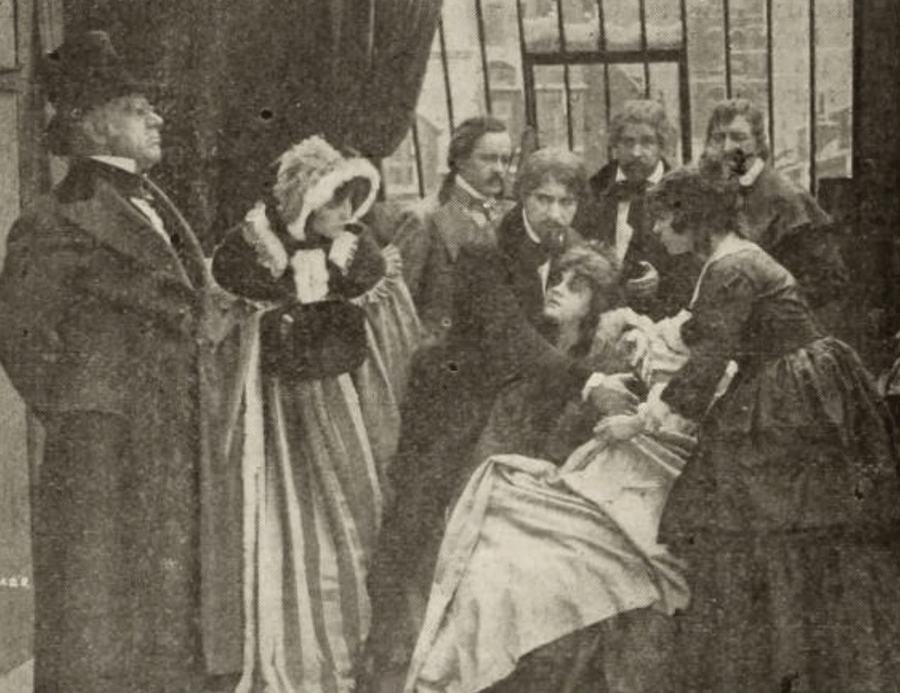
The film’s enduring appeal lies in its universal themes: the beauty and pain of first love, the crushing weight of societal pressures, the inevitability of loss, and the solace found in genuine connection, however fleeting. It speaks to the part of us that believes in an all-consuming passion, even as it acknowledges the harsh realities that often extinguish such flames. It’s a narrative that transcends its historical context, finding resonance in every generation that grapples with similar conflicts between heart and circumstance. The emotional arc, from hopeful romance to despair and ultimately, to a tender acceptance of fate, is masterfully navigated, leaving a lasting impression.
Comparing it to other silent films of the period, one can see its place within a lineage of melodramatic narratives that explored social injustice and personal sacrifice. While not as overtly political as some films that tackled issues like labor rights or urban poverty, La vie de Bohème quietly critiques the class system through its depiction of Mimi’s struggles and Rudolphe’s forced abandonment of his true love. It shares a thematic kinship with works like The Two Orphans, which also delves into the plight of vulnerable women navigating a harsh, indifferent society, though the focus here is more squarely on romantic tragedy rather than familial separation.
What truly elevates this film beyond a mere historical curiosity is its profound emotional honesty. There’s a raw vulnerability in Brady’s performance that makes Mimi’s journey deeply affecting. It's not a story that offers easy answers or a neat resolution. Instead, it presents life as it often is: beautiful, cruel, and ultimately, ephemeral. The tragic ending, far from being gratuitous, feels earned, a culmination of all the forces that conspired against Mimi and Rudolphe. It's a reminder that not all love stories have happy endings, but that the love itself, however brief, can leave an indelible mark. The final moments, with Mimi finding peace in Rudolphe's arms, are handled with such delicate grace that they manage to be both heartbreaking and strangely comforting, a testament to the power of love to transcend even death.
In conclusion, La vie de Bohème is more than just a silent film; it's a timeless piece of cinematic art that continues to speak to the human condition. It’s a masterclass in emotional storytelling, anchored by a truly iconic performance from Alice Brady and supported by a compelling script from Frances Marion. For anyone interested in the foundational works of cinema, or simply in a deeply moving love story, this film is an essential viewing experience. It reminds us of the power of silent film to convey complex emotions and narratives with a clarity and intensity that can still captivate and move audiences today, proving that some stories, and some loves, are truly eternal, even in their tragic brevity.

IMDb 6.8
1919
Community
Log in to comment.