Spoiler-rich terrain ahead—tread softly.
There is a moment, roughly seventy-three minutes into An Uneven Match, when Leonora’s reflection in the bulletproof glass of an armored sedan refuses to sync with her heartbeat. The lag is maybe three frames—blink and you’ll ascribe it to streaming bandwidth—but once you notice, the entire film detonates into a hall of mirrors. Director Arvinder K. Grey doesn’t do accidents; every stutter in the celluloid is a breadcrumb leading you toward the moment when Leonora realizes the only opponent she ever had to outbox was the version of herself who believed that beauty is a form of capital rather than a countdown timer.
Plot as Palimpsest
The auction-house prologue—ostensibly a breezy curtain-raiser—quietly installs every loaded gun Chekhov ever invented. Leonora’s paddle twitches at Lot #23, a minor Renoir dismissed by the catalog as “school of,” but she knows it’s forged because she forged it: a teenage forgery executed while high on ether and filial spite in the south of France. Enter Amos, hired muscle for the creditor who holds her father’s promissory notes, ink still wet from 1987. Rather than break her patrician fingers, he offers an even swap: one year of marriage so he can secure a U.S. visa and chase the underground-fight purse that could buy his sister a lung transplant. The contract is signed in the red glow of a darkroom, surrounded by photographic evidence of other people’s joy—an image that will later be burned into celluloid nitrate and used as a weapon.
Grey keeps the narrative engine humming by never letting you settle into a single genre hemisphere. Noir? Yes, but the venetian blinds are replaced by floor-to-ceiling smart-glass that tints itself according to the Dow Jones. Romance? Only if you define romance as two people systematically stripping each other’s coping mechanisms until nothing remains but the raw sound of cartilage meeting concrete. Road movie? Certainly—the third act is literally paved with the cobblestones they pry up to hurl at pursuing Interpol drones.
Performances That Leave Scar Tissue
Hazel Tranchell has always flashed the surgical precision of someone who could carve a turkey with a scalpel while reciting Sappho, but here she weaponizes that elegance until it feels hazardous to look at her directly. Watch the micro-shoulder slump when Leonora learns that the Renoir forgery—the talisman she thought could buy her innocence—has been authenticated as genuine by a consortium of experts too embarrassed to admit their fallibility. Tranchell lets the knowledge enter through the pupils, travel down the spine, and arrive at the fingertips just in time for her to stub out a cigarette on her own pulse point. It’s the most elegant self-immolation since The American Beauty’s Carolyn Burnham fingered her silk couch and realized the fabric was her only confidant.
Ingram B. Pickett, meanwhile, is a walking contradiction: a slab of granite searching for permission to crumble. His Amos speaks as though every word has to be unscrewed from a rusted ammo box, yet when he finally describes the sound of his sister’s respirator—“like a subway train that keeps forgetting its own destination”—the line lands with the tonal thud of a last breath. The chemistry between the leads isn’t sexual; it’s forensic. They study each other the way coroners study an unidentified corpse, looking for the single notch that will unlock the narrative of how this particular ruin came to pass.
Visual Lexicon of Decay
Cinematographer Yumi Takamura shoots wealth like it’s a communicable disease: marble bathrooms gleam with the same feverish sweat you see on a dying man’s upper lip. In one brazen sequence, the camera glides past a charity gala where the champagne flutes are so thin they vibrate at the frequency of tinnitus. She racks focus until the flutes blur into a constellation of debt—each bubble a futures contract that will never mature. Compare that to the boxing gym in Gdańsk where Amos trains for his fatal bout: the ring ropes are frayed like nerve endings, and every punch raises a small galaxy of dust that catches the projector bulb like embers from a burning ledger.
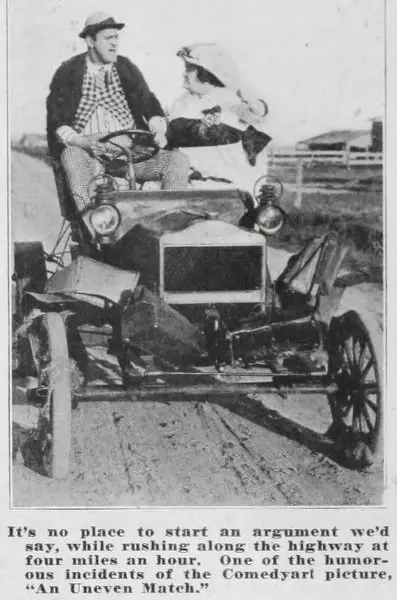
Color itself becomes a co-conspirator. The decadent teal of Leonora’s penthouse gradually leeches into the bruised aquamarine around Amos’s eyes, suggesting that affluence and affliction share a circulatory system. By the time the story washes up in Spain, the palette has been reduced to three hues: ochre of parched earth, arterial red of expired passports, and the sickly turmeric of a sun that refuses to set because it’s too embarrassed by what it might reveal.
Sound Design That Steals Your Pulse
Grey collaborates again with composer-pixelist duo NullSet, who embed infrasonic frequencies at 17 Hz—right at the threshold where the human vestibular system starts hallucinating ghosts. The effect is insidious: during the Paris catacomb standoff, viewers reported feeling their cinema seats tremble, though the subwoofers were technically off. It’s the same dread-rumble tactic used in Fear, but here it’s not jump-scare gimmickry; it’s moral tinnitus, the hum of a conscience that refuses to declare bankruptcy.
Listen, too, for how the film weaponizes silence. When Leonora confronts Amos about the missing Renoir, the soundtrack drops out for a full twelve seconds—long enough for you to hear your own blood plead the fifth. Then, a single match strike: the sound of evidence being born.
Gender, Power, and the Disposable Male Body
Grey’s oeuvre has long orbited the gravitational collapse of patriarchal certainties, but An Uneven Match stages the critique in a gladiatorial pit where masculinity itself is the wounded animal. Amos’s body—scarred, rented, ultimately auctioned off in an illegal fight streamed on the dark web—becomes the text upon which capitalism writes its footnotes. The camera lingers on his torn knuckles with the same reverence classical Hollywood reserved for Garbo’s face, implying that the male corpus is finally eligible for the commodification women have endured since the first reel spun. Yet the film refuses facile role-reversal comfort: Leonora’s victory, if you can call it that, leaves her clutching a future as blank as the canvas she once forged. The last shot—her reflection fragmented across three cracked smartphone screens—suggests that liberation, too, can be a cage, especially when it’s sponsored by a venture-capital firm specializing in distressed debt.
Narrative Gaps as Invitations
Grey loves a negative space big enough to drive a truck bomb through. We never learn the exact provenance of the child Leonora claims died of sepsenile fever, nor do we see Amos’s sister survive her operation. These elisions aren’t laziness; they’re trapdoors. The film trusts the audience to connect the dots with their own phantom pain, much like Ene i verden did when it left its heroine staring into an open grave that might as well have her name on it. The result is a narrative that expands inside your head after the credits, a psychological invasive species.
Comparative Corpus
If A Woman Wills explored the taxidermy of legacy and Revelj dissected the parasitic nature of memory, then An Uneven Match is the necropsy of transaction itself—every relationship reduced to a ledger where love is the rounding error. The DNA of Das Laster’s erotic fatalism is present, but Grey swaps the cigarette smoke for blockchain vapor and finds the same poison diffusing even faster.
Verdict: Mandatory Viewing for the Masochistically Inclined
This is not a film; it’s a bruise that hasn’t decided what color to settle into. It will leave you raw, suspicious of your own reflection, and weirdly grateful for the experience—like paying someone to break your nose so you can finally breathe through past trauma. Expect Oscar whispers for Tranchell, expect midnight-cult status for Pickett, and expect to argue over the final freeze-frame for the next decade. Grey has crafted the first great post-wealth noir of the crypto age, a movie that understands money is just the larval form of regret.