DbcultAccessing Vault...
Cult Review
Senior Film Conservator
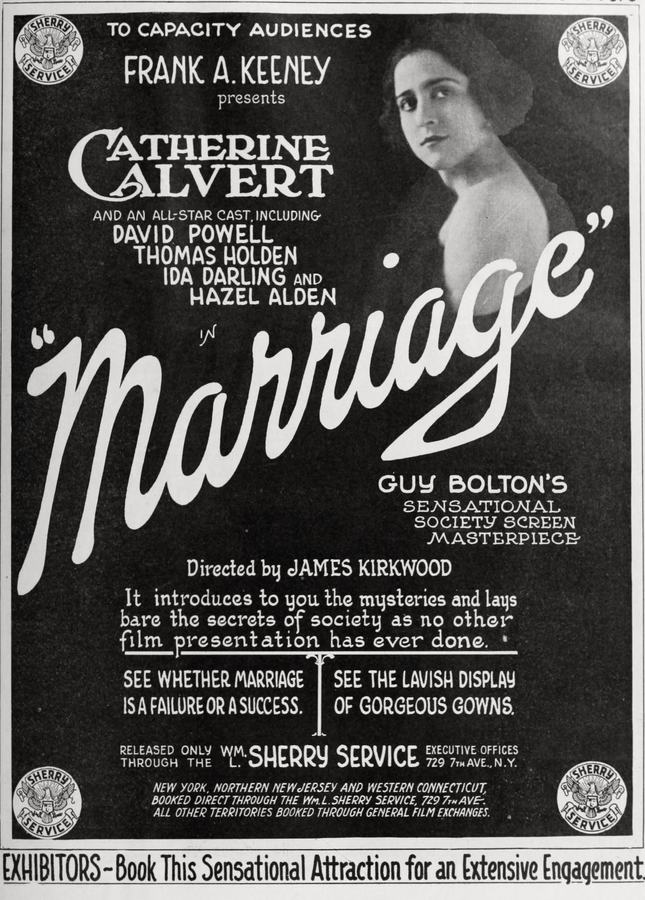
The 1918 cinematic landscape was a crucible of evolving narrative structures, and Marriage stands as a testament to the era's fascination with the domestic Gothic. While many contemporary features adhered to rigid moral binaries, this collaboration between writers Guy Bolton and Bennet Musson dares to explore the penumbral regions of the human psyche. The film is less about the institution of holy matrimony and more about the transactional nature of survival within it.
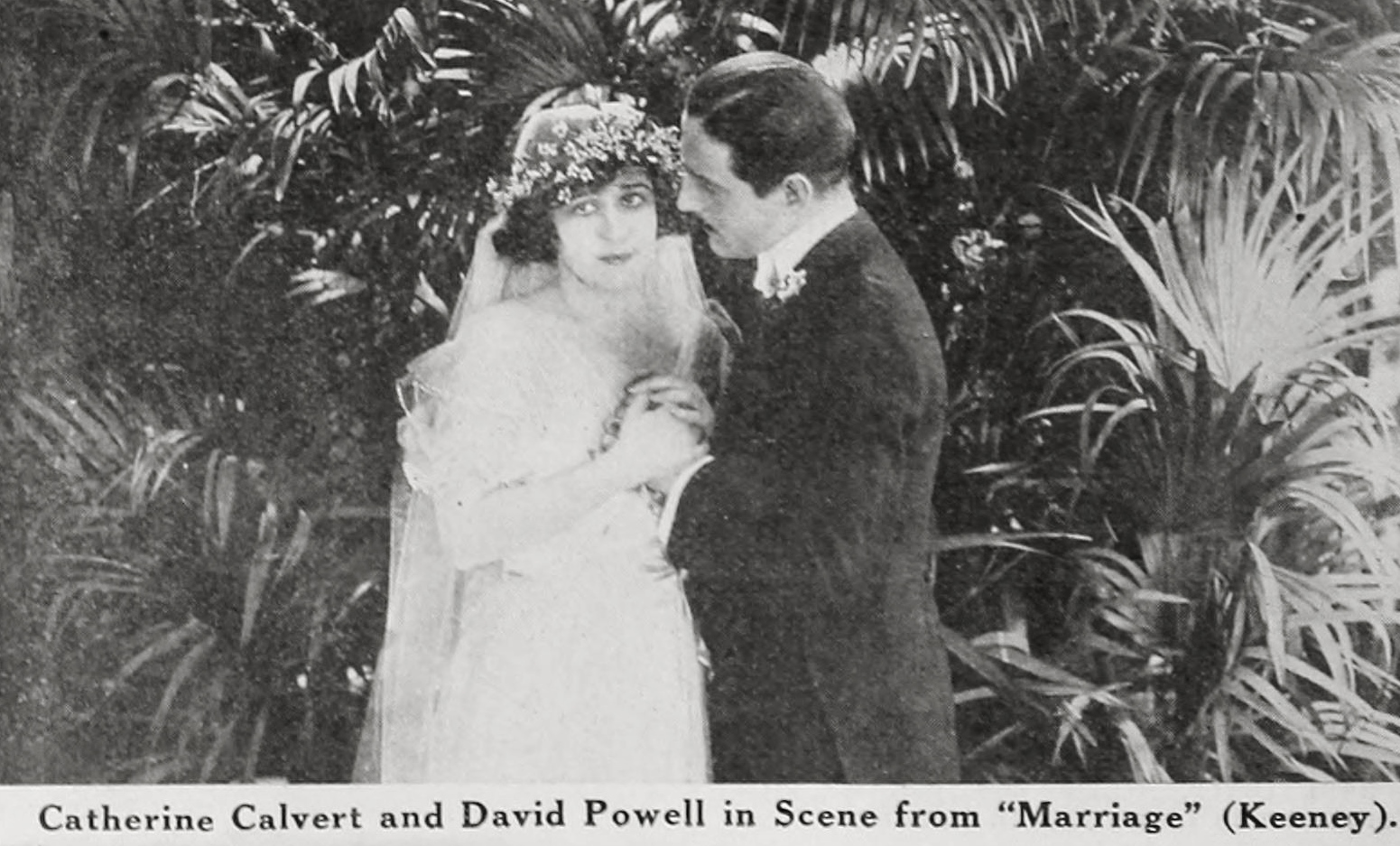
Jack Spencer, portrayed with a stiff-collared austerity by William Walcott, is the quintessential avatar of the Gilded Age's work ethic. His neglect of Eileen is not born of malice but of a profound spiritual absence—a mercantile myopia that renders his domestic life a mere footnote to his ledgers. This absence creates a fertile ground for Eileen’s ennui. Catherine Calvert’s performance as Eileen is a masterclass in silent-era subtlety; her eyes convey a hunger that no amount of material wealth can satiate. When she encounters Carter Ballantyne (David Powell), the novelist, the film shifts into a more cerebral gear. Ballantyne represents the 'other'—the life of the mind and the senses, a stark contrast to the cold mechanics of Jack’s business world.
The dynamic between Eileen and Carter is reminiscent of the themes explored in Society's Driftwood, where the social standing of a woman is constantly at the mercy of the men who surround her. However, where other films might focus on the scandal of the affair, Marriage uses the flirtation as a catalyst for a much darker descent. The decision to elope is not presented as a romantic triumph but as a desperate escape from a gilded cage.
The narrative fulcrum of the film is the sudden onset of Jack’s blindness and his simultaneous financial collapse. This is a classic melodramatic trope, yet it is handled with an almost surgical precision. Jack’s physical blindness serves as a literalization of his previous emotional state; he could not 'see' his wife when he had his sight, and now, in his literal darkness, he becomes entirely dependent on her. This reversal of power is where the film truly begins to breathe. Eileen’s decision to stay is not motivated by a sudden rekindling of romantic love, but by a sense of duty that borders on the sacrificial. It is a pivot into the realm of the 'criminal path' for a righteous cause, a theme that echoes the moral complexities found in The Criminal Path.
Eileen’s transition into a card-sharp is one of the most fascinating sequences in the film. Alongside Dolly Page (Hazel Alden), she enters a world of tactical deception. The cinematography here utilizes shadows and tight framing to emphasize the claustrophobia of her secret life. She is no longer the bored socialite; she is a woman with a singular, desperate mission. The act of cheating at cards becomes a metaphor for her entire existence: she is playing a game with high stakes, where the rules are rigged against her, yet she must win to save the man who previously ignored her.
As Jack is sent to France for treatment, the film expands its scope. The distance between the husband and wife creates a tension that is palpable. While Jack is undergoing a literal restoration of vision, Eileen is sinking deeper into the moral quagmire of her own making. The reappearance of Carter Ballantyne introduces a proto-noir element to the story. He is no longer the charming intellectual but a predatory blackmailer. His demand for her 'submission' in exchange for silence is a harrowing turn that highlights the vulnerability of women in this era. Even when they act with agency, they are often trapped by the very secrets they keep to protect their status.
This segment of the film invites comparison to Mania. Die Geschichte einer Zigarettenarbeiterin, where the protagonist's struggle against social and sexual exploitation leads to a tragic trajectory. In Marriage, however, Eileen’s resilience is framed through a lens of American pragmatism. She does not merely suffer; she strategizes. The key she gives Carter is not a sign of surrender but a tactical move to buy time, though it leads to the inevitable collision when Jack returns home unexpectedly.
The climax of the film—the birthday dinner—is a masterstroke of theatrical tension. In the silent era, large group scenes were often used for spectacle, but here, the focus is intensely psychological. Eileen’s anticipation of Carter’s exposure leads her to a radical conclusion: she will destroy her own reputation before he can do it for her. This public confession is a cathartic explosion of truth. By admitting her 'guilt'—her cheating at cards and her near-infidelity—she strips Carter of his power and forces her social circle to confront the reality of her sacrifice.
The forgiveness she receives from Jack and her friends is perhaps the most 'Hollywood' aspect of the film, yet it feels earned through the sheer weight of Calvert’s performance. The film suggests that true 'marriage' is not found in the initial contract but in the subsequent trials of fire. It mirrors the redemptive arcs seen in Home and The Sting of Victory, where the protagonist must lose everything to find their true self.
The writing by Guy Bolton and Bennet Musson provides a structural integrity that was often lacking in early silent dramas. Bolton, known for his work in musical comedy, brings a sense of rhythm to the dialogue titles, while Musson ensures the plot beats land with emotional resonance. The direction (often attributed to James Nielsen, though sometimes debated) maintains a steady hand, avoiding the over-the-top histrionics that characterized many 1910s productions. The use of light and shadow, particularly in the gambling scenes and the moments of Jack’s blindness, shows a sophisticated understanding of visual storytelling.
Comparing this to The Life and Death of King Richard III, one can see the evolution from stagey, historical reenactment to intimate, character-driven drama. Marriage is interested in the interiority of its characters, a trait that would become the hallmark of the coming decades of cinema.
In the grand tapestry of silent film, Marriage is a work that deserves more than a cursory glance in the archives. It tackles themes of female agency, the ethics of survival, and the complexity of forgiveness with a maturity that feels surprisingly modern. Catherine Calvert’s portrayal of Eileen remains one of the most compelling female leads of the period, offering a nuanced look at a woman who is both a victim of her circumstances and the architect of her own salvation.
Whether viewed as a social commentary on the pressures of the upper class or as a gripping melodrama of secrets and lies, the film succeeds on multiple levels. It lacks the simplistic morality of The Little Girl Next Door and instead embraces the messy, complicated reality of human relationships. For those seeking a silent film that challenges as much as it entertains, Marriage is an essential watch. It is a poignant reminder that sometimes, to save a marriage, one must first be willing to burn down the illusions that sustain it. The film's legacy lies in its refusal to offer easy answers, choosing instead to highlight the grit and grace required to navigate the treacherous waters of love and debt in an unforgiving world.
While the film shares some thematic DNA with The Daughter of the Don in its portrayal of family legacy and survival, it remains uniquely focused on the psychological toll of domestic neglect. The ensemble cast, including Walter Hiers and Thomas Holding, provides a robust support system for Calvert's central performance, making the world of the film feel inhabited and lived-in. It stands alongside The Criminal as a fascinating study of moral transgression in the pursuit of a higher good.
IMDb —
1923
Community
Log in to comment.