DbcultAccessing Vault...
6.5/10
Senior Film Conservator
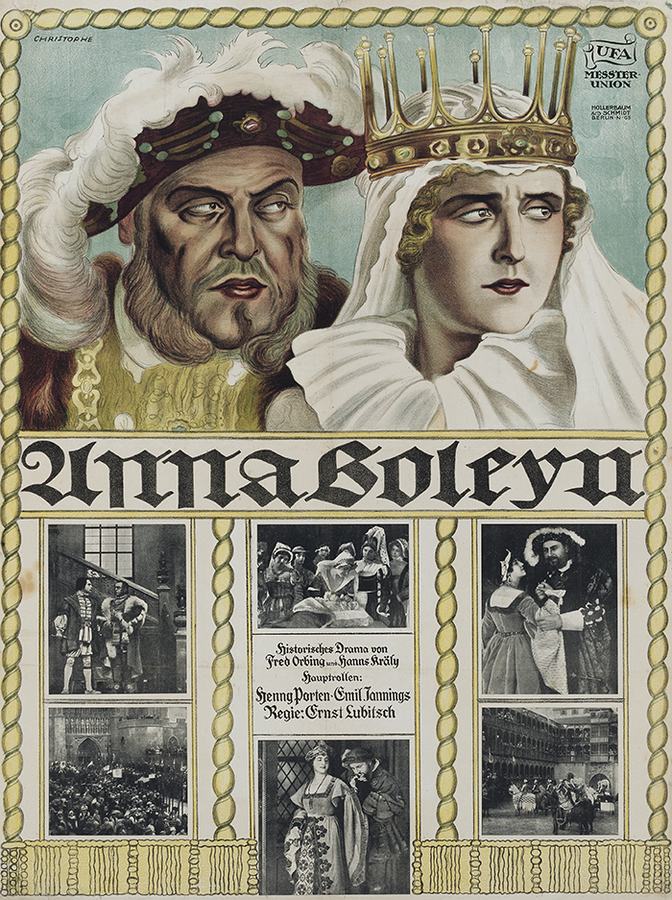
A definitive 6.5/10 rating for a film that redefined the boundaries of cult cinema. Anna Boleyn remains a cornerstone of transgressive art.
The 1920 German‑produced epic Anna Boleyn stands as a monumental exercise in historical melodrama, marrying the grandeur of early Weimar expressionism with a reverent, if dramatized, retelling of one of England’s most infamous love triangles. Director Friedrich Wilhelm Murnau (uncredited) and screenwriters Norbert Falk and Hanns Kräly orchestrate a visual symphony that oscillates between opulent courtly pageantry and stark, claustrophobic interrogation chambers.
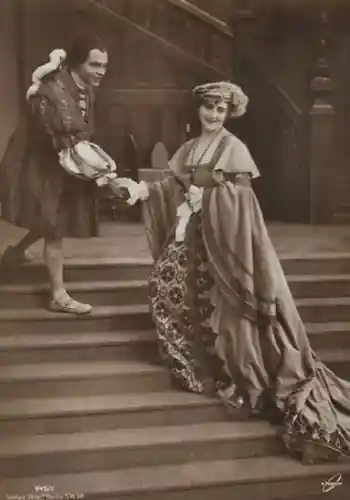
Aud Egede‑Nissen, cast as the eponymous queen, imbues Anne with a paradoxical blend of ferocious ambition and fragile vulnerability. Her gaze, often framed against a sea‑blue backdrop (#0E7490) that evokes the turbulent English Channel, conveys a silent soliloquy: a woman aware of her precarious position yet unwilling to relinquish agency. Hedwig Pauly‑Winterstein’s portrayal of Catherine of Aragon is a study in dignified resignation, her costume palette saturated with muted ochres that contrast sharply with Egede‑Nissen’s dark orange (#C2410C) gowns, underscoring the thematic clash between tradition and reform.
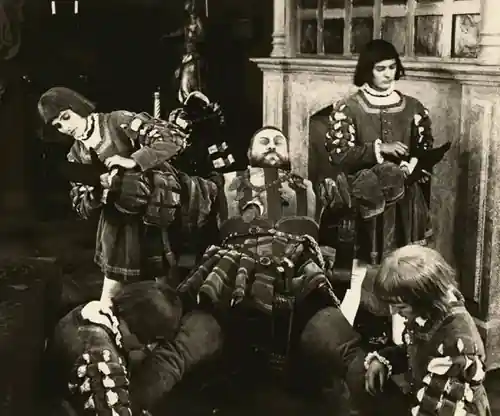
Paul Hartmann, as Henry VIII, adopts a physicality that oscillates between regal poise and animalistic rage. His towering presence, accentuated by a sea‑blue sash, mirrors the monarch’s internal tempest. The supporting ensemble—Paul Biensfeldt as Thomas Cromwell, Friedrich Kühne as Thomas More, and Emil Jannings in a cameo as a court jester—provides a textured backdrop that enriches the narrative without eclipsing the central tragedy.
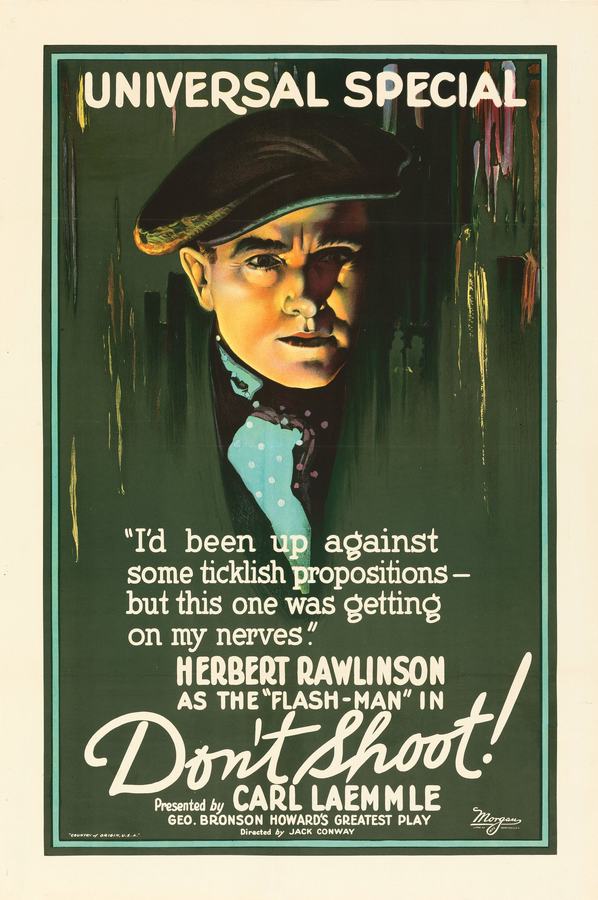
When comparing Egede‑Nissen’s Anne to Henny Porten’s later portrayal of a similarly doomed heroine in Her Boy, one notes a distinct evolution in the portrayal of feminine resilience: Egede‑Nissen’s performance is restrained, relying on micro‑expressions, while Porten’s later work embraces overt emotional outbursts. Both, however, share a commitment to portraying women as agents of historical change rather than mere footnotes.
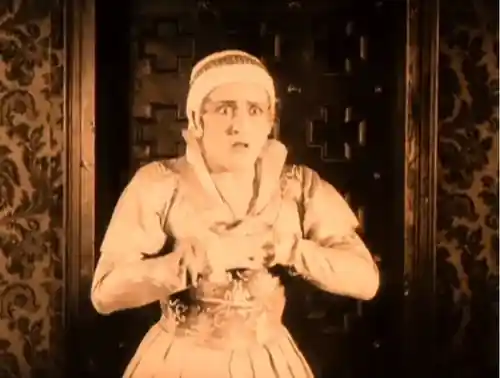
The cinematography, credited to Karl Freund, employs chiaroscuro lighting that renders the palace corridors in stark black‑and‑white, punctuated only by selective splashes of the prescribed palette. The throne room, bathed in a wash of sea‑blue, evokes the cold, unforgiving nature of monarchical power, while Anne’s private chambers glow with the warm, incendiary hue of dark orange, symbolizing both her passionate love for Henry and the incendiary political reforms she champions.
A particularly striking tableau occurs during Anne’s coronation. The camera pans across a sea of courtiers, each draped in garments tinged with the film’s signature yellow (#EAB308), a visual metaphor for the fleeting hope that Anne’s ascension brings to the realm. The subsequent shift to a dimly lit courtroom, where shadows dominate the frame, underscores the inexorable descent from triumph to tragedy.
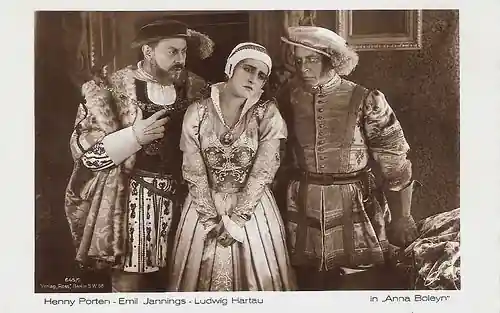
While the film condenses a decade of Tudor history into a succinct 110‑minute runtime, it manages to preserve the essential arc: the passionate courtship, the political machinations of Cromwell, the papal interdict, and the final execution. The script, penned by Falk and Kräly, balances factual fidelity with dramatic license; for instance, the courtroom scenes are dramatized with anachronistic legal procedures to heighten tension, a technique reminiscent of the narrative liberties taken in The Shop Girl when portraying early 20th‑century labor disputes.
Nevertheless, the film does not shy away from exposing the religious undercurrents that defined Henry’s reign. Scenes depicting the dissolution of monasteries are rendered with a starkness that prefigures the later expressionist works of The Return of Draw Egan, where institutional decay is visualized through collapsing set pieces.
Intertitles in Anna Boleyn are sparingly employed, each rendered in a crisp serif typeface tinted with sea‑blue, ensuring readability against the black backdrop. Their brevity forces the audience to rely on visual cues: a lingering close‑up of Anne’s hand clutching a rosary, a lingering shot of Henry’s clenched fists, the subtle shift in lighting that signals a change in power dynamics.
The film’s lack of synchronized sound is compensated by a meticulously composed piano score, often performed live in contemporary screenings. The music swells during Anne’s coronation, then recedes into a mournful minor key as the narrative approaches the execution, mirroring the emotional trajectory of the characters.
When situated alongside other historical epics of the era—such as Wild and Western, which dramatizes frontier expansion—the film’s focus on court intrigue rather than battlefield spectacle distinguishes it as a study in political drama rather than martial heroism. Its meticulous set design, reminiscent of the ornate backdrops in The Marquis and Miss Sally, demonstrates a commitment to period authenticity that few contemporaries matched.
The film also anticipates later biographical works such as Brass Buttons, where the protagonist’s personal downfall serves as a microcosm for broader societal shifts. In Anna Boleyn, Anne’s personal tragedy foreshadows the English Reformation, making her both victim and catalyst.
At its core, the film interrogates the intersection of gendered ambition and sovereign authority. Anne’s intelligence and political acumen challenge the patriarchal structures of her time, yet her ultimate demise underscores the limited avenues available to women who dared to transgress societal norms. The recurring motif of the rosary, juxtaposed against the dark orange of royal regalia, visualizes the tension between piety and power.
Faith, both personal and institutional, permeates the narrative. The Pope’s emissary, portrayed by Wilhelm Diegelmann, appears as a spectral figure shrouded in sea‑blue, his presence a constant reminder of the ecclesiastical forces pulling the strings behind the throne. The film’s subtle critique of clerical corruption anticipates the more overt satirical tones of later works like The Dictator, where political satire is wielded to expose systemic rot.
Although Anna Boleyn fell into relative obscurity during the sound era, recent restorations have revived its significance, prompting scholars to reevaluate its influence on subsequent Tudor dramas. Its visual language—particularly the use of color symbolism within a monochrome framework—has been cited as a precursor to the color grading techniques employed in contemporary period pieces such as Poor Schmaltz.
The film’s treatment of historical nuance, combined with its artistic ambition, renders it a vital artifact for both cinema historians and enthusiasts of Tudor history. Its ability to convey complex political machinations without spoken dialogue showcases the potency of visual storytelling, a lesson that modern filmmakers continue to explore.
In sum, Anna Boleyn offers a richly layered portrait of a queen whose personal aspirations ignited a national upheaval. The film’s meticulous craftsmanship, from Egede‑Nissen’s nuanced performance to Freund’s innovative cinematography, coalesces into a work that is both historically informative and artistically resonant. For viewers seeking an immersive plunge into the volatile world of Tudor England, this silent epic delivers an experience that is as emotionally resonant as it is visually striking.
IMDb —
1917
Community
Log in to comment.