DbcultAccessing Vault...
Cult Review
Senior Film Conservator
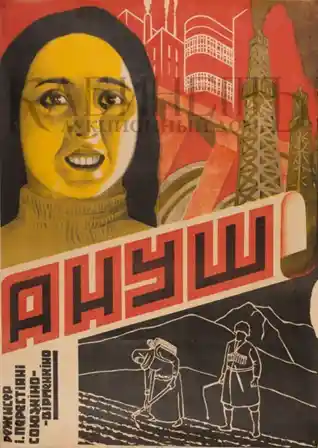
Okay, so 'Anush.' If you're looking for a quick, punchy movie to throw on a Friday night, this ain't it. Absolutely not. This is a very different kind of film, something from way back, and it moves at its own speed.
For folks who really dig into film history, or who appreciate a quietly told, often very sad, love story that doesn't rush anything, you might just find something special here. But if you need constant action or snappy dialogue, you'll probably be climbing the walls after twenty minutes. 🕰️
The story itself is simple, almost stark. Anush (E. Arzumanyan) and Saro (K. Stepanyan) fall for each other, a classic village romance. Their connection feels real, even through the decades-old film grain.
But then, there's the elder brother, played by V. Ter-Hakobyan, who is just so *unyielding*. His stern presence looms over everything, you can feel the weight of tradition coming off him.
There's a scene, early on, where Anush is just watching Saro from a distance. It's a long shot, no dialogue, just her gaze. You can almost feel her heart aching, right there.
The pace is definitely something you need to adjust to. Things unfold *slowly*. Like, really slowly sometimes. It's not always easy, I'll admit, to stay totally focused in our modern binge-watching world. 😴
One moment that really stuck with me was a village dance. Everyone is moving, but Anush and Saro just keep finding each other's eyes. It’s this brief, beautiful bubble of happiness before everything goes downhill.
The film does a wonderful job of showing, not telling, the consequences of pride and rigid rules. The way the community turns, almost imperceptibly at first, feels incredibly natural and sad.
There's this shot of the mountains, I think it was near the middle. It just sits there for a while, vast and indifferent. It makes the human drama feel even smaller, more helpless, against such a grand backdrop.
E. Arzumanyan as Anush carries so much emotion in her eyes. Even without sound, you understand her despair. It's a powerful performance, very *raw*.
Saro, too, feels so earnest. K. Stepanyan makes him seem like a good-hearted, if perhaps a little naive, young man. His eventual fate feels just so *unfair*.
Honestly, the tragedy here feels inevitable from pretty early on. You just *know* it's not going to end well, right from the start. It’s that kind of story, really.
The ending is… well, it just *is*. It doesn't give you neat answers or happy resolutions. It just leaves you with the heavy feeling of what could have been. 💔
This film is a strong reminder of how powerful early cinema could be, even with limited tools. It doesn't rely on tricks, just raw human emotion and a good story. It's a piece of history worth seeing, if you have the patience for it.
IMDb —
1929
Community
Log in to comment.