DbcultAccessing Vault...
Cult Review
Senior Film Conservator
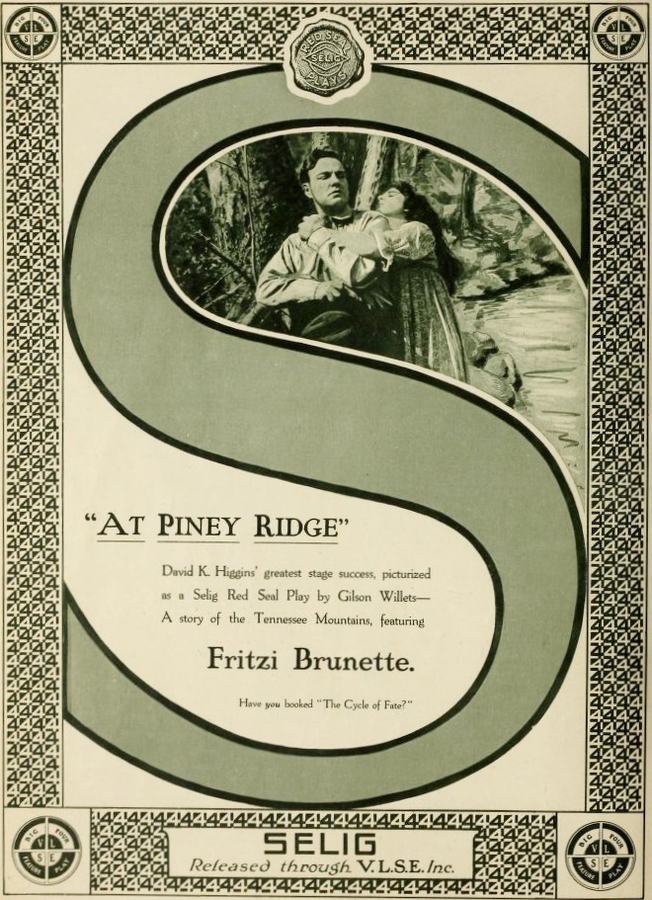
In the annals of early cinema, where moral clarity often served as a guiding principle, At Piney Ridge emerges as a surprisingly complex and morally ambiguous drama, a narrative tapestry woven with threads of betrayal, ambition, and a startling revelation that challenges the very fabric of identity. Released in 1917, this cinematic offering, penned by the collaborative minds of Gilson Willets and David Higgins, plunges viewers into a rural landscape seemingly tranquil, yet seething with undercurrents of deceit and societal hypocrisy. It’s a film that demands attention not just for its intricate plotting but for its audacious tackling of themes that, even a century later, retain a potent resonance.
At the heart of this tumultuous narrative stands Mark Brierson, portrayed with a chilling blend of charm and ruthlessness by Edward Peil Sr. Brierson is not merely an antagonist; he is the very catalyst of the impending chaos, a man whose ambition knows no bounds and whose moral compass is irrevocably broken. His initial transgression—the seduction and subsequent abandonment of Cindy Lane (Lillian Hayward) upon learning of her pregnancy—sets the tragic tone. This isn't a simple tale of illicit love; it's a cold, calculated discarding of responsibility, a move designed to clear his path for a more advantageous liaison. Brierson, ever the opportunist, swiftly pivots his affections towards Azalia Deering (Vivian Reed), whose father, General Deering (James Bradbury Sr.), conveniently owns the town bank. This strategic courtship is less about love and more about leverage, a cynical exploitation of social standing and financial power. The casual ease with which Brierson misuses bank funds underscores his profound lack of scruples, painting a portrait of a man utterly consumed by avarice and a desire for unearned status. Peil Sr.'s performance is crucial here, imbuing Brierson with a suave exterior that masks a truly venomous core, making his eventual downfall all the more satisfying, yet tragically inevitable.
Into this brewing storm steps Jack Rose, a wealthy farmer brought to life by Leo Pierson. Jack is the moral counterpoint to Brierson, a figure of integrity and genuine kindness. His intervention, saving General Deering’s bank from Brierson’s insidious machinations, establishes him not just as a financial savior but as a beacon of honesty in a world increasingly clouded by deceit. Crucially, Jack also harbors a sincere affection for Azalia, an affection that is reciprocated, forming a pure, untainted romantic subplot against the backdrop of Brierson’s cynical maneuvering. Their burgeoning relationship becomes a dangerous obstacle for Brierson, fueling his already considerable malice. This dynamic—the virtuous hero unwittingly drawn into the villain's web—is a classic trope, yet executed here with a heightened sense of dramatic irony.
Meanwhile, the raw, visceral force of paternal wrath manifests in Zeb Lane (Al W. Filson), Cindy’s father. His vow to kill the man who disgraced his daughter is not merely a threat; it’s a promise born of profound grief and a deeply ingrained sense of honor. Filson delivers a performance that embodies the fierce protectiveness of a father, making Zeb's relentless pursuit of justice a compelling, if dangerous, narrative thread. Cindy's steadfast refusal to name her lover, despite her father's anguish, adds another layer of tragic complexity, highlighting her own internal conflict and perhaps a lingering, misguided loyalty or fear. This dramatic tension, with Zeb’s burning desire for vengeance juxtaposed against Cindy’s silence, keeps the audience on tenterhooks, anticipating the inevitable, explosive confrontation.
Brierson’s malevolence reaches its zenith as he perceives the genuine connection between Jack and Azalia. Realizing Jack is a rival not just for Azalia’s hand but for societal standing and moral authority, Brierson concocts an elaborate, cruel scheme. He tells Zeb that Jack is the father of Cindy's child, a lie designed to not only eliminate Jack as a romantic competitor but also to disgrace him utterly. This particular brand of villainy, twisting truth into a weapon, echoes the intricate deceptions found in other period dramas where reputation is paramount, such as the convoluted plots often seen in The Fatal Ring, where characters navigate a treacherous landscape of hidden motives and engineered downfalls. The sheer audacity of Brierson's fabrication is breathtaking, showcasing a mind devoid of empathy, solely focused on self-preservation and advancement.
But Brierson’s depravity does not stop there. To further compound Jack’s misery and solidify the false accusation, he manipulates Dagmar, a Black woman, into claiming Jack as her son. This act is particularly heinous, exploiting racial prejudices of the era to inflict maximum social damage. It’s a chilling reminder of the systemic injustices and the ease with which marginalized individuals could be coerced and used as pawns in others' games. Dagmar’s tragic involvement, though initially a tool for Brierson, becomes a pivotal point for the film’s most shocking and profound revelation. While the list of comparative films does not offer a direct parallel for this specific racial theme, one might consider how identity, often concealed or misunderstood, plays a role in films like The Half-Breed, albeit in a different context of heritage and social acceptance.
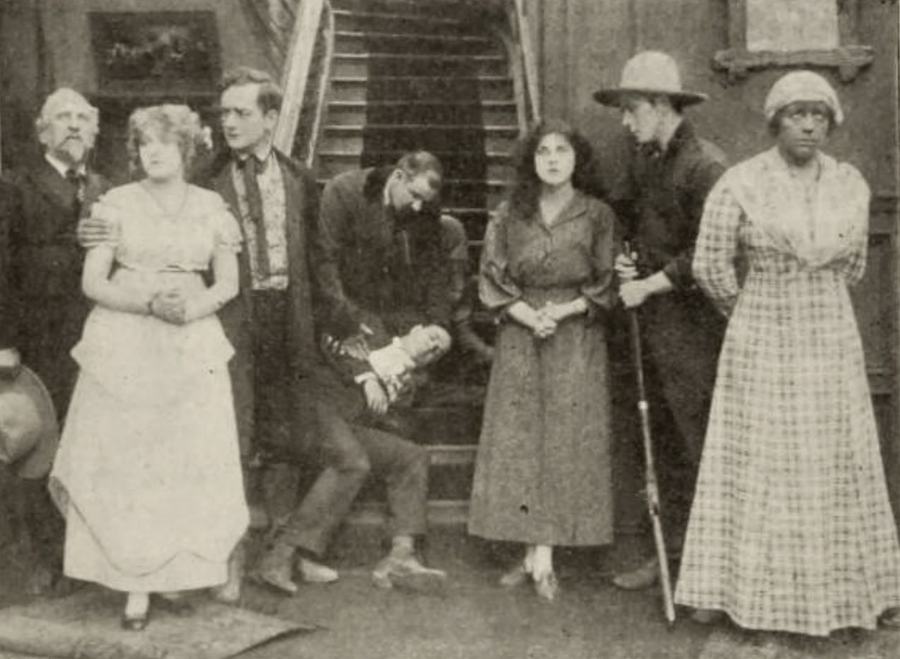
The carefully constructed edifice of Brierson’s lies begins to crumble, however, under the relentless pursuit of truth. Zeb, driven by his unwavering commitment to justice for Cindy, eventually learns the true identity of his daughter’s betrayer: Brierson himself. But the revelations don’t end there. In a stunning, almost seismic twist that elevates At Piney Ridge beyond a mere melodrama, Zeb is also informed that Brierson is Dagmar's son. This revelation, delivered with dramatic precision, reshapes everything. It forces a re-evaluation of Brierson's character, his motivations, and the societal pressures that may have driven his relentless pursuit of a white, privileged existence. The film, in this moment, transcends its genre, offering a potent, albeit subtle, commentary on race, class, and the desperate lengths to which individuals might go to escape perceived societal limitations or embrace an identity that is not their own.
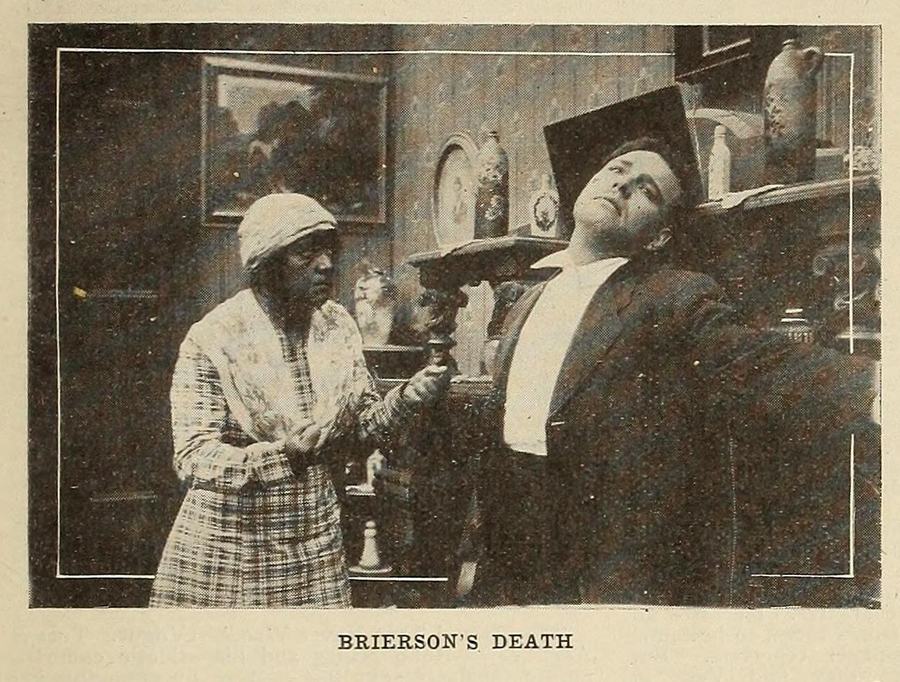
The narrative hurtles towards its electrifying climax as Zeb, now fully aware of the extent of Brierson's villainy and his personal responsibility for Cindy's plight, confronts him. The ensuing confrontation is steeped in the raw emotion of vengeance, a primal justice long sought. Zeb kills Brierson, a definitive act that brings a violent, yet arguably deserved, end to the architect of so much suffering. It’s a moment that resonates with the themes of retribution and the ultimate triumph of truth, reminiscent of the climactic showdowns in dramas like Strife, where long-simmering conflicts erupt into decisive, often fatal, resolutions.
Yet, even in death's embrace, Brierson is not spared further torment. Before his final breath, Dagmar approaches him, delivering the crushing truth: while she is not his biological mother, she confirms his heritage is Black. This final, devastating disclosure is a masterstroke of storytelling. It casts a new, tragic light on Brierson’s entire life, his relentless striving for status, his cruel rejections, and his desperate attempts to construct a false identity. It implies a life lived in fear, in denial, and ultimately, in a self-made prison of deceit. This revelation is not merely a plot twist; it is a profound commentary on the societal anxieties surrounding race and identity in early 20th-century America, making At Piney Ridge a far more daring and socially conscious film than its surface might suggest. It forces the audience to grapple with the idea of who Brierson might have been, had he not been driven by the need to conceal such a fundamental aspect of himself. The weight of this truth, delivered at the precipice of death, is an incredibly powerful, almost Shakespearean, moment of tragic recognition.
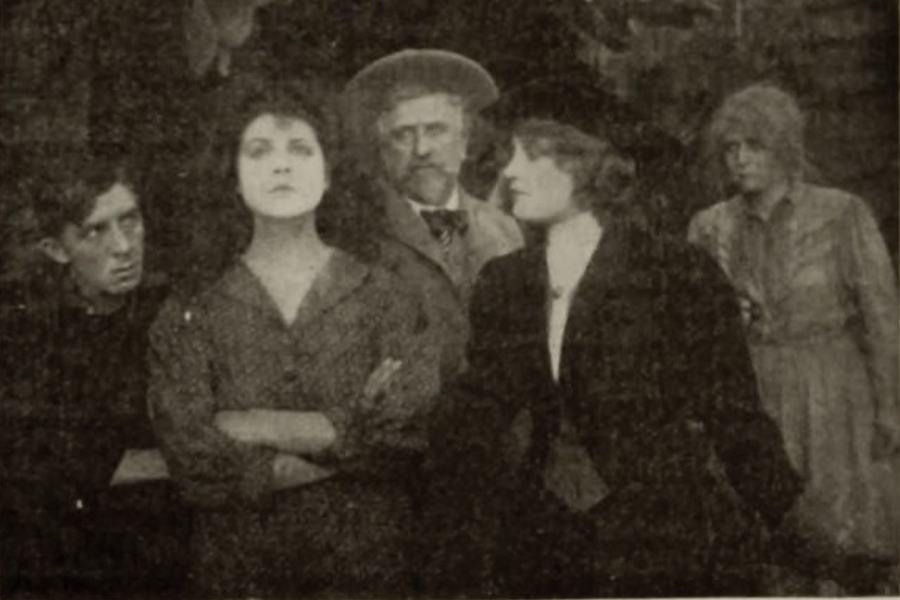
As the dust settles, the survivors are left to pick up the pieces of their shattered lives. Jack Rose and Azalia Deering, having navigated the treacherous waters of Brierson’s manipulations, finally find solace and happiness in their union. Their marriage represents a triumph of genuine affection and integrity over calculated ambition and deceit. It’s a classic romantic resolution, offering a balm to the audience after the intense drama. For Cindy Lane, however, the path to peace is more arduous and tinged with profound sorrow. Her child has died, a tragic consequence of Brierson's abandonment and the ensuing turmoil. This loss, deeply poignant, underscores the lasting damage wrought by his actions. Yet, Cindy finds a measure of closure and hope by returning to a former love, a man she cherished before Brierson's destructive intrusion. This bittersweet ending for Cindy, though marked by loss, suggests a possibility of healing and a return to a life built on authentic connection, rather than the false promises of a manipulative charlatan. It’s a testament to resilience, even in the face of insurmountable grief, echoing the quiet strength of protagonists in films like The Springtime of Life, where characters find renewal after hardship.
What truly elevates At Piney Ridge beyond a conventional silent-era melodrama is its audacious exploration of themes that remain deeply relevant. The film dissects the corrosive power of betrayal, not just of individuals but of trust within a community. Brierson's financial misdeeds and his personal deceits are two sides of the same coin, illustrating how a lack of moral integrity can unravel an entire social fabric. The stark contrast between his ambition and Jack Rose's inherent decency highlights the eternal struggle between venality and virtue.
The film's treatment of racial identity, particularly through Brierson's devastating revelation, is remarkably bold for its time. While the portrayal might be viewed through a contemporary lens with nuanced critique, its very inclusion as a central, shocking plot point speaks volumes about the societal anxieties and prejudices of the early 20th century. It subtly critiques the pressures to conform, to hide one's true self, and the tragic consequences of living a lie driven by racial stigma. This makes the film a compelling artifact for studying social history as much as cinematic art. The film doesn't shy away from depicting the harsh realities of prejudice, even as it uses it for dramatic effect.
The notion of justice and vengeance is another powerful undercurrent. Zeb Lane's unwavering pursuit of his daughter's seducer is a visceral representation of a father's protective instinct, culminating in a violent, yet narratively satisfying, act of retribution. This stark, almost Old Testament, sense of justice provides a cathartic release after the prolonged tension of Brierson's manipulations. It’s a form of frontier justice, perhaps, but one that feels earned within the dramatic confines of the story.
The performances, even in the absence of spoken dialogue, convey a rich tapestry of human emotion. Edward Peil Sr. masterfully crafts a villain who is both despicable and, in his final moments, tragically pathetic. Lillian Hayward imbues Cindy with a quiet strength and enduring sorrow, making her plight deeply sympathetic. Al W. Filson's Zeb is a force of nature, a man driven by righteous fury. And Leo Pierson's Jack Rose is the steady, moral anchor the story desperately needs. Even supporting players like Frank Clark, Fritzi Brunette, and William Scott, though their specific roles might be less prominent in the plot summary, undoubtedly contributed to the rich tapestry of the Piney Ridge community, adding authenticity to the setting and depth to the unfolding drama.
In conclusion, At Piney Ridge stands as a testament to the enduring power of dramatic storytelling, even in the nascent years of cinema. It’s a film that, despite its age, refuses to be relegated to mere historical curiosity. Its intricate plot, its bold confrontation of societal issues, and its exploration of the darker facets of human nature ensure its continued relevance. The film’s ability to weave together themes of illicit romance, financial malfeasance, deep-seated prejudice, and shocking revelations of identity into a cohesive and compelling narrative is a remarkable achievement. It reminds us that the human condition, with all its flaws and triumphs, has always been the most fertile ground for profound artistic expression. For those interested in the evolution of cinematic narrative and the ways in which early filmmakers grappled with complex social commentary, At Piney Ridge is an indispensable viewing experience, a forgotten gem that shines brightly with its enduring power to provoke thought and stir emotion.
IMDb —
1917
Community
Log in to comment.