DbcultAccessing Vault...
Cult Review
Senior Film Conservator
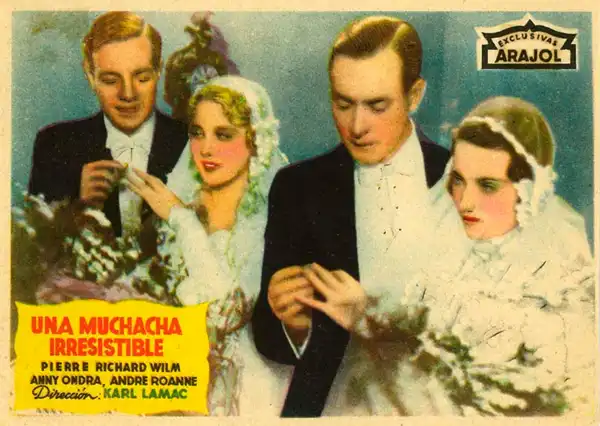
If you like old-school French comedies where everyone is constantly winking at the camera and doors are always slamming, then yeah, sure. It’s light, it’s fluffy, and it doesn't try to solve the world's problems. If you need grit or deep psychological tension, keep walking.
The whole thing feels like a stage play that someone accidentally left the camera running for. Anny Ondra is doing a lot of the heavy lifting here, and honestly, she’s pretty magnetic. She manages to make the 'let’s swap places' trope feel slightly less tired than it actually is.
There’s this one scene where they’re rehearsing a bit for the show, and the timing is just… off. It’s not necessarily bad, but it feels like they were rushing to get to lunch. You can almost see the actors thinking about their next cue instead of living in the moment.
It’s nowhere near as heavy as something like The Case of Sergeant Grischa, thank god. It’s just people being silly in nice clothes. The transition between the school setting and the theater world is handled with a real lack of grace, but that’s kind of part of the charm, isn't it?
I found myself zoning out a bit during the mid-section, but then someone would trip over a rug or say something particularly sharp, and I was back in it. It reminds me a bit of the frantic energy in Foolish Follies, just with less singing and more French accents.
Is it perfect? No. Does it feel like a relic from a different planet? Absolutely. There’s a specific kind of innocence in these 1930s comedies that we just don't get anymore. They didn't feel the need to explain why the swap worked or how they pulled it off. It just happens. Magic of cinema, I guess. 🙄
Anyway, don't overthink it. Grab a drink, settle in, and just watch Anny Ondra work her magic. It’s a breezy way to kill an afternoon, even if you forget the plot about ten minutes after the credits roll.
Year
1933
IMDb Rating
—

Editorial
Deciphering the legacy of transgressive cult cinema.
Community
Log in to comment.