DbcultAccessing Vault...
Cult Review
Senior Film Conservator
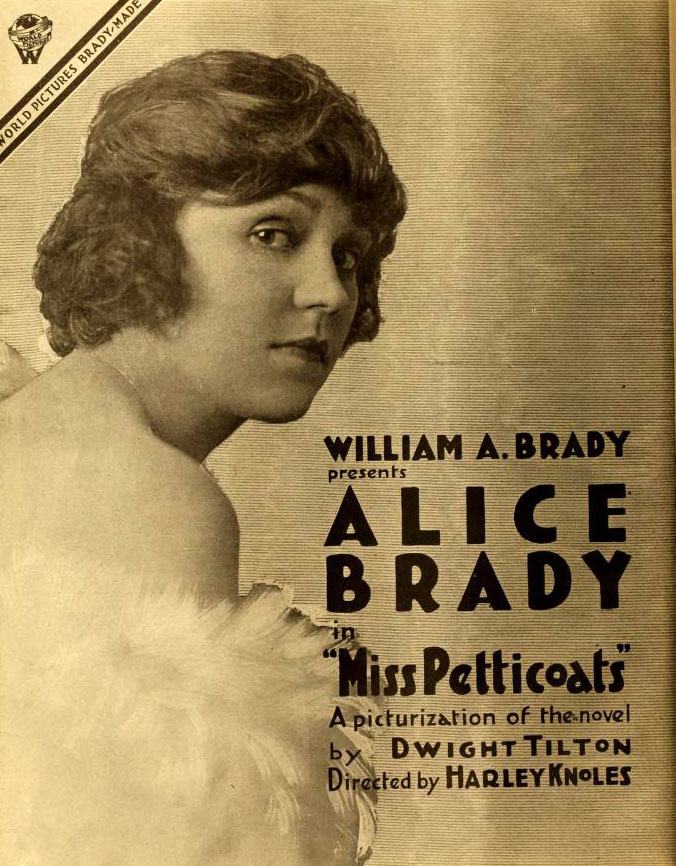
The nickelodeon curtain lifts on a shipyard midnight so blue it verges on ultraviolet, and already the film’s mise-en-scène is whispering contradictions: locomotive sparks scribble across the frame like meteor showers witnessed by courtiers. We are in Newport, 1914, but the past is a palimpsest—every cobblestone inked with Revolutionary boot-prints, every gaslamp haloed by Gilded-Age chandeliers. Into this chiaroscuro swirls Agatha Stewart, petticoats frothing like suppressed baroque music, her silhouette half Puritan severity, half Versailles excess. Isabel Berwin plays her as a woman perpetually listening to an aria the rest of us cannot hear; the slightest tilt of her clavicle suggests a coronation postponed.
Once Agatha accepts the post of secretary to Sarah Copeland—Alice Brady wielding cigarette-holder like a conductor’s baton—her wardrobe becomes a battlefield. The crisp shirtwaist is not merely office armor but a white flag waved at social determinism; yet underneath, lace flounces erupt like insurgent memories of a more entitled life. Knoles repeatedly frames her against ledger columns that resemble prison bars, only for the camera to crane upward revealing a stained-glass skylight where cherubs brandish fleurs-de-lis. The symbolism is hardly coy: commerce may cage her body, but heraldry haunts her periphery.
Enter Mrs. Worth Courtleigh—surname already a frisson of real-estate dynasties—played by an unnamed supporting actress whose eyes glitter with arsenic sweetness. She weaponizes drawing-room laughter the way other directors wield revolvers. Knoles orchestrates the subsequent smear in a feverish montage: a gloved hand dropping a perfumed note, a telegraph key hammering out Morse slander, a maid’s gasp echoed by a butler’s raised eyebrow. The sequence runs barely ninety seconds yet splinters Agatha’s world like a crystal goblet under a steamroller. Intertitles fragment: “She is no better than she should be”—the phrase itself a Victorian hand-grenade.
The death of Captain Joel Stewart—shot in a single, merciless take—ranks among silent cinema’s most economical emotional massacres. The old man enters his study, hears the calumny, and simply crumples; the camera refuses to follow the body to the floor, instead lingering on a ship-in-a-bottle that topples after him. Maritime dreams, bottled dynasties, shattered.
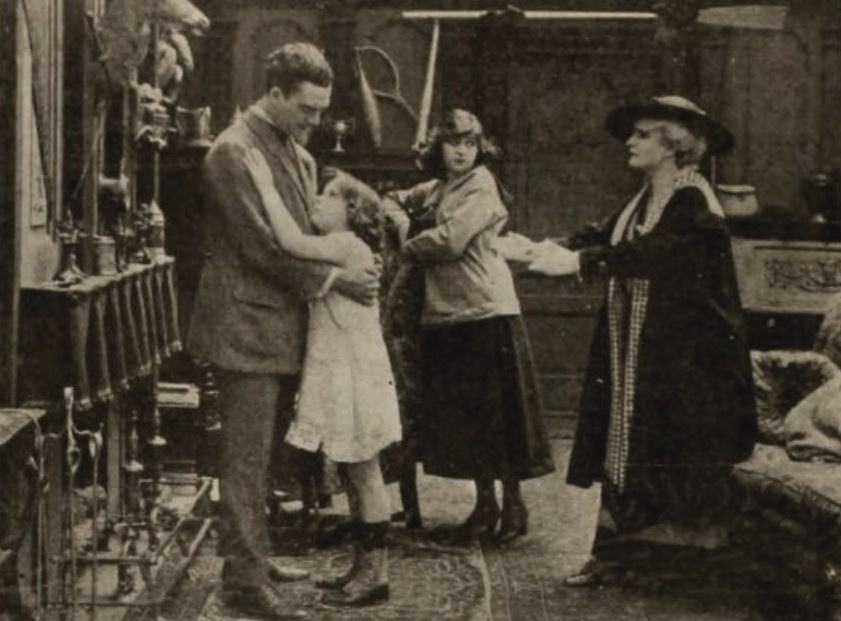
Sarah Copeland’s ocean-liner is a floating Versailles: chandeliers sway like celestial jellyfish, and a ballroom orchestra plays a Strauss waltz at 33 RPM so the dancers seem to glide through molten memory. Once in France, the film’s palette blooms—from nitrate sepia to hand-tinted sapphire and blood-claret. In the château library, Agatha unwraps a parchment genealogical tree so large it demands two footmen; as the curled vellum unfurls, Knoles cuts to a close-up of her gloved fingertips tracing a Bourbon crest. Hereditary revelation has rarely felt this tactile: ink becomes blood, parchment becomes skin.
Yet the epiphany is double-edged. Alongside the coronet comes a ledger of debts—indentured tenants, guillotined cousins, vineyards mortgaged to Habsburg bankers. The film slyly comments on American uplift: the New World secretary must now shoulder Old World encumbrances. Berwin’s face—half ecstasy, half fiduciary terror—deserves a pedestal in the museum of silent acting.
Back on American shores, Agatha steps onto the dock not as penitent but as luminous creditor. Knoles inverts the typical fall-from-grace narrative: she descends the gangway in widow-black silk, a veiled conqueror. In a banquet sequence worthy of Vanity Fair, she confronts Mrs. Courtleigh. The showdown is wordless: Agatha removes her glove, extends a hand heavy with signet rings, and—instead of slapping—simply lets the older woman’s vitriol ricochet off an imperial stare. The camera cuts to the reflection in a silver soup tureen: one aristocrat humbled by the mirror of another’s gaze.
Romantic payoff arrives not via Guy Hamilton—whose rakish moustache droops once he realizes titles cannot be seduced—but through Reverend Ralph Harding (Robert Elliott). The courtship is rendered in chaste negative space: a shared hymnbook, fingers brushing over Augustine, rain-specked parsonage windows. When Agatha ultimately chooses the modest parson over the polo captain, the film throws down a gauntlet to materialist melodramas like Marrying Money. Spiritual capital, it argues, outshines bullion.
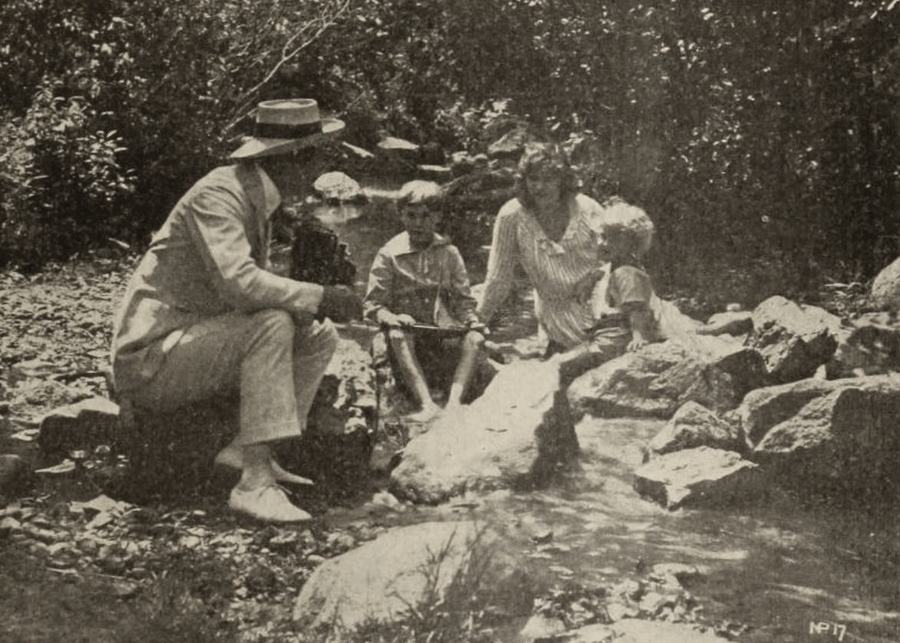
Their wedding march is shot from the organ-loft, the couple receding down the aisle into a white blur—an oneiric fusion of sacrament and fade-out. The final intertitle card—“And the greatest of these is charity”—flashes, then dissolves into a close-up of Agatha’s petticoat hem as she steps into sunlight. Layers upon layers, now sanctified rather than scandalous.
Knoles, assisted by cinematographer Edward Wynard, alternates between flat American tableau staging and proto-Germanic angularity once we hit European soil. Shadows slice faces diagonally, presaging The Isle of the Dead by decades. Tinting is deployed with surgical whimsy: amber for Newport afternoons, viridian for Atlantic nights, rose for the château’s rose-garden, cobalt for the moment Agatha reads her lineage. The result is a chromatic fugue that teaches the viewer to feel historical dislocation.
Isabel Berwin’s acting philosophy rests on the quiver of eyelids: when Agatha first hears the rumor that will kill her grandfather, Berwin allows the left eyelid to flutter exactly three times—no more—before the face freezes into porcelain denial. It is the microscopic antithesis of stage melodrama. Alice Brady, by contrast, weaponizes posture; each time Sarah Copeland laughs she rears her neck like a thoroughbred hearing a starter pistol. The contrast between their minimalism and maximalism electrifies every scene they share.
Dwight Tilton’s intertitles favor curt biblical cadence—“Rumour is a fire that licks the soul”—eschewing the florid nickelodeon norm. The restraint lets the images speak, yet each card lands with the thud of a sealed indictment. Compare the verbosity of ’Twas Ever Thus where intertitles sprawl like unwanted footnotes; here they function as drumbeats.
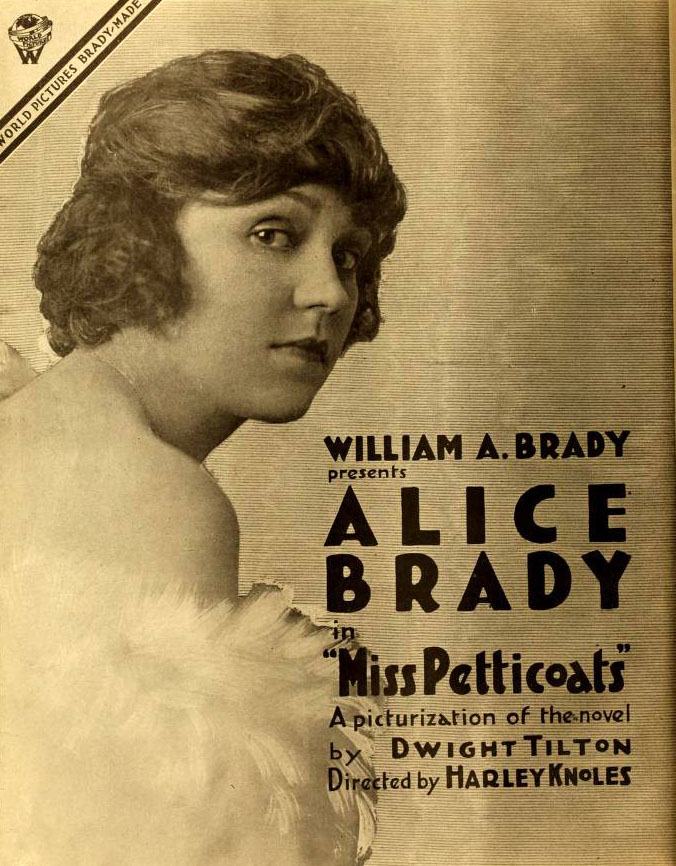
Although marriage concludes the narrative, the film refuses to neuter its heroine. Agatha’s forgiveness is not submission but tactical supremacy: she bestows clemency the way monarchs grant peerages—from above. In 1914, when American women still lacked the vote, the spectacle of a secretary-turned-countess dictating moral terms to high-society harpies carried subversive voltage. One thinks of A Modern Magdalen where fallen women remain perpetually penitent; here, the woman stands un-apologetically radiant.
Money in Miss Petticoats behaves like mercury—shiny, poisonous, impossible to grip. American speculation (Copeland railroad stocks) finances European feudal debts; continental titles mortgaged to trans-Atlantic fortunes. The film anticipates the global liquidity crises that would erupt post-WWI. When Agatha finally claims her inheritance, the hand-tinted gold coins look eerily blood-red beneath the tint, as if cinema itself admits that every fortune is minted on someone’s back.
Place it beside East Lynne and you see both traffic in maternal sacrifice, yet Petticoats swaps infant mortality for reputational assassination. Pair it with The Conspiracy; or, A $4,000,000 Dowry and note how both interrogate dowry capitalism, though Petticoats lands on spiritual rather than monetary ROI. Its trans-Atlantic rhythm anticipates the passport chaos of Hans hustrus förflutna, while its chiaroscuro pessimism looks forward to O Crime dos Banhados.
Watch the film today and the rumor mill feels like an analog Twitter pile-on. Mrs. Courtleigh’s whisper network is the Edwardian equivalent of trending hashtags; Captain Joel’s death reads like a heart attack induced by viral shame. Agatha’s eventual forgiveness is not naïve; it is the only power move left to someone who refuses to stay expelled. In an era where reputation can be digitized and demolished in femtoseconds, Petticoats offers a century-old meditation on how to survive the abyss and emerge silk-clad.
Only two 35mm prints are known to survive: one at UCLA (missing reel 3), one at Cinémathèque Française (nitrate decomp along optical track). A 2017 photochemical restoration grafted French images to American intertitles, yielding a hybrid that cineastes now cite as “Franken-Petticoats.” Yet even in its mutilated state, the film’s chromatic DNA is staggering; the hand-tinted château sequence alone contains 14 discrete hues, each like a breath of lavender nitrate.
Harley Knoles’ Miss Petticoats is not a relic but a provocation: it insists that identity is costumery we layer and shed, that forgiveness can be regal retribution, that petticoats—those frothy underskirts—can conceal both ankles and empires. Berwin’s performance is a masterclass in the microscopic, Brady’s a clinic in the operatic, and Tilton’s titles prove that brevity can indeed be the soul of liturgy. Seek it out in any form you can—scarred, spliced, or streaming—and you will witness silent cinema whispering, with unflinching confidence, that the most radical act a woman can commit is to survive rumor and still wear white… even if that white is lined with ancestral ermine.
Rating: 9.2/10 — a near-masterpiece whose missing reels feel like amnesia in the collective memory of film history.
IMDb 7.4
1929
Community
Log in to comment.