DbcultAccessing Vault...
Cult Review
Senior Film Conservator
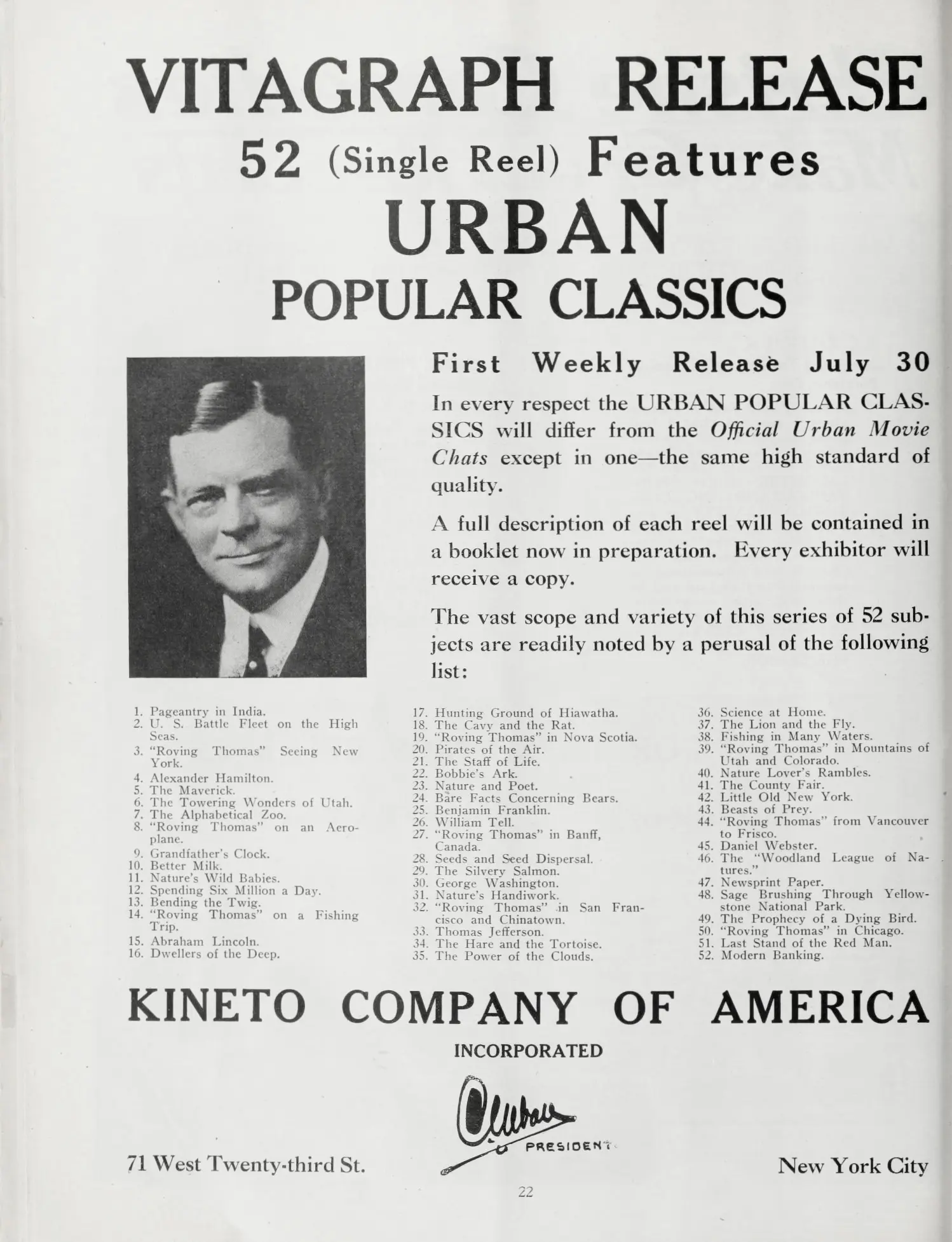
The year 1923 remains a watershed moment in the evolution of cinematic language, a period where the medium finally shed its theatrical vestments to embrace a purely visual syntax. Among the artifacts of this era, Beasts of Prey (originally titled Rovdyret) emerges not merely as a relic of silent storytelling, but as a prescient precursor to the film noir movement. It is a work that breathes the soot and desperation of its urban setting, eschewing the whimsical escapism of its contemporaries for a cold-eyed examination of the human animal. While many films of the early twenties sought to moralize, this picture chooses to observe, documenting the friction between social stratification and primal necessity with a surgical precision that feels startlingly modern.
The cinematography in Beasts of Prey is nothing short of revolutionary. The director utilizes the camera as an intrusive presence, weaving through the alleyways and grand ballrooms with a fluidity that suggests a predator stalking its quarry. Unlike the static, stage-bound compositions found in Lena Rivers, which relied heavily on traditional narrative framing, this film experiments with depth of field and perspective to isolate its characters. The city itself is rendered as a living entity—a sprawling, indifferent beast that swallows the individual whole. The use of shadow is not merely an aesthetic choice here; it is a thematic anchor. The darkness is where the 'beasts' reside, and as the protagonist descends further into the criminal quagmire, the light sources become increasingly scarce, mirroring his psychological disintegration.
In comparing the atmospheric dread of this film to Pitfalls of a Big City, one notices a distinct shift in tone. While the latter treats the metropolis as a den of vice to be avoided, Beasts of Prey treats it as an inescapable ecosystem. There is no 'outside' to this world. The characters are defined by their proximity to power and their ability to manipulate the shadows. This structural nihilism is what separates the film from the more hopeful or didactic works of the period. It posits that the predator-prey relationship is the foundational element of modern civilization, a sentiment that resonates through every flickering frame.
The acting in silent cinema is often criticized for its histrionics, yet the ensemble in this production displays a remarkable restraint. The lead performance is a masterclass in internal tension; the character's motivations are conveyed through subtle shifts in posture and the haunted vacancy of his gaze. We see a man who has traded his soul for survival, a transformation that brings to mind the duality explored in Dr. Jekyll and Mr. Hyde. However, unlike the supernatural metamorphosis of Stevenson's doctor, the change in Beasts of Prey is purely environmental. The protagonist is not a monster by nature, but by necessity.
This nuanced approach to characterization is further highlighted when contrasted with the more archetypal roles found in The Slavey. While that film relies on clearly defined moral boundaries, Beasts of Prey thrives in the gray areas. The 'villains' are often motivated by the same survival instincts as the 'hero,' creating a sense of tragic inevitability. The female lead, too, breaks away from the 'damsel' trope. She is a cunning operator in her own right, navigating the patriarchal structures of the underworld with a lethal grace that anticipates the femme fatales of the 1940s. Her interactions with the protagonist are charged with a subtextual electricity that dialogue would only diminish.
Beneath the surface of its crime-thriller plot, the film engages in a sophisticated critique of capital and class. The 'beasts' of the title are not just the criminals in the gutters, but also the financiers in the high-rises. This thematic resonance links it to The Money Master, though Beasts of Prey is far more cynical regarding the possibility of wealth bringing anything other than corruption. The film suggests that reputation is a fragile currency, a theme also explored in What's Your Reputation Worth?, but here, the cost of a ruined name is not just social ostracization—it is physical extinction.
The screenplay (or rather, the scenario) avoids the pitfalls of over-explanation. The intertitles are sparse, allowing the visual storytelling to carry the narrative weight. This economy of language forces the viewer to engage more deeply with the imagery, deciphering the power dynamics through blocking and lighting. When we see the master thief looking down at the city from a balcony, he is framed not as a king surveying his kingdom, but as a gargoyle perched on a crumbling edifice. The visual metaphor is clear: he is part of the architecture of decay.
To truly appreciate the gritty intimacy of Beasts of Prey, one must look at the broader landscape of 1920s cinema. While films like Valdemar Sejr or Charles IV sought to find meaning in the grand sweep of history and the divine right of kings, Beasts of Prey finds its truth in the dirt. It rejects the romanticism of the past for the harsh reality of the present. Even when compared to the nationalistic fervor of Egri csillagok, this film feels like a radical departure. It isn't interested in the glory of the state, but in the failure of the social contract.
Furthermore, the film’s exploration of transgressive relationships and moral ambiguity places it in conversation with Freie Liebe. However, where that film looks at the liberation of the spirit, Beasts of Prey looks at the incarceration of the soul. There is no 'free love' in a world where everyone is a commodity. Even the moments of genuine connection between characters are tainted by the looming threat of betrayal. This sense of impending doom is far more palpable here than in the lighthearted defiance of Never Say Quit. In the world of the beasts, quitting is not an option, and the only end is a violent one.
The production design of the film deserves significant praise. The transition from the lavish, almost surreal interiors of the 'Angel Factory' (a nod perhaps to the thematic concerns of The Angel Factory) to the skeletal remains of a warehouse district creates a jarring visual rhythm. The film uses these locations to comment on the artificiality of civilization. The 'civilized' spaces are just as predatory as the docks, only the weapons used are different. Instead of knives, the elite use contracts and social standing to eviscerate their rivals, a dynamic that echoes the clever machinations seen in The Silk-Lined Burglar.
The editing, too, is ahead of its time. The cross-cutting during the film’s final act builds a sense of mounting hysteria that is rare for a production of this vintage. It doesn't rely on the wide-open spaces of A Desert Hero to create tension; instead, it uses the narrowness of the city to create a feeling of entrapment. Every cut feels like a tightening of the noose. The pacing is deliberate, allowing the atmosphere to seep into the viewer's bones before erupting into the final, inevitable confrontation. It is a masterclass in sustained suspense that many modern directors would do well to study.
Ultimately, Beasts of Prey stands as a testament to the power of silent cinema to communicate complex psychological states. It is a film that refuses to offer easy answers or comforting resolutions. Like Bodakungen, it explores the darker impulses of the human heart, but it does so within a framework that feels visceral and immediate. It challenges the viewer to look into the mirror and recognize the predatory instincts that reside within us all, waiting for the right circumstances to emerge.
As we look back at the cinematic output of 1923, Beasts of Prey remains a towering achievement. It is a film that captured the anxiety of a world in flux, caught between the trauma of the past and the uncertainty of the future. It remains essential viewing for anyone interested in the origins of the crime genre or the development of visual storytelling. It is a dark, beautiful, and deeply unsettling work of art that continues to haunt the imagination long after the final intertitle has faded to black. The beasts are still among us, the film suggests, and the city is still their hunting ground.
IMDb 6.2
1929
Community
Log in to comment.