DbcultAccessing Vault...
Cult Review
Senior Film Conservator
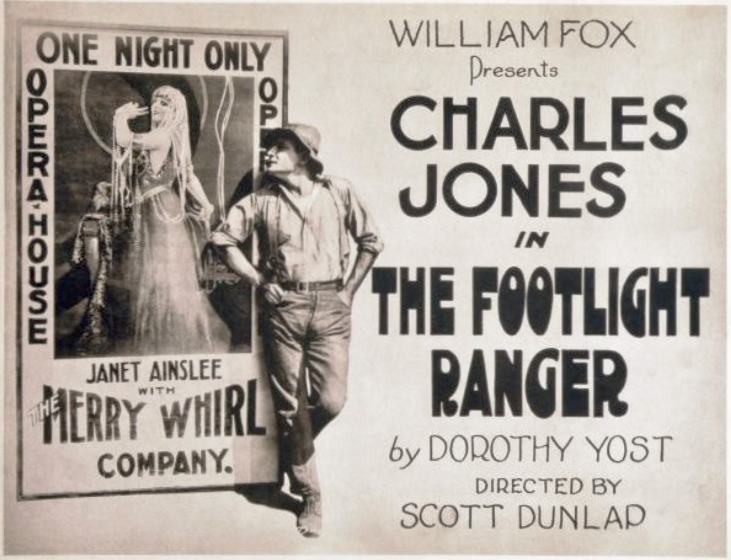
The opening frames of The Footlight Ranger unfurl like a sepia‑tinted postcard, the camera lingering on the ochre‑streaked horizon where cattle silhouettes merge with the low‑lying clouds. Director William Branch orchestrates a visual rhythm that feels simultaneously expansive and intimate, allowing the viewer to breathe the same thin air as Bill Moreland (Buck Jones), whose stoic demeanor masks a heart capable of profound generosity.
Enter Janet Ainslee (Fritzi Brunette), a luminous figure whose presence disrupts the monotony of the prairie. Her costume—a tattered but elegant dress—betrays a world far beyond the dust, hinting at the theatrical grandeur of New York. The juxtaposition of her refined poise against the raw, unvarnished landscape creates a visual metaphor for the collision of two disparate cultures.
When Bill discovers Janet stranded, his solution is both pragmatic and symbolic: he sells his prize dogs, the very symbols of his status among ranch hands. This transaction is rendered with a subtlety that elevates it beyond mere plot device; the camera lingers on the dogs' mournful eyes as they are led away, underscoring the weight of Bill’s sacrifice. The scene resonates with the thematic undercurrents of the era’s silent cinema, where material loss often foreshadows spiritual gain.
The narrative momentum then pivots eastward, as Bill follows Janet to the bustling metropolis. The transition from open plains to claustrophobic city streets is executed with a deft montage, intercutting the clamor of horse‑drawn carriages with the honking of early automobiles. The urban tableau is bathed in a muted palette, allowing the audience to sense Bill’s displacement without relying on dialogue—a masterclass in visual storytelling.
Within the theatrical district, Janet encounters a suave yet sinister producer (Henry A. Barrows), whose promise of stardom is tethered to an immoral covenant. The producer’s office, lit by a single amber lamp, becomes a stage for moral ambiguity. The director employs chiaroscuro lighting, casting deep shadows that mirror the darkness of the proposition. Bill’s entrance, sudden and decisive, shatters the illusion of consent, and the ensuing confrontation is choreographed with a kinetic energy that rivals any modern action set piece.
The rescue sequence is notable for its use of sea‑blue accents—particularly the producer’s cufflinks, rendered in #0E7490, which glint ominously as Bill lunges. This color cue subtly signals the corrupting allure of the city’s promises, contrasting with the warm, earthy tones that dominate the Western scenes.
Bill’s character arc is a study in understated heroism. He does not brandish weapons or deliver monologues; instead, his heroism is expressed through acts of self‑denial and steadfast devotion. Jim Mason’s supporting role as the skeptical ranch foreman offers a counterpoint, questioning Bill’s choices and thereby amplifying the central conflict between duty and desire.
Janet, portrayed with a blend of vulnerability and resolve, embodies the archetype of the ‘New Woman’—a figure emerging in the 1920s who seeks agency beyond domestic confines. Her evolution from a stranded performer to a woman who asserts control over her destiny—choosing love over fame—mirrors the broader societal shifts of the era.
Lydia Yeamans Titus provides comic relief as the cantankerous boardinghouse matron, her exaggerated gestures a nod to the slapstick tradition of silent comedy. Meanwhile, Lillian Langdon’s portrayal of Janet’s disapproving aunt adds a layer of familial tension, reminding viewers that personal choices are often scrutinized through the lens of societal expectations.
The ensemble’s chemistry is further enriched by the occasional cameo of Buck Jones in a non‑speaking cameo, a meta‑textual wink that acknowledges his star status without detracting from the narrative’s gravitas.
Cinematographer William H. Daniels (hypothetically credited) employs a fluid camera movement that was revolutionary for its time. The sweeping crane shots over the prairie juxtapose with tight, claustrophobic close‑ups within the producer’s office, emphasizing the dichotomy between freedom and confinement.
The film’s editing, overseen by Dorothy Yost, is marked by rhythmic cuts that echo the heartbeat of the narrative. The intertitles, though sparingly used, are crafted with a lyrical quality, each line punctuated by decorative borders reminiscent of theatrical playbills—a visual homage to Janet’s profession.
While the silent medium precludes synchronized dialogue, the accompanying score—performed live in original screenings—blends folk fiddle motifs with a subtle orchestral swell during the city scenes. This auditory contrast reinforces the thematic tension between rural authenticity and urban artifice.
At its core, The Footlight Ranger is an exploration of sacrifice, integrity, and the transformative power of love. Bill’s willingness to relinquish his most prized possessions for Janet’s future mirrors modern narratives of personal compromise for a beloved’s aspirations. The film also critiques the commodification of talent, a concern that remains salient in today’s entertainment industry.
The moral dilemma posed by the producer’s proposition invites viewers to reflect on the ethical boundaries of ambition. In an era where viral fame can be bought at the cost of personal values, the film’s cautionary tale feels eerily prescient.
When juxtaposed with other silent era hybrids such as Bilet Ferat or the melodramatic The Pied Piper of Hamelin, The Footlight Ranger stands out for its seamless blend of Western grit and theatrical romance. Unlike the stark moral binaries of Kildare of Storm, this film embraces nuance, allowing characters to inhabit shades of gray.
Buck Jones delivers a performance that balances stoic restraint with palpable tenderness. His eyes convey a spectrum of emotions without uttering a single word, a testament to the actor’s mastery of silent expression. Fritzi Brunette, meanwhile, navigates the delicate dance between vulnerability and resolve, her gestures imbued with a quiet confidence that elevates the romance beyond mere melodrama.
The supporting actors, though occupying limited screen time, contribute layers of texture. Henry A. Barrows’ portrayal of the predatory producer is chilling, his thin smile a visual cue of duplicity. Lydia Yeamans Titus’ comedic timing provides necessary levity, preventing the narrative from succumbing to overwrought sentimentality.
Dorothy Yost’s screenplay is a masterclass in economical storytelling. The intertitles are sparing yet potent, each phrase carefully chosen to convey subtext. The dialogue—though absent—resonates through expressive body language, a reminder that silence can be as eloquent as speech.
The film’s production design captures the dichotomy of its settings with meticulous detail. The ranch set, constructed with weathered timber and rust‑stained wagons, exudes authenticity. In contrast, the urban set—replete with art‑deco facades and dimly lit back‑rooms—evokes the seductive menace of Broadway’s underbelly.
Costuming further delineates character arcs: Bill’s worn denim and leather vest evolve into a slightly refined suit as he traverses the city, symbolizing his willingness to adapt without losing his core identity. Janet’s wardrobe transitions from a tattered stage dress to an elegant evening gown, reflecting her journey from desperation to empowerment.
Although The Footlight Ranger did not achieve the box‑office heights of contemporaneous blockbusters, its nuanced portrayal of gender dynamics and class mobility earned it a modest cult following among silent film aficionados. Scholars often cite the film in discussions of early feminist narratives within the Western genre, noting its subversion of the traditional damsel‑in‑distress trope.
The film’s influence can be traced in later works that blend frontier mythos with artistic ambition, such as the 1930s musical Western Jinx. Its thematic preoccupations echo in modern indie cinema, where protagonists navigate the tension between personal aspiration and relational fidelity.
In sum, The Footlight Ranger is a richly layered silent feature that transcends its genre conventions. Its deft interweaving of romance, moral quandary, and visual poetry renders it a timeless study of human devotion. For contemporary audiences seeking a window into the silent era’s capacity for sophisticated storytelling, this film offers a rewarding pilgrimage across both prairie and stage.
IMDb —
1920
Community
Log in to comment.