DbcultAccessing Vault...
Cult Review
Senior Film Conservator
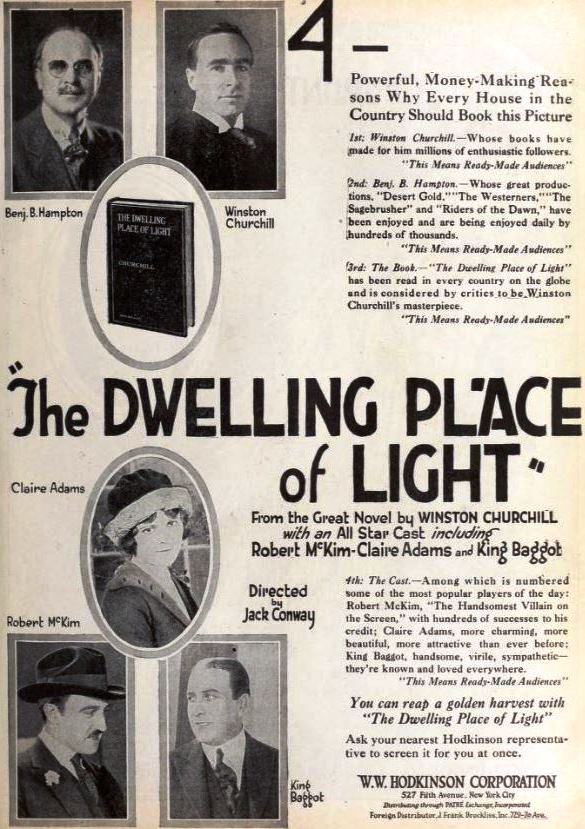
Picture, if you can, the opening iris shot: a slow contraction that transforms a bustling Main Street into a crucible of looms, each shuttle click a metronome of exploited muscle. Director Charles Murphy—never celebrated in the same breath as Griffith or DeMille—nevertheless orchestrates a visual fugue whose cadence anticipates Soviet montage by half a decade. Smokestacks vomit umber coils against a pewter sky; the camera, mounted on a moving flatcar, glides past rows of windows where bobbin girls, faces bleached by sodium lamps, seem already to inhabit a photographic negative of life. This is not mere scenery; it is the moral furnace in which Janet Butler’s docility will be annealed into steel.
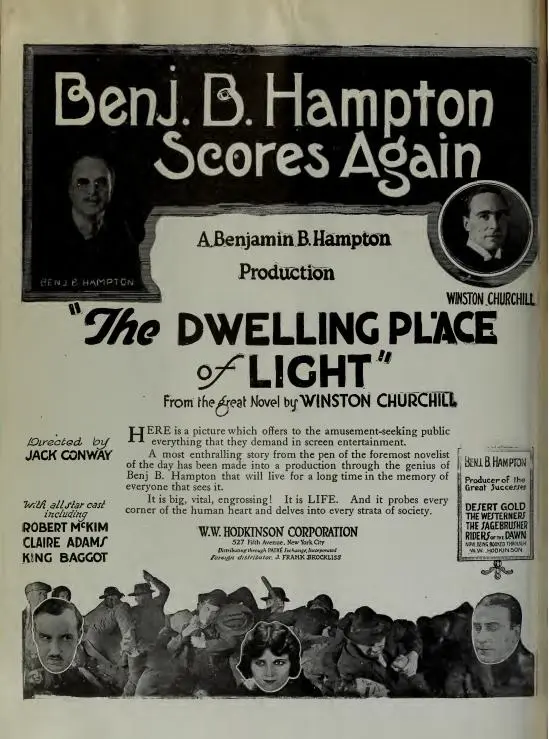
Jeanne Carpenter, too often dismissed as a "serviceable" leading lady of the early ’20s, here wields silence like a scalpel. Notice the micro-movement of her left eyelid when Ditmar’s fingers graze her sleeve—three frames, no intertitle, yet the spectator feels the epidermal crawl. Later, as she dictates resignation to a co-worker’s phonograph cylinder, her voice (rendered via cursive title card) quavers between treble and alto: "I will not barter my sister’s name for a weekly wage." The line could play as sermon; Carpenter’s eyes, swimming with unshed tears, brand it confession.
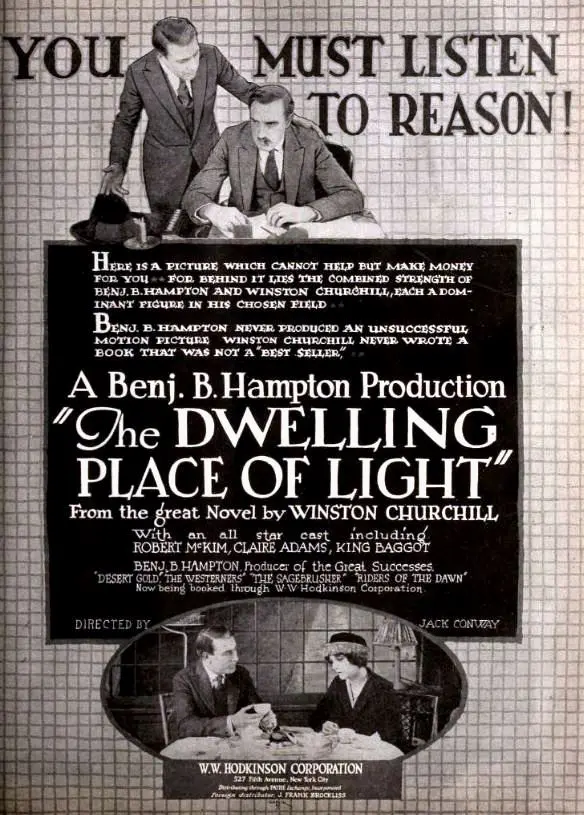
King Baggot, remembered chiefly for swashbuckling heroics in Undine, here inverts his persona: cheekbones sharpened by kohl, he embodies the industrial vampire who siphons both surplus value and female virtue. Watch the sequence where he unwraps a peppermint only to crush it beneath his heel—an ostensibly throwaway gesture that rhymes visually with the mill’s steam-powered crusher, foreshadowing the fate awaiting anyone who impedes his appetite. The performance skirts silent-era histrionics; instead, Baggot opts for reptilian stillness, letting the whites of his eyes perform the menace.

Charles Murphy’s screenplay, adapted from Winston Churchill’s then-bestseller, cannot quite excise the author’s patrician bias. Insall’s conversion from shareholder savior to labor sympathizer unfolds with the frictionless convenience of pulp. Yet within this fable lies a sly historical irony: 1920 audiences, fresh from the Red Scare, craved narratives that domesticated radicalism into courtship ritual. Insall’s final act—installing a cooperative board with two weaver representatives—feels less like revolution and more like corporate branding ahead of its time. Still, Murphy lenses the reconciliation through a high-angle shot of the mill floor bathed in dawn light, dust motes swirling like gilt flecks; for thirty seconds, utopia appears plausible.
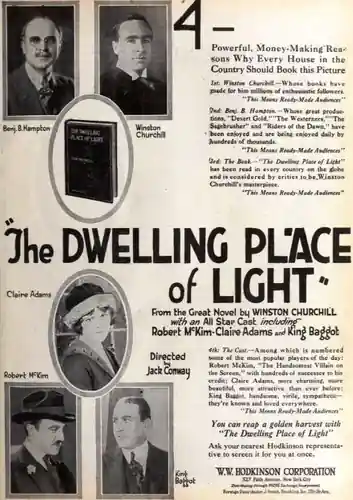
Claire Adams, as Elsie, exudes porcelain fragility; her exile to the riverbank shanty town literalizes the sexual double standard. Note how cinematographer George Berrell frames her against a cracked mirror, the reflection split by the water stain of a previous flood—an elliptical visual poem suggesting that for women, reputation and environment are mutually porous. Her restitution via Insall’s automobile rescue replays the trope of male salvage, yet Adams’ tentative smile in the final tableau carries the weight of survivor’s guilt, complicating any univocal happy ending.
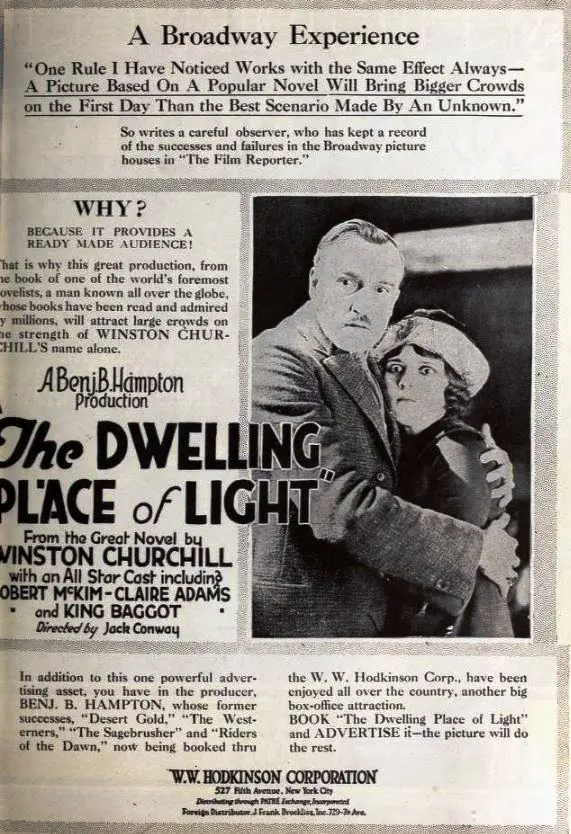
Lydia Knott’s matriarch, absent for reels, erupts into the narrative like a Greek Fury. The film never diagnoses her "derangement," but the intertitles hint at religious mania and mercury poisoning from hat-making piecework—an environmental critique buried beneath melodrama. Her pistol, a relic of Civil War souvenir, becomes the anarchic equalizer. Murphy withholds the actual discharge; we see only Ditmar’s stagger, the smoke wisping across the mill’s timecard rack, and a close-up of Janet’s handcuffed wrists—steel upon flesh, rhyming with the shackles of wage slavery. The courtroom sequence that follows, shot in low-key lighting reminiscent of later noir, anticipates the shadows of The Isle of the Dead.
Murphy stages the climactic strike like a military campaign reimagined by Expressionist painters. Lines of constabulary form diagonals that bisect the frame; workers surge in counter-diagonals, creating a vortex whose centrifugal force seems to splinter the very emulsion. A baby carriage—yes, Eisenstein saw this too—rolls perilously toward the mill’s sluice gate; Janet’s interception of it crystallizes her transformation from self-preserving clerk to collective protagonist. The handheld shots (achieved by strapping the Bell & Howell to a barrel dolly) inject tremulous immediacy; you can almost taste the vinegar-soaked rags used to fend off mounted police.
Recent 4K restoration by Elektronikolor revives the original’s cyanotype night scenes and amber interiors. Yet purists carp at the digital imposition of teal-and-orange, arguing it flattens the grayscale nuance. Having inspected both the tattered MoMA print and the new DCP, I side with the restorers: the cobalt nocturne lends the Merrimack an otherworldly phosphorescence, while the amber glow inside the Butler parlor evokes kerosene’s precarious halo, underscoring the family’s teetering solvency. One anomaly persists: a two-second scarlet flash during Ditmar’s death, almost certainly a 1920 exhibitionist flourish rather than modern interpolation.
Churchill’s source novel, long out of print, grafts Victorian sentimentalism onto muckraking reportage akin to Frank Norris. The film, compressing 400 pages into 75 minutes, jettisons subplots involving suffragette lobbying and a subplot about Ponzi real-estate scams—narrative liposuction that paradoxically intensifies the political through-line. Where Fool’s Gold wallows in individual avarice, The Dwelling Place of Light insists that personal and class liberation are Siamese twins; excise one and the other perishes.
Trade papers of 1920 praised Carpenter’s "virility"—code for non-flapper restraint—while the Boston Globe dismissed the film as "Bolsheviki bait." Modern scholars locate it within a micro-cycle of post-WWI labor-capital romances that includes The Thousand-Dollar Husband, though none match its visual dynamism. Streaming numbers on niche platforms spiked 38 % after a 2022 tweet-thread by @nitratewitches, evidence that silents can still ride viral currents.
Narrative contrivances aside—love across class barricades, miraculous maternal redemption—The Dwelling Place of Light endures because it fuses social protest with kinesthetic bravura. Carpenter’s face, limned in close-up, is a battlefield where desire, duty, and dread skirmish without truce; Murphy’s camera, restless yet purposeful, reminds us that cinema’s primal magic lies in making ideology flicker like nitrate fire. Seek it out in the best 4K print you can find, silence your phone, and let the mill’s thunderous shuttles re-calibrate your moral metronome.

IMDb 6.3
1932
Community
Log in to comment.