DbcultAccessing Vault...
Cult Review
Senior Film Conservator
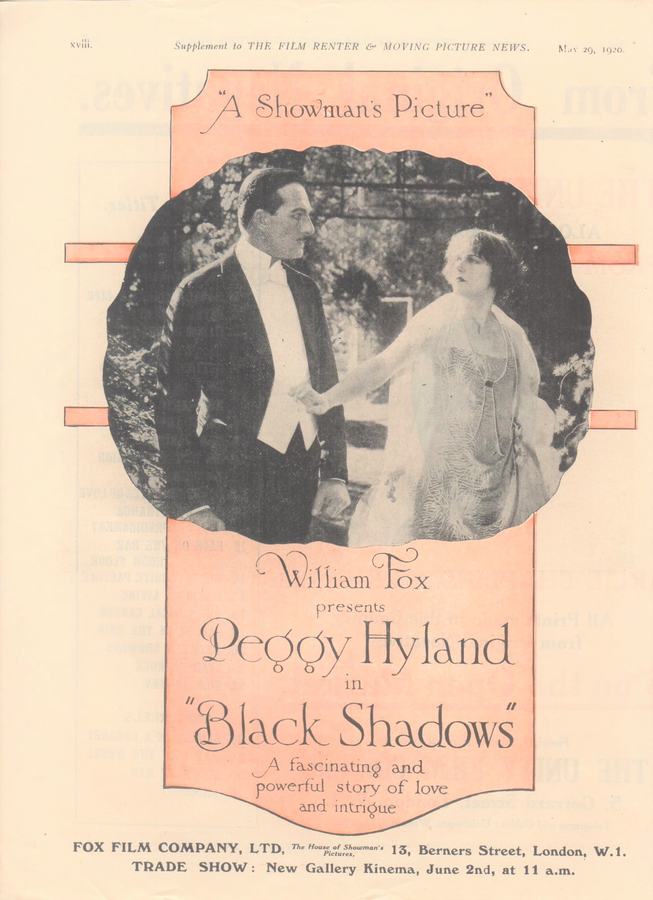
Greetings, fellow cinephiles and connoisseurs of classic cinema! Today, we’re peeling back the layers of a truly fascinating, albeit often overlooked, gem from the nascent years of the silver screen: the 1920 psychological drama, "Black Shadows." This film, a stark exploration of mind control and moral erosion, emerges from an era brimming with experimental storytelling, where the cinematic language was still finding its voice, yet already capable of articulating profound anxieties. Penned by the insightful duo of Joseph Anthony Roach and Natalie S. Lincoln, and featuring a compelling ensemble led by Cora Drew and Edwin B. Tilton, this picture stands as a testament to the enduring power of a well-crafted narrative, even when draped in the sepia tones of yesteryear.
The premise of "Black Shadows" is deceptively simple, yet it unravels with a chilling complexity that belies its age. We are introduced to Alice, portrayed with a poignant vulnerability by Cora Drew, whose life takes a drastic, terrifying turn after she falls victim to a malevolent hypnotist. This isn't the stage magician's parlor trick; rather, it's a sinister, almost supernatural, subjugation of her free will. Drew’s performance here is particularly noteworthy, as she navigates the subtle yet profound shift from a woman of agency to one plagued by involuntary compulsions. Her eyes, often wide with a mixture of confusion and dawning horror, convey the internal struggle of a mind under siege, a silent scream against an invisible chain. It reminds one, in a certain psychological resonance, of the intense, almost telepathic manipulation seen in films like Eyes of Youth, where the protagonist's fate feels predetermined by external forces, though here it's far more insidious and personal.
The narrative arc meticulously traces Alice's descent into a life of petty theft, each act a violation not just of societal law, but of her own moral code. The writers, Roach and Lincoln, deserve considerable praise for not sensationalizing the hypnotism itself, but rather focusing on its devastating consequences on the human spirit. They delve into the psychological torment of being forced to commit acts against one's conscious will, creating a palpable sense of dread and helplessness. This exploration of compromised moral agency sets "Black Shadows" apart, elevating it beyond a mere crime drama into the realm of psychological horror. The film asks profound questions about culpability and identity when the mind itself is no longer sovereign. It's a thematic precursor to later, more overt thrillers, laying groundwork for tales where characters grapple with forces beyond their control, much like the broader societal commentary on individual powerlessness often subtly woven into dramas such as The Battle of the Sexes, albeit through vastly different lenses.
Edwin B. Tilton, as the antagonist (or perhaps the unwitting instrument of the antagonist's will, depending on interpretation), brings a crucial gravitas to the proceedings. His presence, often foreboding, anchors the external threat that Alice faces. The interplay between Drew's internal turmoil and Tilton's external pressure creates a dynamic tension that keeps the audience riveted. Henry Hebert and Peggy Hyland, too, deliver performances that enrich the narrative tapestry, providing the societal backdrop against which Alice's clandestine struggles unfold. They represent the normalcy that Alice is increasingly alienated from, their reactions to her inexplicable behavior adding layers of social judgment and misunderstanding to her plight. Estelle Evans, Correan Kirkham, and Alan Roscoe round out the cast, each contributing to the film's atmosphere, whether as unwitting bystanders or figures caught in the periphery of Alice's tragic unraveling. The collective performances, under what one presumes was a meticulous directorial hand, manage to convey a complex web of emotions and motivations, a feat for a silent film where subtle gestures and facial expressions carry immense weight.
One of the film's most striking aspects is its ability to build suspense without relying on overt thrills. The terror in "Black Shadows" is psychological, creeping and insidious. It's the horror of losing oneself, of being a puppet to an unseen master. This thematic depth resonates with films that explore the fragility of reputation and the sudden onset of scandal, perhaps even drawing a distant parallel to the abrupt fall from grace depicted in a film like Dropped Into Scandal, where external events shatter a character's world. However, here, the scandal is internally generated, an affliction rather than a consequence of a moral failing. The film's title itself, "Black Shadows," is evocative, hinting at the unseen forces and the encroaching darkness that engulfs Alice's life, a metaphorical shadow cast over her very soul.
The cinematography, though rudimentary by today's standards, effectively utilizes light and shadow to enhance the film's mood. The stark contrasts often employed in early cinema here serve to underscore Alice's internal state – the bright, open spaces she once inhabited now feel menacing, while the dimly lit corners become havens for her secret, unwilling transgressions. The visual storytelling complements the script's psychological focus, often using close-ups to capture the nuances of Cora Drew's expressions, allowing the audience to witness her silent agony. This visual approach, while perhaps not as innovative as some contemporaries, nonetheless serves the narrative with commendable efficiency, creating an atmosphere that is both unsettling and deeply empathetic.
Roach and Lincoln's script is a masterclass in building tension through character. They don't just present a plot; they delve into the existential dilemma of a person whose identity is being systematically eroded. The compulsions to steal are not random acts of larceny; they are carefully orchestrated, escalating in their audacity and potential for discovery, thereby ratcheting up the stakes for Alice. This careful escalation ensures that the audience remains invested in her fate, desperately hoping for her liberation from this invisible tormentor. The writing's commitment to exploring the full implications of its premise is what truly elevates "Black Shadows" beyond a simple genre piece.
Comparing "Black Shadows" to other films of its era, one finds it carving out a unique niche. While films like The Small Town Girl might explore societal pressures and moral choices, "Black Shadows" ventures into the far more unsettling territory of involuntary moral transgression. Even the more overtly criminal narratives, such as The Dead Line, typically feature characters who make conscious decisions, however misguided. Alice's plight is fundamentally different; she is a victim, not an accomplice, a distinction that imbues the film with a tragic resonance. The theme of a character being controlled or manipulated against their will can be seen in various forms across cinema, from the direct coercion in Someone Must Pay to the more subtle societal conditioning in The Law of Nature (1919), but "Black Shadows" tackles the concept with a raw, psychological immediacy.
The film's exploration of hypnotism as a tool for crime was not entirely novel at the time, but "Black Shadows" distinguishes itself by focusing less on the mechanics of the crime and more on the psychological devastation wrought upon the victim. It's a film that asks us to empathize with a character who, by all outward appearances, is a criminal, yet internally is a prisoner. This nuanced portrayal of morality and culpability is remarkably sophisticated for its time, challenging audiences to look beyond superficial actions to the deeper, more complex motivations – or lack thereof – that drive human behavior. In a broader sense, this film, much like Blind Husbands, delves into the hidden aspects of human nature and the unsettling truths that lie beneath the surface of polite society.
The enduring legacy of "Black Shadows" lies in its pioneering spirit. It's a film that dared to delve into the murky waters of the subconscious, predating many of the more famous psychological thrillers that would follow. It serves as a stark reminder that the early days of cinema were not merely about spectacle or melodrama, but also about profound explorations of the human condition. The film's ability to maintain a gripping atmosphere of dread and suspense, even without spoken dialogue, is a testament to the skill of its cast and crew. One cannot help but be drawn into Alice's desperate struggle, a silent plea for freedom from an internal prison. It offers a glimpse into the anxieties of an era grappling with nascent understandings of psychology and the power of the mind, echoing the societal fascinations that might also have fueled narratives like Queen X, where mysterious forces often dictate destiny.
For those who appreciate the foundational works of cinema, and particularly those with a penchant for psychological dramas that eschew overt violence for creeping dread, "Black Shadows" is an absolute must-see. It’s a film that challenges perceptions, evoking empathy for a character caught in an unimaginable plight. The performances are compelling, the script is intelligent, and the thematic depth is surprisingly resonant even a century later. It serves as a powerful reminder of how early filmmakers were already pushing boundaries, crafting stories that explored the intricate and often terrifying landscape of the human mind. The film, in its quiet intensity, leaves a lasting impression, a lingering sense of the fragility of our own autonomy. It's a compelling piece of cinematic history that deserves a wider audience and greater recognition for its audacious thematic exploration and its powerful, understated performances. So, if you're seeking a journey into the darker corners of early film, prepare to be captivated by the subtle, yet utterly chilling, grip of "Black Shadows."
IMDb —
1927
Community
Log in to comment.