DbcultAccessing Vault...
Cult Review
Senior Film Conservator
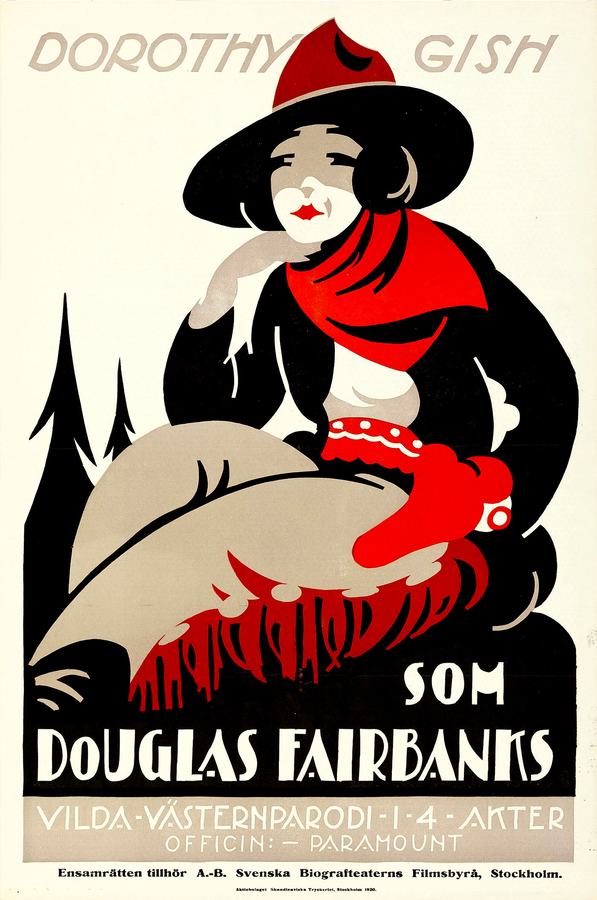
When the silent era first unfurled its tapestry of mythic frontiers, few pictures managed to blend slapstick vigor with a surprisingly tender emotional core as deftly as Nugget Nell. Directed by John R. Cornish and anchored by Dorothy Gish’s magnetic performance, the film invites viewers into a world where rugged masculinity, gender fluidity, and the economics of love intersect on a dusty crossroads.
The narrative opens with a panoramic sweep of the mining country, a landscape rendered in stark chiaroscuro that underscores the isolation of its inhabitants. In the midst of this desolation, Nugget Nell runs a hash house—a bustling tavern that doubles as a social hub for miners, drifters, and the occasional wayward gentleman. Gish imbues Nell with a paradoxical blend of swagger and vulnerability; she is at once the town’s unofficial matriarch and a restless soul yearning for validation beyond the clatter of mugs and the clang of pickaxes.
Enter Big‑Hearted Jim, the sheriff whose moniker is as much a promise as a description. Jim (played with earnest gravitas by Bob Fleming) is the embodiment of frontier law—steady, reliable, and unflinchingly devoted to the community. His affection for Nell is palpable, expressed through lingering glances and quiet gestures that speak louder than any dialogue could. Yet, the film’s central tension arises from Nell’s emotional calculus: she is drawn to Jim’s constancy, yet her heart flutters for a more elusive, cosmopolitan ideal.
The catalyst for this inner conflict arrives in the form of an elderly miner’s request. He asks Nell to look after his "child," a phrase that initially conjures images of a fragile infant but soon reveals a towering six‑foot woman—Regina Sarle’s imposing yet graceful figure. The "child" is not a literal offspring but a symbolic embodiment of the miner’s legacy, a living reminder of the past that refuses to be neatly categorized. Nell’s shock at the woman’s stature quickly gives way to a compassionate stewardship; she feeds, dresses, and protects the giantess with a tenderness that hints at the film’s broader commentary on unconventional motherhood.
While Nell grapples with this unexpected responsibility, a polished City Chap (Raymond Cannon) rides into town, his polished boots and silk cravat a stark contrast to the soot‑stained boots of the miners. He is a man of capital, dispatched to oversee a remote mining claim, and his presence introduces a new axis of desire. The Chap’s attention, however, is captured not by Nell’s rugged charm but by an ingénue he meets on the stagecoach—a delicate, ethereal figure whose very existence seems to belong to a different world entirely.
Jealousy, that age‑old engine of drama, propels Nell into a series of comedic yet poignant misadventures. She pilfers a set of stylish garments from the town’s boutique, hoping that silk and lace will transform her into the object of the Chap’s gaze. The resulting scene—Nell attempting to navigate French high‑heels on uneven wooden boards—offers a masterclass in physical comedy, yet it also underscores a deeper truth: the futility of reshaping oneself to fit another’s expectations.
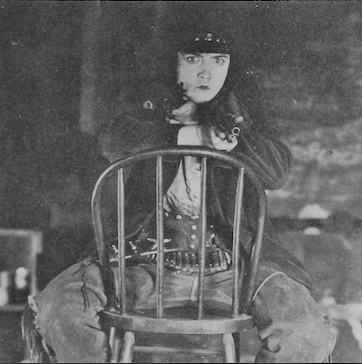
When outlaws ambush the stagecoach carrying the City Chap, Nell’s resourcefulness shines. She orchestrates a daring rescue, brandishing a rifle with a confidence that belies her earlier self‑doubt. The outlaws, a ragtag crew led by a wiry antagonist (Wilbur Higby), are dispatched one by one as Jim, ever the stalwart, lassoes them with a practiced flick of his rope. This sequence, choreographed with kinetic precision, serves as both an action set‑piece and a visual metaphor for the tangled bonds of loyalty and love.
Following the rescue, Nell escorts the Chap to a deserted shack—a temporary sanctuary that quickly devolves into a crucible of revelation. The outlaws, refusing to be thwarted, kidnap the "child" and set the shack ablaze, forcing Nell and the Chap into a frantic scramble for survival. In the inferno’s orange glow, Jim arrives, his silhouette framed against the flames as he methodically dismantles the outlaw threat. The fire, both literal and figurative, consumes the pretenses that have clouded Nell’s judgment.
When the smoke clears, the Chap’s cowardice is laid bare; he abandons Nell in the face of danger, revealing a character more hollow than heroic. In that moment, Nell’s disillusionment crystallizes, and she finally acknowledges the steadfast love that has been present all along: Jim’s unwavering devotion. Their embrace, tender yet charged with the weight of unspoken years, resolves the film’s emotional arc with a quiet, resonant finality.
Beyond its narrative beats, Nugget Nell excels in its thematic richness. The film interrogates gender norms through Nell’s tomboyish demeanor and her willingness to adopt traditionally masculine roles—running a business, wielding a gun, lassoing outlaws. Simultaneously, the presence of the six‑foot "child" challenges conventional notions of femininity and motherhood, suggesting that care and affection are not confined to size or appearance.
Comparatively, the film shares a kinship with The Destruction of Carthage, another silent epic that juxtaposes personal drama against a backdrop of larger historical forces. Both works employ expansive landscapes to mirror internal turmoil, yet Nugget Nell distinguishes itself through its comedic interludes and its focus on a female protagonist who defies the era’s typical damsel‑in‑distress archetype.
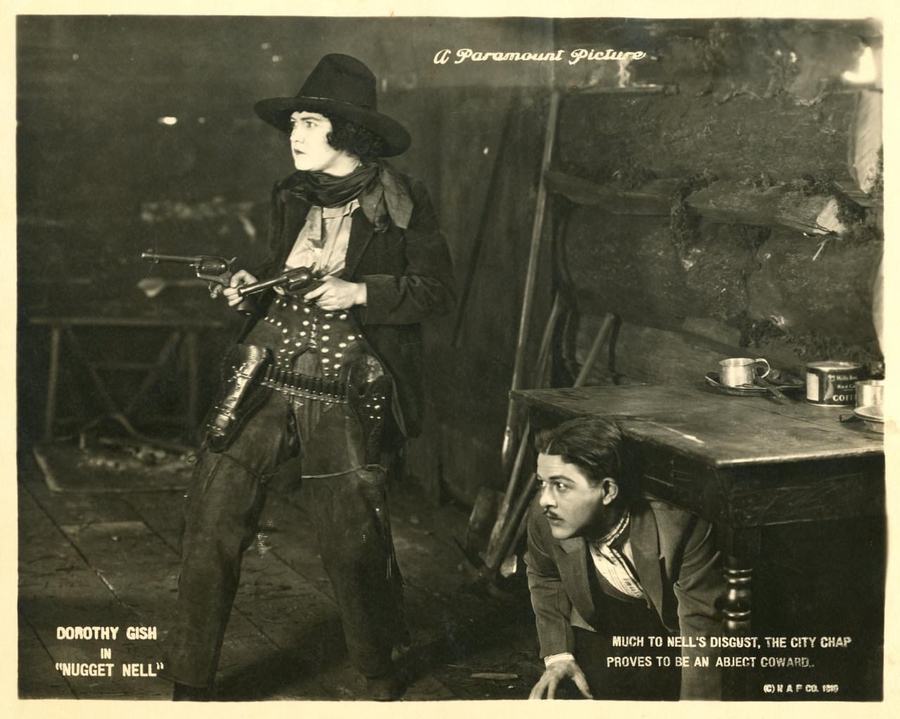
In terms of visual style, the cinematography employs a palette of high‑contrast shadows that accentuate the starkness of the mining town while allowing moments of warmth—particularly in scenes featuring the hash house’s interior, where amber lantern light flickers against wooden tables. The use of close‑ups on Gish’s expressive face captures the subtleties of her performance, a testament to the director’s understanding of silent‑film storytelling where emotion must be conveyed without spoken word.
The supporting cast contributes layers of texture. Emily Chichester’s portrayal of the miner’s wife adds a grounding, maternal presence, while David Butler’s comic relief as a bumbling prospector provides levity without undermining the film’s emotional stakes. Jim Farley’s turn as a rival miner injects a subtle commentary on the cut‑throat nature of frontier economics, reminding viewers that love and ambition often collide in this unforgiving terrain.
From a modern perspective, the film’s treatment of consent and agency is surprisingly progressive. Nell’s decision to care for the "child" is not predicated on obligation but on a genuine desire to nurture, and her subsequent choices—whether to pursue the City Chap or to confront Jim—are presented as autonomous actions rather than mere plot devices.
When situating Nugget Nell within the broader silent‑era canon, one cannot ignore its resonance with works such as Indiscreet Corinne and The Waifs. Like those films, it blends romance, comedy, and social commentary, yet it does so with a distinctively Western flavor that sets it apart from the more urban, European‑inspired narratives of its contemporaries.
Moreover, the film’s pacing—alternating between brisk, action‑filled sequences and slower, introspective moments—mirrors the rhythm of frontier life itself: sudden bursts of danger followed by periods of quiet contemplation. This ebb and flow keep the audience engaged, ensuring that the 70‑minute runtime feels both expansive and intimate.
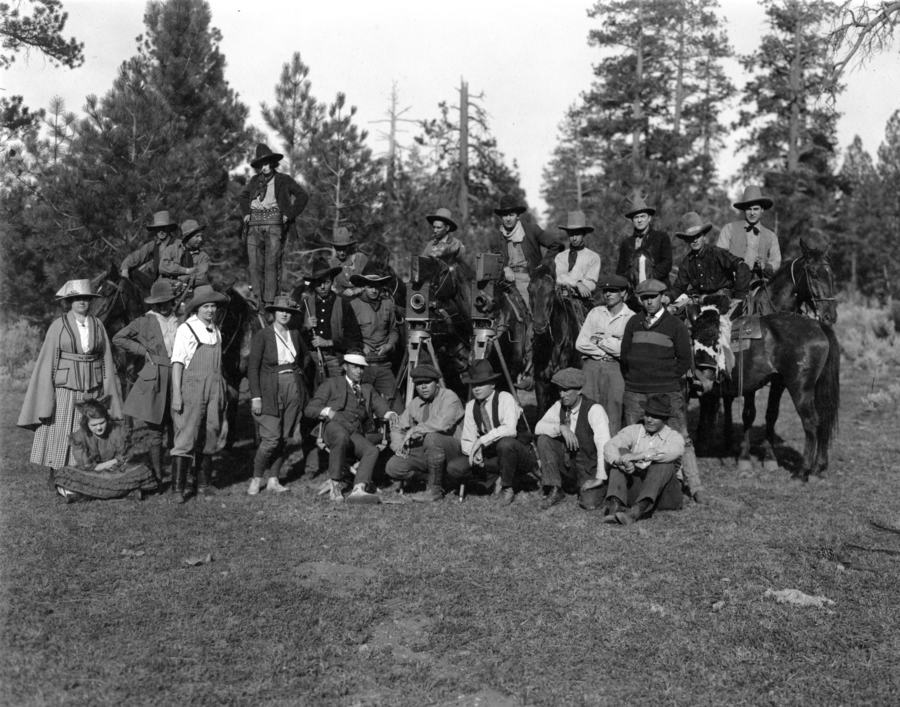
In terms of legacy, Nugget Nell offers a valuable case study for scholars examining the evolution of female agency in early cinema. Dorothy Gish’s performance predates the more overt feminist narratives of later decades, yet it lays groundwork for characters who are both physically capable and emotionally complex.
For viewers seeking a film that balances humor with heartfelt drama, the movie delivers on both fronts. The comedic set‑pieces—Nell’s high‑heel fiasco, the outlaws’ slapstick missteps—are executed with a timing that feels fresh even by today’s standards. Meanwhile, the emotional crescendo, culminating in Jim’s heroic rescue and Nell’s ultimate acceptance of his love, provides a cathartic payoff that feels earned rather than contrived.
In conclusion, Nugget Nell stands as a testament to the silent era’s capacity for nuanced storytelling. Its blend of frontier spectacle, gender‑bending characterization, and timeless themes of love, loyalty, and self‑discovery ensures its relevance for contemporary audiences. Whether you are a silent‑film aficionado, a student of gender studies, or simply a lover of well‑crafted cinema, this film offers a rich tapestry of visual and narrative delights that merit repeated viewings.
For those interested in exploring similar narratives of rugged romance and societal subversion, consider watching Her Great Price or The Widow's Might, both of which echo Nugget Nell’s thematic concerns while presenting distinct aesthetic approaches.
Ultimately, the film’s enduring charm lies in its ability to make the audience root for a heroine who refuses to be pigeonholed, a sheriff whose love is as steady as the desert wind, and a six‑foot "child" who reminds us that compassion knows no bounds. Nugget Nell is not merely a relic of a bygone era; it is a vibrant, living work that continues to speak to the complexities of identity and affection in a world that is, at once, both wild and wonderfully human.
IMDb 5.7
1928
Community
Log in to comment.