DbcultAccessing Vault...
5.3/10
Senior Film Conservator
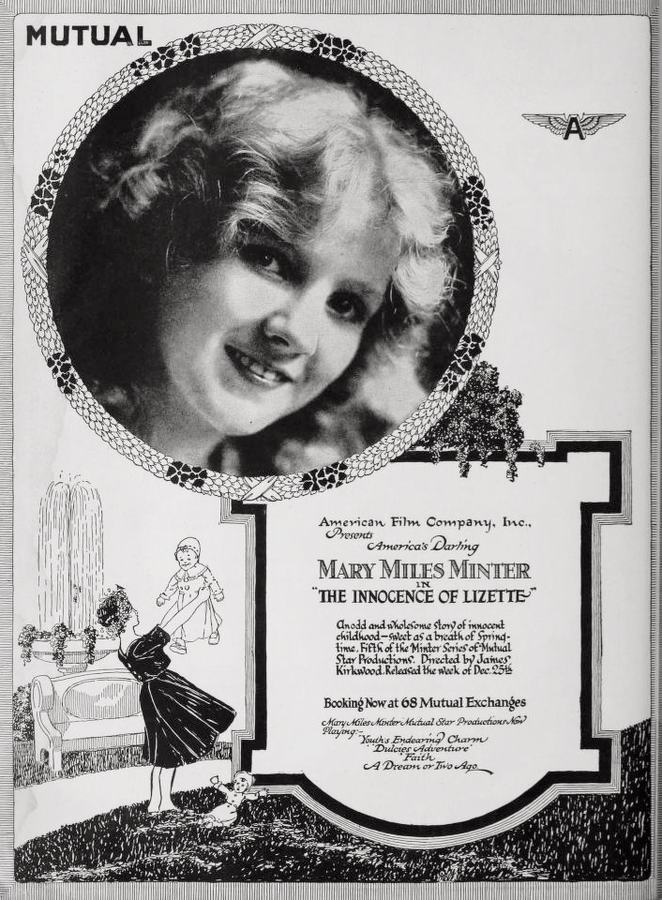
A definitive 5.3/10 rating for a film that redefined the boundaries of cult cinema. The Innocence of Lizette remains a cornerstone of transgressive art.
In the annals of early cinema, few genres captured the raw, unvarnished spectrum of human emotion quite like the silent drama. These films, stripped of spoken dialogue, relied entirely on the expressive power of visual storytelling, a nuanced choreography of gesture, gaze, and mise-en-scène to convey the deepest currents of the human heart. Among them, The Innocence of Lizette emerges as a captivating exemplar, a narrative tapestry meticulously woven with threads of profound loss, the complexities of adoption, and the often-bewildering purity of youthful naivety. It’s a work that speaks volumes without uttering a single word, inviting its audience into a world both familiar and fraught with unexpected turns.
The film opens on a note of poignant transition, establishing its emotional bedrock. We are introduced to Lizette, a character whose inherent brightness shines through the somber circumstances of her grandfather, Ashby Leene’s, passing. A celebrated actor in his prime, Leene’s final years were marked by a stark decline into poverty, leaving Lizette adrift in a world suddenly devoid of her primary anchor. Her salvation arrives in the form of Granny Page, a landlady whose compassion transcends mere contractual obligation. Granny’s humble abode becomes a sanctuary, a testament to the enduring power of human kindness. Here, Lizette's spirit finds fertile ground, blossoming anew in the warmth of genuine affection. She forms an immediate, unwavering bond with Paul, Granny's earnest young nephew, whose modest newsstand serves not merely as a place of commerce but as a vibrant nexus for their burgeoning friendship. Granny, ever the vigilant guardian, dedicates her time to assisting at the stand, her watchful eyes noting with quiet disapproval the nascent attentions of Dan Nye, a figure whose charm masks a distinctly unsettling opportunism. This initial setup masterfully contrasts the stark realities of poverty with the richness of human connection, laying the groundwork for Lizette’s subsequent, more tumultuous journey.
The narrative takes a pivotal turn with the introduction of Henry Faure, an elderly millionaire whose vast material wealth cannot assuage the profound emptiness left by the tragic loss of his wife and child. His is a life of gilded sorrow, a stark reminder that affluence often fails to mend the deepest wounds of the soul. It is at Paul's newsstand, a microcosm of everyday life, that Faure encounters Lizette. Her radiant spirit, her unclouded innocence, acts as a sudden, potent balm to his weary heart. In her, he perceives a chance for redemption, a beacon to illuminate his shadowed existence. His offer of adoption is born not of charity, but of a desperate, aching longing for connection, for a surrogate daughter to fill the void. This proposition presents Granny and Paul with an agonizing dilemma. To consent means an unimaginable separation, a wrenching of familial bonds. Yet, to refuse would be to deny Lizette a life of comfort and opportunity, a future far removed from the precariousness of their own. Their heartbroken consent underscores a profound act of selfless love, a sacrifice made for what they perceive as Lizette’s greater good.
Initially, Lizette thrives within the opulent confines of Faure’s mansion. The novelty of luxury, the attention, the promise of a stable future, all contribute to her contentment. However, the human spirit, particularly one as genuinely rooted as Lizette’s, yearns for more than material comfort. During Faure’s absence on business, the magnetic pull of her former life, of the authentic, unvarnished connections she shared with Granny and Paul, proves irresistible. Her clandestine visits back to the newsstand and the familiar embrace of her old friends highlight a crucial theme: the enduring value of genuine affection over superficial grandeur. Faure’s unexpected return precipitates a moment of heart-wrenching vulnerability. Lizette, with an earnestness that cannot be gainsaid, pleads to remain with Granny. Faure, though undeniably wounded by this unspoken rejection, demonstrates a profound understanding, albeit tinged with sorrow, by reluctantly granting her wish. This act of selflessness, however, comes at a cost, reigniting the embers of his old depression, plunging him back into the isolating depths of his sorrow.
The film’s central dramatic engine ignites with the housekeeper’s heartfelt plea to Lizette, begging her to return for Faure’s sake. It is upon her reluctant re-entry into the mansion’s grandeur that fate, or perhaps narrative contrivance, introduces its most pivotal element: an abandoned infant, left on the doorstep. Lizette, with an unburdened heart and an almost primal maternal instinct, embraces the child. Her joy is palpable, a pure, unadulterated response to the vulnerability of the tiny being. This scene, rendered through the expressive silent film acting, would have undoubtedly conveyed a powerful sense of emergent maternal affection. The subsequent confrontation with the aghast butler and a distraught Faure sets the stage for a classic comedy of errors, imbued with a deep undercurrent of poignant misunderstanding.
In a moment of sublime, almost unbelievable, naivety, Lizette declares herself the baby's mother. When pressed for the father's identity, her innocent admission of not knowing, followed by a simplistic deduction that all babies must have a father, leads her to spontaneously bestow the dubious honor upon Dan Nye. The sheer preposterousness of the situation, juxtaposed with Lizette's guileless candor, renders Faure and his kind housekeeper speechless. They find themselves unable to condemn her, disarmed by her profound lack of worldly knowledge. The housekeeper, in particular, finds a strange, almost tender amusement in Lizette's unblemished ignorance regarding the facts of life. This sequence, while potentially played for comedic effect, also serves to highlight the vast chasm between Lizette’s pure, uncorrupted view of the world and the complex, often morally ambiguous realities understood by adults. It is a brilliant stroke of characterization, cementing Lizette’s status as a true innocent.
The comedic tragedy quickly escalates into a gripping drama of blackmail and societal pressure. Faure, driven by a desperate, if misguided, desire to protect Lizette’s "honor" and reputation, confronts Dan Nye, charging him with paternity. Nye, a man whose moral compass points squarely towards self-interest, instantly recognizes the extraordinary leverage this bizarre situation affords him. Concealing his astonishment, he feigns indignation, then swiftly pivots to exploitation. He "admits" to paternity but demands an exorbitant sum from Faure for a forced marriage, an arrangement designed purely for financial gain. Faure, trapped by his own protective instincts and the rigid societal codes of the era concerning a young woman’s reputation, agrees to this outrageous demand, insisting only on an immediate ceremony to seal the fabricated union. This scene, packed with dramatic tension, underscores the pervasive power of social convention and the lengths to which individuals, even those of immense wealth, might go to preserve a semblance of propriety.
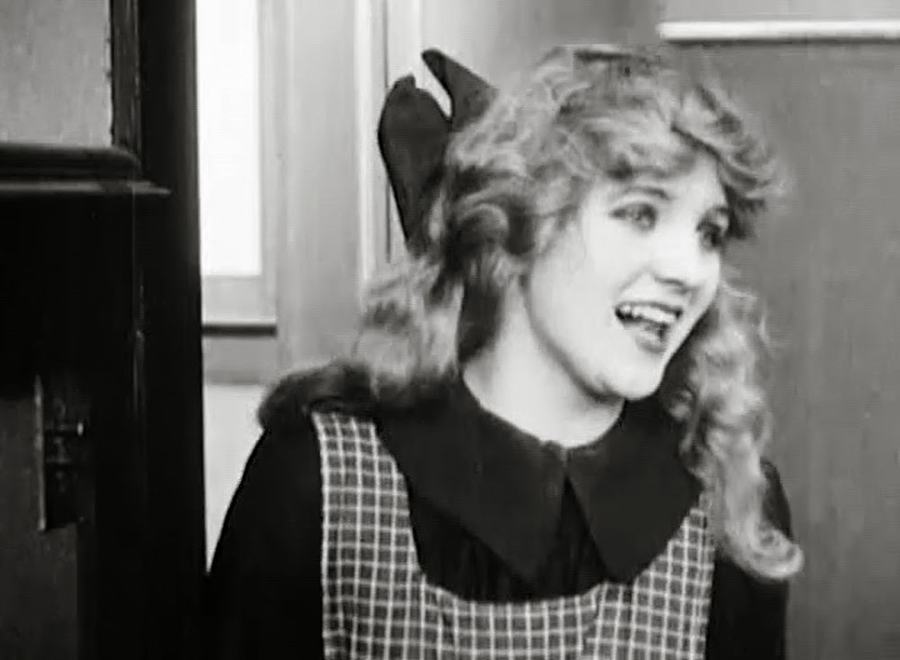
The tightly woven web of deceit, however, is destined to unravel. The opportune arrival of the child's true mother shatters Nye's cynical scheme. Her appearance not only exonerates Lizette but exposes Nye's duplicity in its entirety. Lizette, having formed a profound bond with the infant, is initially unwilling to relinquish her adopted charge, a testament to her innate nurturing spirit. Yet, through gentle persuasion, she is finally induced to return the baby to its rightful mother, a moment that, while tinged with sorrow for Lizette, signifies the restoration of natural order. Nye, his villainy laid bare, is summarily ejected from the mansion, his opportunistic machinations brought to a swift, ignominious end. This dramatic climax clears the stage for the film’s tender resolution.
The success of The Innocence of Lizette hinges significantly on the nuanced portrayals by its cast, particularly Mary Miles Minter in the titular role. Her ability to convey Lizette's profound naivety, her bright spirit, and her emotional resilience without spoken dialogue would have been paramount. One can imagine Minter employing a delicate balance of wide-eyed wonder and genuine affection to make Lizette's fantastical claims believable within the film's own emotional logic. Harvey Clark, as Henry Faure, would likely have brought a gravitas tinged with deep melancholy, his gestures conveying the weight of his sorrow and the desperate hope he places in Lizette. Blanche Hanson, as Granny Page, would embody the warmth and steadfastness of unconditional love, a maternal figure whose quiet strength anchors Lizette's early life. And Ashton Dearholt, as Paul, would portray the earnest, unwavering devotion that ultimately proves to be Lizette's true refuge.
Beyond the performances, the film deeply explores several timeless themes. At its core is the stark contrast between innocence and worldly deceit. Lizette’s uncorrupted view of the world clashes dramatically with the cynical opportunism of Dan Nye, creating a powerful moral dichotomy. The narrative also delves into the nature of family – questioning whether blood ties are paramount or if bonds forged through love and shared experience hold greater weight. Faure's attempt at creating a family through adoption is poignant, but it is the organic, selfless love of Granny and Paul that ultimately defines Lizette’s true home. Furthermore, the film offers a fascinating glimpse into societal judgment and the concept of "honor" in an earlier era. Faure’s desperate efforts to protect Lizette’s reputation, even to the point of coercing a marriage based on a lie, highlight the rigid social codes that dictated acceptable behavior and the perceived sanctity of a young woman's name. This theme resonates with the dramatic complexities often found in period pieces, where reputation could be as valuable as life itself.
While The Innocence of Lizette stands firmly on its own merits, its thematic underpinnings and narrative trajectory invite intriguing comparisons with other works of its era and beyond. The dramatic shift in Lizette’s social standing, moving from the penury of her grandfather’s final days to the modest warmth of Granny Page’s home, and then into the gilded cage of Henry Faure’s mansion, echoes the profound environmental and class-based transformations explored in stories like Mark Twain’s The Prince and the Pauper. While Lizette doesn't swap identities, her journey across vastly different social strata forces her to adapt, to understand the contrasting values and expectations of each world. This exploration of class disparity and the impact of wealth on individual lives finds a distant cousin in films like Artie, the Millionaire Kid, which, though perhaps more focused on the transformative power of money on youth, shares a common thread of examining the collision between youthful ideals and the realities of immense wealth.
Moreover, Lizette’s gradual, albeit sometimes obtuse, understanding of the world’s complexities – particularly regarding the "facts of life" – can be seen as a form of awakening. This subtle but significant character development, where innocence gives way to a more nuanced grasp of reality, albeit still colored by her inherent purity, resonates with the thematic arcs found in films like The Awakening of Bess Morton. Such narratives often chronicle a protagonist’s journey from a state of ignorance or naivety to a more profound understanding of themselves and their place in the world, often triggered by dramatic personal experiences. The film's use of blackmail and deception, orchestrated by Dan Nye, while not as dark or violent as, say, the extreme machinations depicted in The Devil's Double, nevertheless positions him as a classic antagonist whose greed threatens to unravel the lives of the innocent. This element of moral corruption, though presented in a more melodramatic silent film style, is a timeless narrative device for creating conflict and highlighting virtue.
The resolution of The Innocence of Lizette is a deeply satisfying culmination, bringing to a close the various narrative threads with a sense of poetic justice and emotional fulfillment. The true mother’s appearance is not merely a plot device but a necessary catalyst for restoring order, exposing Nye's villainy, and allowing Lizette’s true path to unfold. The film beautifully underscores the triumph of genuine affection over superficiality and deceit. Paul, who has long harbored a quiet, steadfast love for Lizette, finally receives the happiness he so richly deserves. Lizette's acceptance of him is not just a romantic conclusion but a profound affirmation of where her heart truly belongs – not in the transient glow of opulence, but in the unwavering warmth of authentic connection.
In its entirety, The Innocence of Lizette transcends its silent film origins to deliver a compelling and emotionally resonant narrative. It is a testament to the enduring power of simple, yet profound, storytelling. The film's exploration of innocence, the complexities of family, the pitfalls of societal judgment, and the ultimate triumph of true love ensures its place as a poignant and memorable work. It reminds us that even without spoken words, cinema possesses an unparalleled capacity to delve into the intricate dance of human relationships, leaving an indelible mark on the viewer's heart. This is not merely a historical artifact; it is a vibrant, living story that continues to speak to the universal experiences of love, loss, and the bewildering, beautiful journey of growing up.
IMDb —
1923
Community
Log in to comment.