DbcultAccessing Vault...
Cult Review
Senior Film Conservator
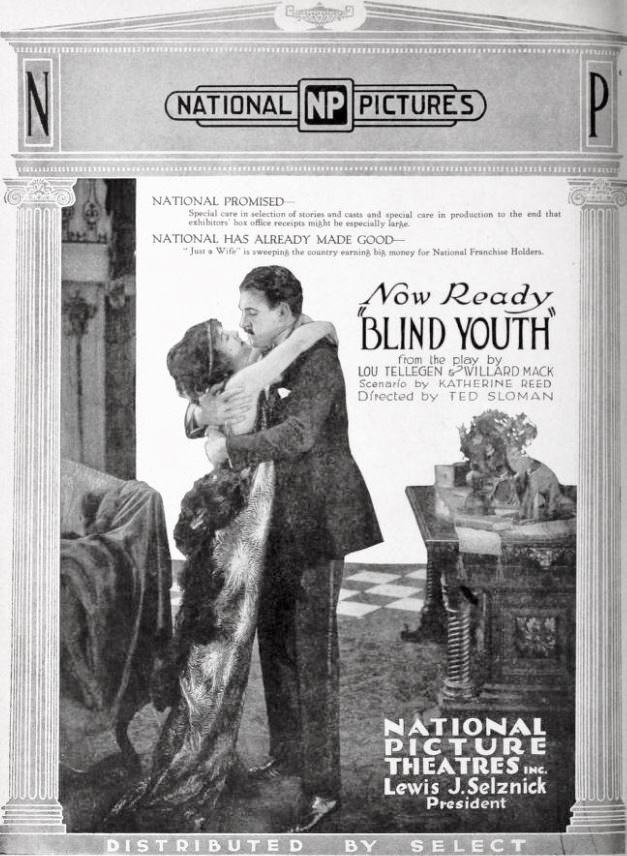
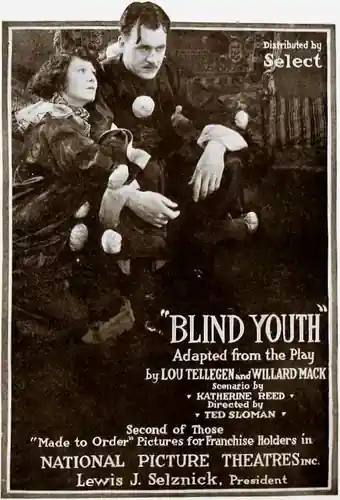
Paris, 1920. Gaslights bruise the fog. A sculptor’s loft reeks of turpentine and unpaid rent. Enter Maurie Monnier—shoulders sharp as chisels, eyes the colour of wet cement—played by Walter McGrail with the brittle swagger of a man who has already pawned tomorrow.
Maurie courts Clarice (Leatrice Joy) inside a single tremulous tracking shot: she circles a model stand like a panther appraising carrion, her satin robe slithering off collarbones that could slice bread. Their marriage registers less as sacrament than contract—she initials with a lipstick kiss, he with a signature sodden with absinthe. Director Lou Tellegen, a matinée idol turned cynic, keeps the camera low so the wedding witnesses loom like creditors.
Newsreel of the father’s death arrives via ocean liner—whitecaps scratch the telegram like Morse-code vultures. Inheritance? Millions. Yet Maurie’s coffers remain empty; Clarice has already laundered sentiment into jewellery. A dissolve transports us from the grey Seine to a Manhattan brownstone so manicured it squeaks. Mother Monnier (Claire McDowell) greets her prodigal with gloved silence; the brother (Colin Kenny) inspects Maurie’s frayed cuffs as though measuring contagion. Exile is served at lunch, chilled.
What follows is a tour of urban purgatory shot through with Germanic shadows—think Wahnsinn’s tilted alleys grafted onto American asphalt. Maurie tries hawking miniature busts in Washington Square; pedestrians stride past, faces obscured by brimstone hats. Creditors strip his studio till echo replaces easel. Snow falls upward in one surreal iris-out, implying the world itself has slipped its axis.
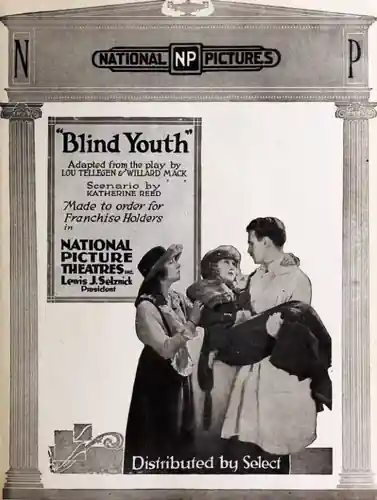
At the nadir he staggers onto a bridge whose girders resemble the ribcage of some mechanical leviathon. Cue intertitle—white letters shudder against black: “The river asks for a portrait in despair.” He hoists one leg over the rail. Enter Hope, literally: a waif in a velvet cape the colour of sunrise, portrayed by Clara Horton with an unblinking serenity that makes salvation look like common sense. She recites no scripture; instead she offers a cold apple and the use of her dead father’s kiln. Try chiselling gratitude into granite with a stomach full of night; McGrail lets his lower lip tremble, just once, and the whole silent medium seems to discover sound.
Cue the resurrection montage: clay spirals, arms bare to biceps, sparks cascading like dwarf stars. Hope’s silhouette blends with Maurie’s on the studio wall until two shadows solder into one. Tellegen jump-cuts between hands kneading earth and lovers intertwining fingers—erotic without a single stocking dropped.
Just as the audience exhales, Clarice returns, this time in fox furs and litigation papers. She prowls the new loft, eyeing a half-finished marble nude that uncannily resembles herself. “An artist owes his muse alimony,” she purrs via intertitle, teeth glinting like a typewriter’s exclamation mark. The triangle ignites: possession versus inspiration, past versus future, gilt versus grit.
The climax borrows the syntax of crime serials—midnight assignations, forged signatures, a gun that changes pockets faster than subway straphangers. Yet the stakes remain resolutely emotional: can art survive when its root system is blackmail? Cinematographer Jules Cronjager floods the final confrontation with sodium flares, so faces appear carved from butter left under klieg lights. Clarice reaches for the pistol; Hope shields Maurie; the weapon clatters into wet cement—an unspoken joke that their futures are literally cast in mud.
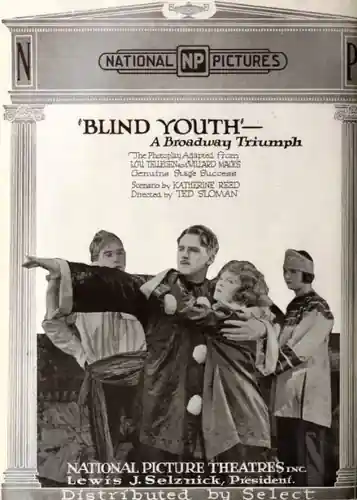
Scholars often yoke Blind Youth to The Royal Imposter for their mirrored examinations of class subterfuge, yet the film’s true spiritual cousin is Il sogno di Don Chisciotte—both traipse along the parapet between quixotic idealism and bruising reality. The difference: Tellegen refuses to tilt at windmills; he dynamites them.
Leatrice Joy’s Clarice predates the vamp archetype’s exhaustion; she gifts her predator a yawn, as if debauchery were merely tiresome labour. Watch her stretch on a chaise while negotiations occur—she flexes an ankle in extreme close-up, the ankle becomes exclamation point to every syllable of extortion.
Walter McGrail shoulders the film’s moral curvature. He begins with Valentino-like vanity—moustache waxed to lethal points—and ends stripped, eyes hollowed by someone who has seen the void file taxes. The transition occurs in a single take where he sculpts: shoulders rise, breath deepens, pupils dilate until the bust looks more alive than the body beside it.
Clara Horton’s Hope could have slid into saccharine quicksand; instead she plays the part like a young nun who has memorised Kropotkin—tenderness sharpened by politics of generosity. When she implores Maurie to “mould the world rather than be moulded,” the line feels less platitude than manifesto.
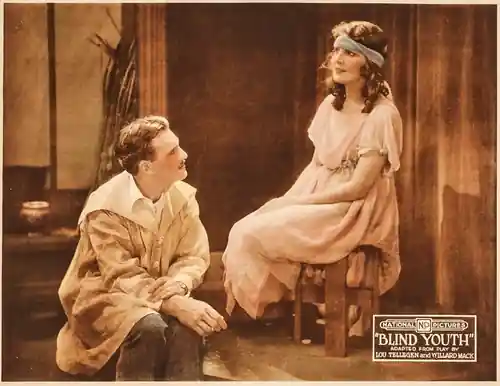
Art direction by Edgar Ulmer—years before his expressionist noir detonated Hollywood—yokes Parisian decadence to American puritanical chill. The Montparnasse garret drips burlap and absinthe bottles; the Manhattan parlour radiates mahogany tombstones. A repeated motif: windows shaped like coffins, implying every view is mortal.
Tinting alternates between arsenic green for Paris nights and bruised amber for New York dawns. The switch happens mid-scene during the Atlantic crossing: waves chartreuse turn to molten gold as Maurie’s ship approaches Ellis Island, as though the very ocean knows he trades one purgatory for another.
Katherine S. Reed, Willard Mack and Tellegen compress Dickens into a haiku of desperation. Intertitles are haiku-sharp: “Love sold by the ounce weighs more than gold.” The script weaponises silence; characters often stare past each other, letting negative space speak the unsayable.
Compare to Secret Marriage, where every emotional beat is footnoted; here subtext suffocates text until the viewer becomes complicit archaeologist.
Original score—recently resurrected by Alicia Svigals—pairs klezmer violin with saxophone bleats, evoking both shtetl lament and speakeasy swagger. During the suicide sequence, the violins hold a single note so long it feels like oxygen debt; when Hope appears, the sax swoops into major, aural equivalent of CPR.
Blind Youth prefigures the economic nihilism of 1970s New Hollywood—think midnight cowboys and dog-day afternoons—yet arrives wrapped in flapper silk. Its DNA recurs in The Frame-Up’s institutional paranoia and in La voix d’or’s meditation on art versus survival.
Moreover, the film interrogates masculinity with a surgeon’s ruthlessness: Maurie’s hands can birth beauty yet cannot balance a chequebook; his identity is mortgaged to muses and money-men alike. In an era when male suffering usually wore a war uniform, Tellegen exposes the quieter carnage of capitalist emasculation.
Print damage mars reel three—nitrate warps like eczema—yet the imperfection only amplifies urgency. Where pristine restorations sometimes embalm, scars here testify: cinema as living tissue.
Minor misstep: comic-relief landlord (Leo White) with Teutonic accent borders on caricature. But the film recovers fast—Tellegen kills the buffoon with off-screen bankruptcy, narrative pruning at its most ruthless.
Blind Youth is not merely a curio for completists of the silents; it is a scalpel to the membrane separating hope from hubris. Watch it at 2 a.m. when rent is late and faith runs on fumes. Let its amber glow remind you that despair is just the kiln before the shape of something new.
IMDb 6.1
1937
Community
Log in to comment.