Summary
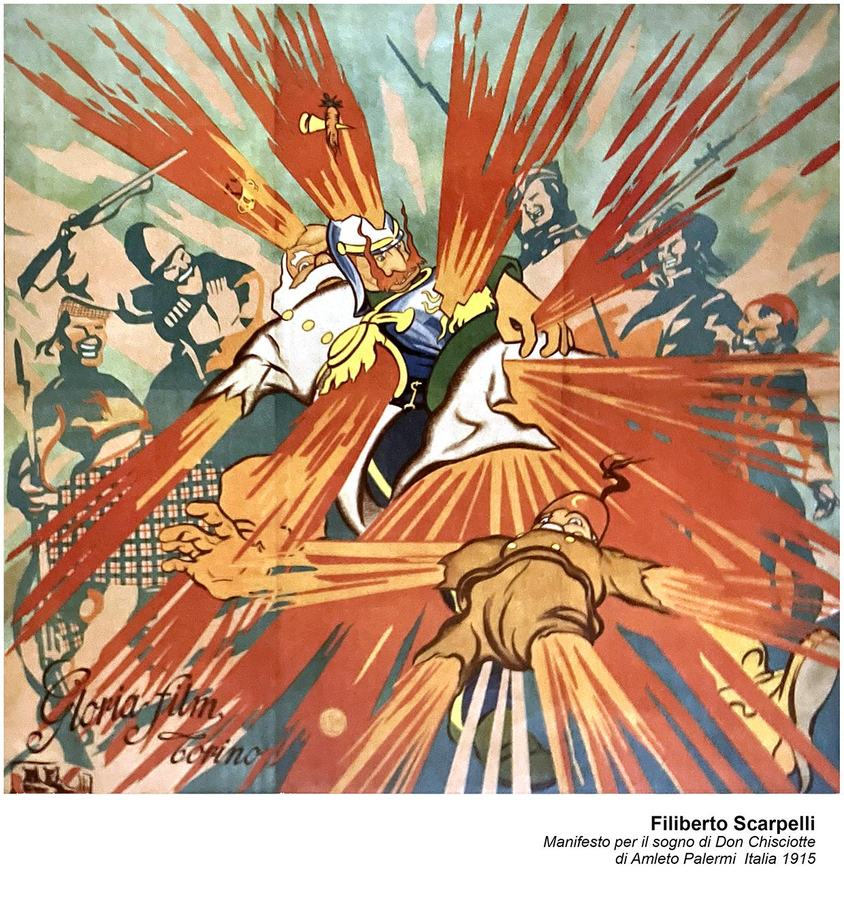
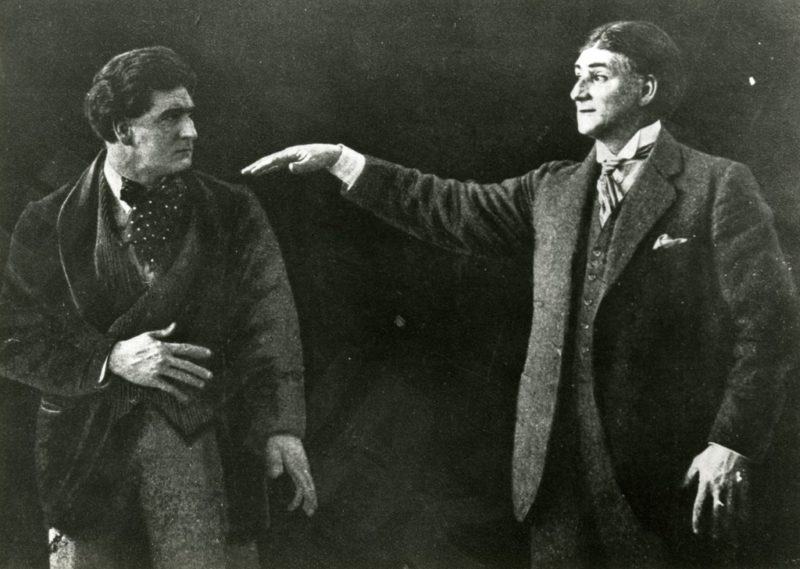
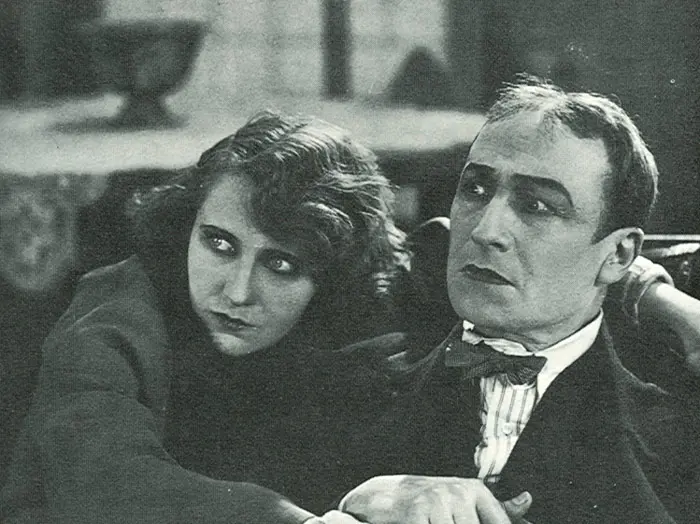
A sun-bleached Italian hill-town, circa 1912, becomes the cracked mirror in which Miguel de Cervantes’ tattered knight forever gallops. Here, Don Chisciotte—played by Guido Petrungaro with the stoic grace of a fresco saint—no longer tilts at windmills but at the very idea of windmills: shadows cast by a half-built aqueduct, laundry flapping like heraldic banners, and the flicker of a cinematograph that has just begun to haunt the piazza. His Sancho, a moon-faced Attilio Pietromarchi, drags a wooden cinema crate instead of a donkey, convinced that every projected frame is a deed of real estate in the kingdom of illusion. Between them wanders Gina Montes as Dulcinea, now a widowed schoolmistress who teaches children to read by decoding intertitles; she scribbles marginalia on the wind, believing love to be a subtitle yet to be inserted. Into this mirage rides Arturo Petrucci’s travelling showman, a proto-Mephistopheles in a top-hat stitched from strips of nitrate, promising the villagers that their dreams can be developed—literally—if they surrender their last copper to his portable lab. Mademoiselle Barthell’s Maritornes, once an inn-girl, keeps a ledger of every soul who has sold their reflection for a single close-up; Arduina Lapucci’s housekeeper sweeps the town square at dusk, gathering discarded frames that curl like autumn leaves, each one a lost shot of someone’s life. Miss Selma’s ghost-nun appears only in double-exposure, clutching a rosary made of sprocket holes. The plot dissolves into a labyrinth of reel changes: Chisciotte, convinced that the camera is an evil enchanter, tries to ‘free’ the frozen images by slicing through the screen with a rusted sword; Sancho, drunk on celluloid moonshine, screens the out-takes of his own death and applauds. Dulcinea, discovering that her written intertitles now appear in the sky, attempts to rewrite the ending, but every inserted card turns into a decree of exile. In the final torrent of light, the entire village is projected onto the clouds above; the townspeople watch themselves watching themselves until the nitrate catches fire, raining embers that spell out ‘Fin’. When the smoke clears, only the wooden crate remains, inside it a single undeveloped negative of a knight still charging—an image that refuses to be fixed, forever longing for a dream that has learned to dream itself awake.
Review Excerpt
"
A cathedral of dust and silver halide
The first thing that strikes you about Il sogno di Don Chisciotte is the light—harsh, chalk-white, as if the Apennine sun itself has been forced through a prism of nitrate. Director-star Guido Petrungaro doesn’t merely shoot scenes; he bleaches souls onto the emulsion. Every frame feels sun-stroked, the contrast so severe that black becomes a velvet abyss and white a blade. In this crucible, Cervantes’ knight is no longer a quaint crackpot but a tragic ont..."