DbcultAccessing Vault...
Cult Review
Senior Film Conservator
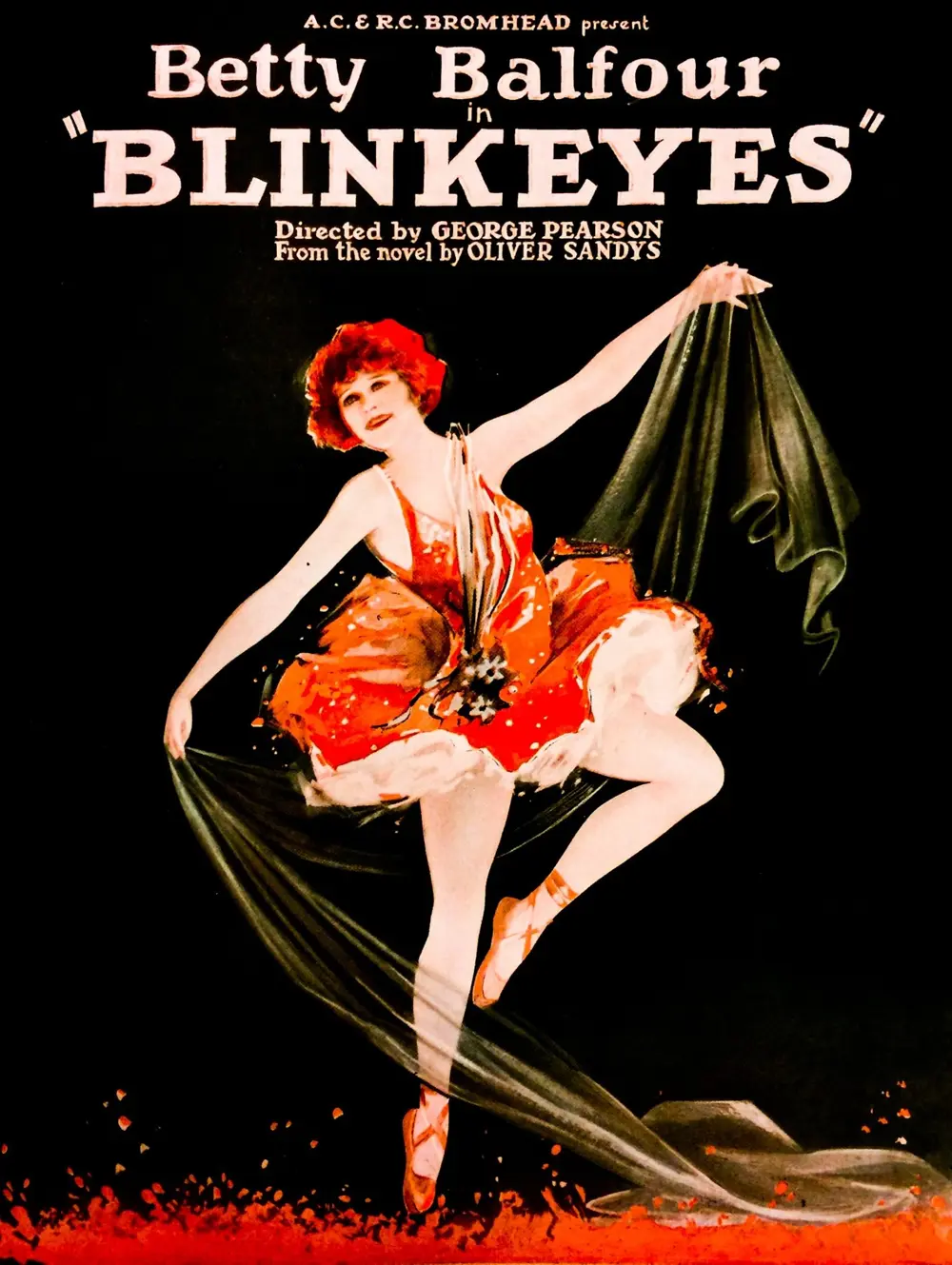
Short answer: yes, but only if you can stomach the raw, unpolished edges of 1920s social realism. This film is for the cinephile who enjoys seeing the 'British Mary Pickford' play a character with real, jagged teeth; it is not for those who require the sanitized pacing of contemporary romantic comedies.
This film works because Betty Balfour delivers a performance that feels decades ahead of its time, eschewing the pantomime acting common in the silent era for something far more grounded and defiant.
This film fails because the final act relies on a generic newspaper-based misunderstanding that temporarily robs the protagonist of her hard-earned agency.
You should watch it if you want to see a silent film that isn't afraid to treat poverty as a trap rather than a colorful backdrop.
Blinkeyes captures a specific kind of urban anxiety that feels remarkably modern. The theater district isn't a place of glamour here; it’s a place of work. When we first meet the titular dancer, she isn't floating on air; she’s walking home through the shadows, weary and alert. The cinematography by the uncredited cameramen (likely under George Pearson's direction) uses the contrast between the dimly lit alleyways and the harsh, artificial lights of the upper class to tell a story of exclusion. It reminds one of the stark class divides found in The Pitfall, where the environment is as much a character as the actors.
The inciting incident—the car accident with Ken Clay—is handled with a surprising lack of sentimentality. Blinkeyes doesn't swoon; she snarls. She sees in Ken not a savior, but a reflection of the man who ruined her mother. This psychological baggage informs every interaction they have. It’s an unconventional observation, but the film treats her trauma as a tangible obstacle, almost like a physical wall between her and her eventual happiness. It’s a gutsy choice for a film produced in 1926.
The most arresting sequence in the film occurs when Blinkeyes enters a bar and announces she is for sale. This isn't played for laughs or as a whimsical fairy tale trope. It is a cold, calculated transaction born of absolute necessity. Uncle Dick’s debt is a looming shadow, and the failure of her boyfriend, the Basher, to provide any real assistance highlights the impotence of her own social circle. The Basher is a brute, a man who thinks strength is enough to solve problems. But in a world of capital, his fists are useless.
When Ken Clay enters the bar and outbids the room, the tension is palpable. The film takes a stance here: it critiques the idea that a woman’s hand can be bought, while simultaneously acknowledging that for someone in Blinkeyes' position, a transaction might be the only path to safety. It’s a messy, uncomfortable moral grey area. The film doesn't stay neutral; it forces the audience to sit with the indignity of the situation. It works. But it’s flawed in how quickly it tries to pivot back to romance later.
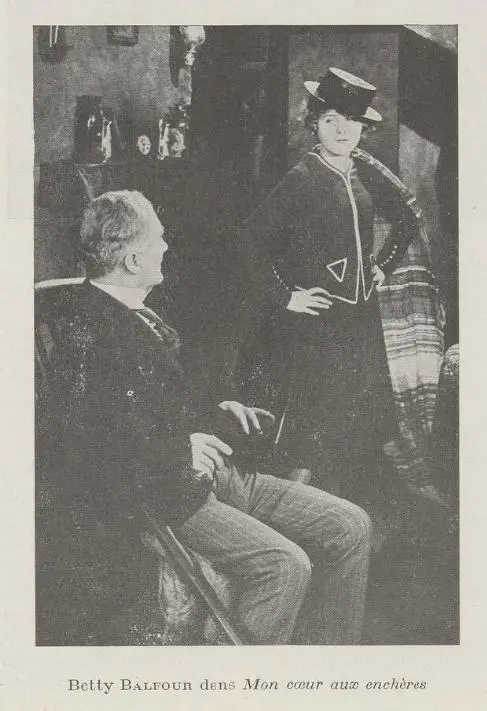
The rivalry between Ken Clay and the Basher provides the film's physical momentum. Unlike the stylized combat seen in Fighting Blood, the fight in Blinkeyes feels personal and ugly. The Basher’s attempt to ambush Ken before their scheduled bout is a testament to his desperation and lack of honor. However, the revelation that Ken is a champion fighter is a double-edged sword. While it provides a satisfying 'hero' moment, it also reinforces the idea that the rich are not just wealthier, but inherently 'better' or more capable—a common, if frustrating, trope of the era.
The training sequences are shot with a focus on Ken's disciplined athleticism versus the Basher’s wild, uncoordinated rage. This contrast is a visual metaphor for the film's view on class: one side has the luxury of technique, while the other only has the raw, destructive energy of the streets. It is a brutally simple observation that elevates the film above standard melodrama.
Critics often labeled Betty Balfour as the British Mary Pickford, but that does her a disservice. In Blinkeyes, she displays a range that Pickford rarely touched. There is a hardness in her eyes during the scene where she confronts Ken about his supposed marriage that is genuinely chilling. She isn't just a girl who's been hurt; she’s a woman who expected the world to fail her and is almost relieved when it finally does. This cynicism is the film's secret weapon.
Her chemistry with Tom Douglas is fascinating because it is built on a foundation of mutual suspicion. They don't fall in love at first sight; they negotiate their way into a relationship. For a deep dive into similar character dynamics, one might look at The Agent, though Balfour’s performance here is significantly more nuanced. She carries the film's 1500-odd meters of celluloid with an ease that makes you wonder why she isn't a household name today.
The pacing of Blinkeyes is its greatest hurdle. Like many films of the mid-20s, it suffers from a middle section that meanders through subplots involving side characters like Flowerpots. While Flowerpots provides some much-needed levity, his scenes often feel like they belong in a different movie—perhaps something more akin to Andy's Lion Tale. However, when the film focuses on the central trio of Blinkeyes, Ken, and the Basher, it moves with a surprising clip.
The set design of the theater and the uncle’s home are meticulously detailed. You can almost smell the dust and the cheap gin. This commitment to atmosphere helps ground the more fantastical elements of the plot, such as the sudden wealth of the characters. The use of intertitles is sparse but effective, allowing the actors' faces to do the heavy lifting. This is a film that trusts its audience to read a subtext of pain and longing without having it spelled out in every frame.
Pros:
- Exceptional lead acting that avoids silent film cliches.
- Gritty, realistic depiction of 1920s poverty.
- Strong thematic exploration of female agency and commodification.
- Visually impressive use of lighting and shadow.
Cons:
- The plot relies on several convenient coincidences.
- The supporting characters are occasionally caricatures.
- The ending feels slightly rushed compared to the slow-burn opening.
Blinkeyes is a fascinating relic that deserves a spot in the conversation about early 20th-century realism. While it occasionally falls into the traps of its era—specifically the reliance on melodrama to resolve complex social issues—it is anchored by a performance from Betty Balfour that is nothing short of magnetic. It is a film about the price of survival and the unexpected places where one might find dignity. It isn't perfect. It is clunky in parts. But it is honest in a way that many of its contemporaries, like Daring Love, failed to be. If you have any interest in the evolution of the 'strong female lead,' Blinkeyes is essential viewing.
IMDb 5.2
1932
Community
Log in to comment.