DbcultAccessing Vault...
4.9/10
Senior Film Conservator
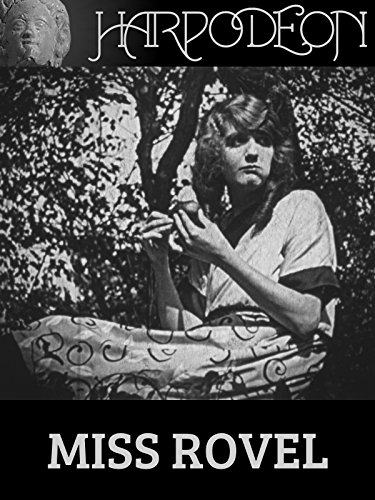
A definitive 4.9/10 rating for a film that redefined the boundaries of cult cinema. Miss Rovel remains a cornerstone of transgressive art.
Miss Rovel (1930) Review: A Study in Solitude and Defiance
Victor Cherbuliez’s Miss Rovel is a film that thrives in the silences between its characters. It is not a story of grand gestures or explosive confrontations, but rather a slow-burning exploration of the chasm between societal obligation and personal integrity. Set against the backdrop of a France still reeling from the aftershocks of World War I, the film’s narrative orbits Raymond Ferray (Jean Devalde), a man whose misanthropy is as meticulously curated as the books lining his study. His life, a carefully constructed fortress of solitude, is breached by the arrival of the Rovel family—a clan whose ambitions and artifice threaten to unravel his carefully preserved equilibrium.
The film’s brilliance lies in its restraint. Cherbuliez, adapting his own novel, constructs a world where tension simmers beneath the surface, never boiling over into the kind of histrionics that might satisfy a less discerning audience. The Marquise de Boisgenêt (Charlotte Barbier-Krauss), with her powdered face and calculating glances, embodies the archetypal aristocrat: a relic of a fading order clinging to power with desperate vigor. Her pursuit of Meg Rovel (Jane Faber) is less a romantic overture than a transactional maneuver, a bid to secure status through marriage. Yet, it is in the quiet defiance of Meg herself—whose yearning for agency mirrors the film’s broader critique of patriarchal structures—that Miss Rovel finds its most compelling voice.
Jean Devalde’s portrayal of Raymond is a masterclass in subtlety. Unlike the more flamboyant performances of his contemporaries (see Lady Windermere’s Fan), Devalde’s Raymond is a man of understatement, his emotions conveyed through the tiniest shifts in posture or the deliberate slowing of his speech. His relationship with Meg is never explicitly romanticized; instead, it is framed as a mutual recognition of kindred souls—a woman trapped in a gilded cage and a man who has built his own solitary fortress. This ambiguity is what elevates the film beyond genre conventions, transforming it into a philosophical inquiry into the nature of human connection.
Geneviève Félix, as Lady Rovel, delivers a performance that is both chilling and mesmerizing. Her manipulation of Meg is not overtly cruel but insidious, a slow erosion of the young woman’s autonomy masked as maternal concern. The film’s most striking scene—a tea-laden confrontation between Meg and her mother—unfolds in real time, the camera lingering on the trembling porcelain cups and the barely perceptible tremors in Lady Rovel’s hands. It is here that the film’s visual language becomes its most eloquent, using objects and gestures to convey what dialogue cannot.
What sets Miss Rovel apart from its contemporaries is its refusal to offer easy resolutions. Unlike the operatic tragicomedy of Der Falschspieler, which leans into farcical misunderstandings, Cherbuliez’s work is grounded in a quiet realism. The film’s climax—a decision made not in the heat of passion but in the cold light of self-awareness—feels earned, a culmination of the characters’ internal struggles rather than a contrived plot device. This restraint is perhaps what makes the film so enduring; it does not seek to entertain in the traditional sense but to provoke reflection.
The cinematography, while unassuming, is a testament to the film’s thematic underpinnings. Wide shots of the Rovel estate emphasize the isolation of its inhabitants, their lives playing out like chess moves on a vast, empty board. The use of natural light—flickering candlelight in the château’s drawing room, the pale glow of dawn over the countryside—serves as a metaphor for the fleeting nature of the characters’ hopes. In one particularly haunting sequence, Raymond walks through the woods, the camera tracking him as the shadows lengthen. The scene is devoid of dialogue, yet it speaks volumes about his internal state: a man caught between the desire for solitude and the inevitability of entanglement.
Cherbuliez’s writing is equally nuanced. The script eschews the melodramatic excesses of The Yellow Ticket, instead favoring a more introspective tone. The dialogue is sparse but loaded, each line carrying the weight of unspoken history. This is particularly evident in the exchanges between Raymond and Meg, whose conversations are laced with a tension that is both intellectual and emotional. The film’s title, Miss Rovel, is itself a subtle act of defiance, a refusal to reduce the young woman to a mere object of desire.
The supporting cast deserves equal praise. Jean Worms, as the aging Marquis de Boisgenêt, embodies a certain weary decadence, his character a direct contrast to Raymond’s youthful austerity. Jacques Lerner’s performance as a minor but pivotal role—perhaps the village priest—adds a layer of moral ambiguity to the narrative. Even the smallest roles are populated by actors who understand the importance of presence; in a film where much is left unsaid, their expressions and gestures are crucial to the story’s emotional resonance.
Thematically, Miss Rovel resonates with modern audiences in ways that might not be immediately apparent. Its exploration of autonomy and resistance feels particularly relevant in an era where individual agency is frequently challenged by institutional and cultural forces. The film’s critique of aristocratic complacency and its portrayal of the individual’s struggle against societal expectations echo the concerns of later works like Just Out of College, though with a far more subdued aesthetic. The contrast between Meg’s yearning for self-determination and Lady Rovel’s calculated control is a microcosm of broader social tensions, making the film as much a period piece as a timeless reflection on human nature.
In conclusion, Miss Rovel is a film that rewards patience and attention to detail. It is not a story of action but of contemplation, its power lying in the spaces between its lines. For those seeking a cinematic experience that challenges as much as it entertains, this 1930 classic remains a formidable choice. Its themes of solitude, resistance, and the quiet rebellion of the individual continue to resonate, a testament to the enduring relevance of Cherbuliez’s vision.
IMDb 6.3
1937
Community
Log in to comment.