DbcultAccessing Vault...
5.8/10
Senior Film Conservator
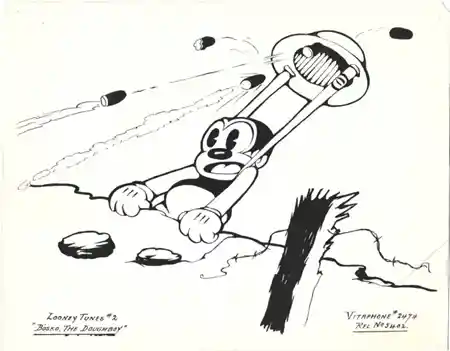
A definitive 5.8/10 rating for a film that redefined the boundaries of cult cinema. Bosko the Doughboy remains a cornerstone of transgressive art.
So, Bosko the Doughboy. Is this one for your Saturday night? Probably not, unless you’re a serious animation buff or just super curious about what cartoons were like way back when. If you're into the history of animation, especially the very raw, early stuff, you might find it fascinating. But if you’re looking for modern pacing, intricate plots, or anything resembling today's polished animation, you'll probably just scratch your head and wonder what all the fuss was about. This is a very particular taste. 🧐
The whole setup is simple: Bosko’s a soldier, a "doughboy," right in the middle of World War I. You see him in the trenches, doing... well, Bosko things.
He's got that classic rubber-hose animation style, where everything stretches and squishes in a way that just feels so old school. It’s almost startling how much movement they packed into these early shorts.
There's this moment where he’s dodging cannon fire, and the cannonballs look less like actual projectiles and more like big, angry bowling balls flying through the air. And when they hit, it's not a huge explosion, but more of a cartoon puff and a shake.
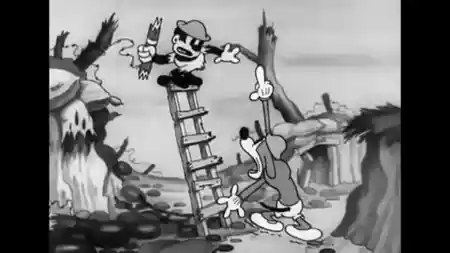
It’s got a very specific, almost naive kind of energy. You can tell they were still figuring out what animation could even do.
His interactions with the enemy feel very much of their time – broad, silly, and without much nuance. He even uses a tuba as a weapon at one point, which is just the kind of absurd gag you'd expect from a 1931 cartoon.
The sound effects, too, are pretty basic. Lots of boings and pops that feel straight out of a vaudeville act. It's charming in its own way, but also shows how far things have come.
I found myself wondering about the animators, Rudolf Ising and the team. What were they thinking, sketching Bosko into a war zone?
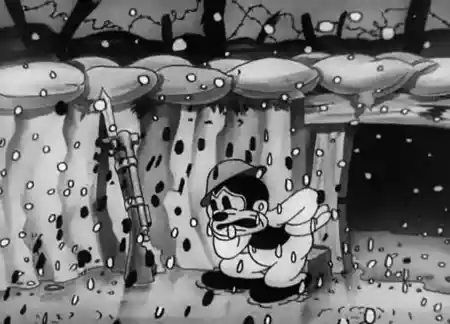
It's not exactly a profound statement on conflict, more like a backdrop for some classic cartoon mischief. There’s a scene where Bosko uses a machine gun, and it's less about the actual danger and more about the rhythm of the bullets leaving the barrel, turning into musical notes. It’s a very Bosko solution to a serious problem.
The whole thing flies by, really. It’s a short, sharp burst of energy. You don't get much in terms of character development, obviously. It’s Bosko being Bosko, through and through.
The ending felt a bit abrupt, almost like they ran out of ideas or frames. But that’s often how these early shorts were, right? No big fanfare, just a quick wrap-up.
It’s definitely a product of its era. Some of the humor might not land today, or even feel a little uncomfortable, depending on your perspective. But it's an important piece of animation history, showing those first shaky steps towards what cartoons would become.
If you’ve ever wondered about the roots of things like Looney Tunes, this is a raw, unpolished ancestor. It’s like looking at a very old, slightly faded photograph. You get a sense of something _real_ that was happening, even if the details are a bit fuzzy.
It’s not a movie you’d recommend to just anyone, but for the right person, it’s a cool little artifact. A weird, wobbly, wartime wonder. 🎬
IMDb 6.1
1933
Community
Log in to comment.